


 Back
Back






(This story was originally published in 2014, but was updated on April 18, 2018.)
If you've played golf long enough, you've probably had that "Tin Cup" moment. It might not have come on a par 5 but on a par 3 -- you basically find yourself pumping most of your ball supply into the water as you stubbornly try to reach the green over a hazard. But what's more painful, the 26 you made on the hole or the dozen golf balls you just lost? If you're like most regular golfers, it's the $30-$50 you just drowned. Of course, if they're used, it's far less painful.
But there's certainly a stigma associated with playing used golf balls. If we find a good one (such as a Titleist Pro V1) at the edge of the woods, most of us will put it in play at some point.
Yet buying recycled golf balls is beneath many players and for good reason.
After all, these golf balls are usually harvested from ponds, streams and lakes, and water has to be bad for them, right?
Well, that's true, but probably to a lesser degree than you think. And it used to be truer than it is now. The golf manufacturers have long made claims that balls recovered from water lose a significant amount of performance. But much of that was before the solid core technology and advanced cover materials used today. The truth is golf balls are so well made today that they can spend a few nights or even weeks in the water and come out just fine -- at least for casual play. (I mean, if you're playing in the U.S. Open qualifier, break out the new sleeves.)
Does that mean all recycled or refurbished balls are the same? Of course not. You have to beware of companies that might repaint inferior balls (refurbished), often distinguished by a non-genuine logo. And you don't want anything that's been underwater for a year.
The good news, these days, though, is that the companies that sell millions of recycled golf balls make their runs often in the same locations, so they're not spending much time in the water. And the balls are sold according to grade, so you get what you pay for. It also depends on where the golf balls are lost. Golf balls recovered in the saltier waters of Florida and Louisiana deteriorate a little quicker than balls found in the colder lakes and ponds of the Pacific Northwest, for example.
Buy the top-graded golf ball, and it's almost impossible to tell from new. In fact, some golfers have been known to buy high-grade used balls and put them back in their old sleeves.
Before you go used, check out GolfBalls.com clearance page for deep discounts on new golf balls and more | View current sales
LostGolfBalls.com: 650 million and counting
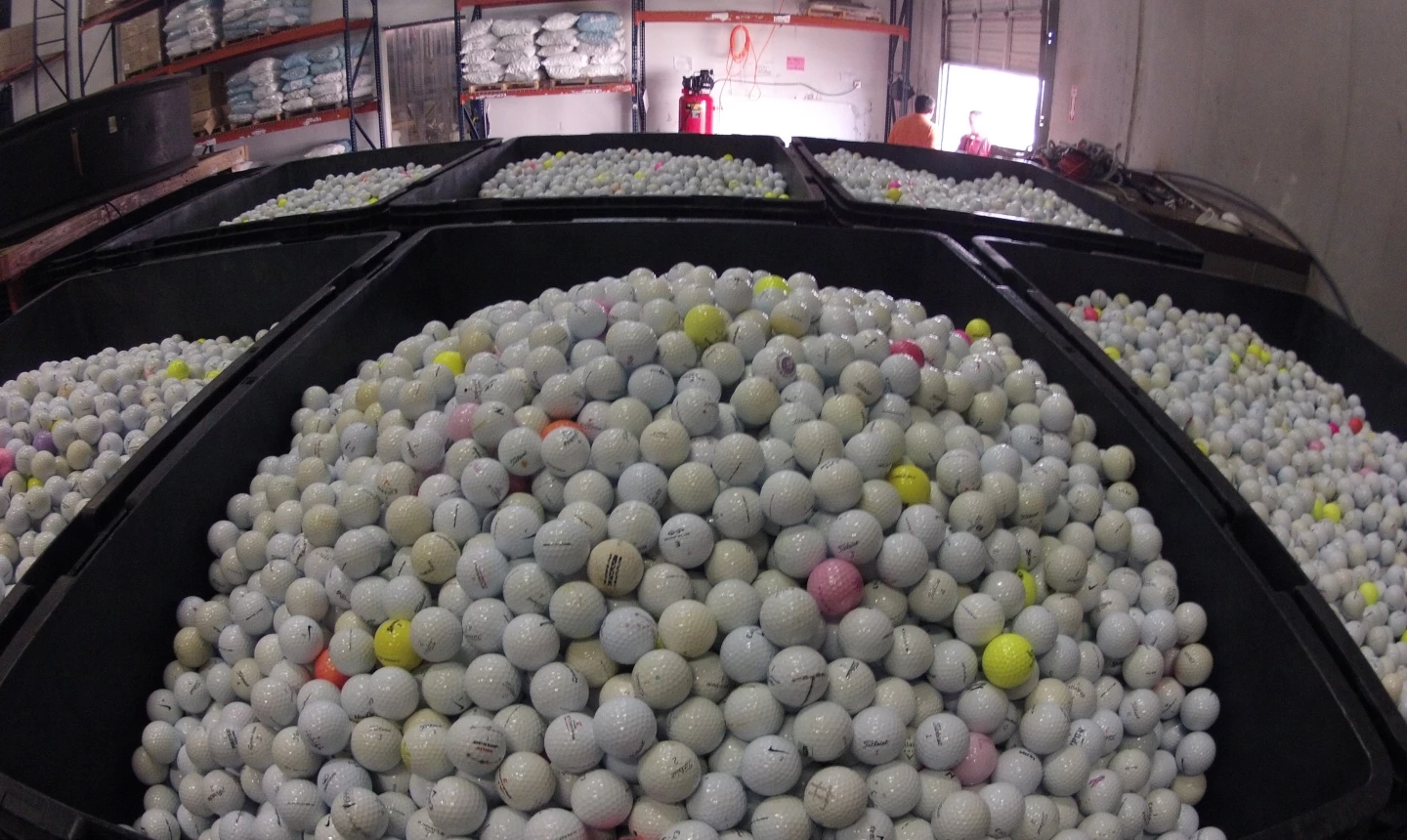
The largest online retailer of used golf balls is LostGolfBalls.com, located in Sugar Land, just southwest of Houston. The company was started more than 25 years ago by four former Texas A&M golfers, who used their connections in the golf industry to contract divers at various golf courses, starting primarily in Texas. The operation began in a garage using washing machines. Since 1992, LostGolfBalls.com has sold more than 650 million golf balls. Last year, sales were close to 55 million and reaches out to nearly 5 million golfers, according to Semih Dilek, director of e-commerce for LostGolfBalls.com.
The company harvests golf balls from more than 2,400 golf courses, from every state except Alaska, Hawaii, North Dakota and South Dakota. Hawaii is on the list because shipping them back from Hawaii to Houston would be cost prohibitive. But LostGolfBalls.com does ship its product to golfers in Hawaii.
It is conceivable that you could actually buy your own golf balls back after you dunk one in a pond.
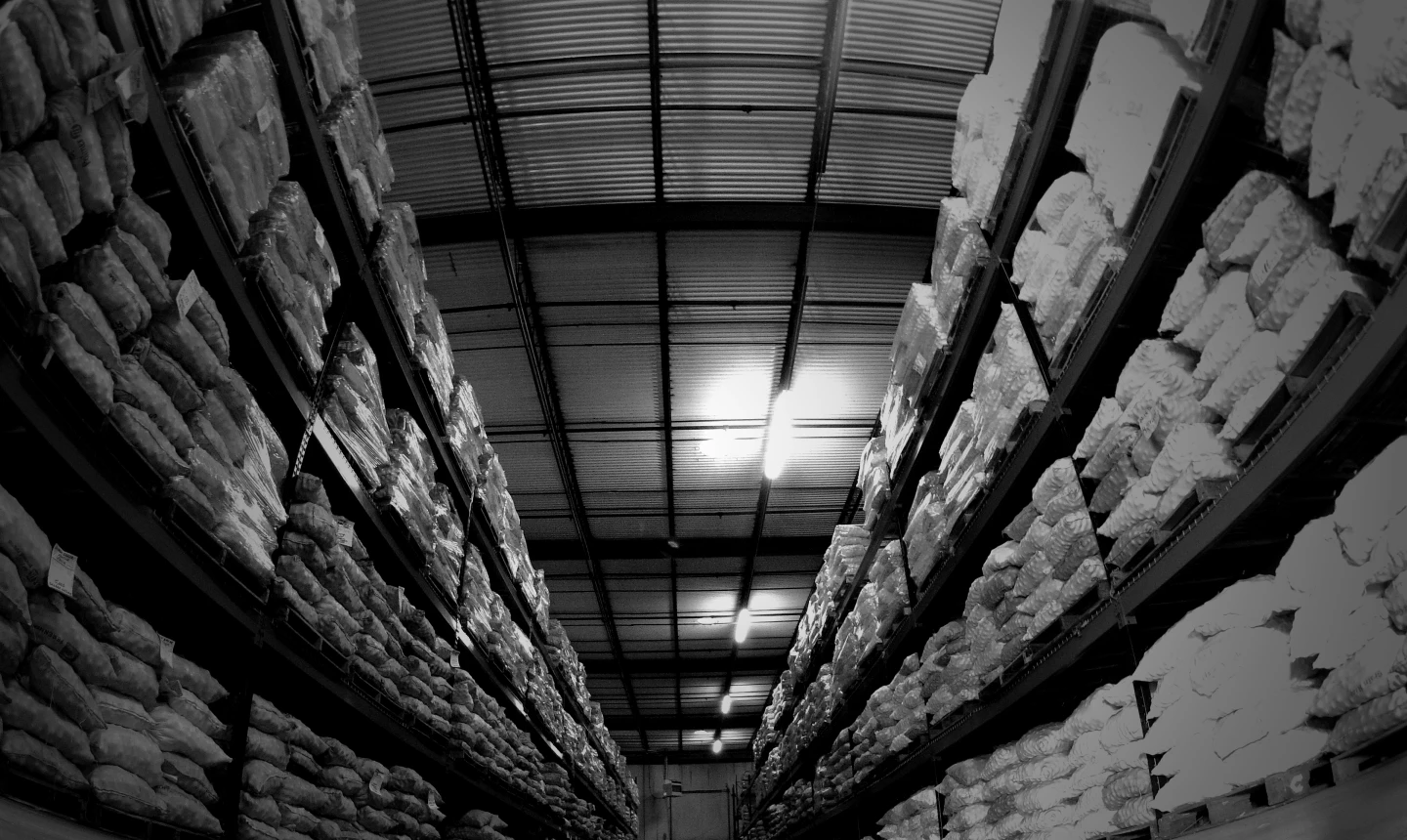
They're shipped by truck to the company's large warehouse, sorting and washing facility, which can house 20 million balls at a time.
Workers sort the balls according to grade. The best ones, AAAAA, look pretty much brand new, and the next grade down, AAAA, have minor blemishes but pretty much play like new. Independent testing in California showed that the higher-rated recycled golf balls tested like new balls, and in some cases even flew farther, which could be attributed to the dimple patterns being somewhat smoother because they're a little worn.
Titleist Pro V1s lead the pack
It's not difficult to figure out what brand of used golf balls sells the best. And that would be Titleist Pro V1s, of course. They account for approximately 40 percent of the company's sales. In fact, LostGolfBalls.com has even started to sell the Titleist AVXs, which were only available in test markets (and have already been recovered in California), as well as the new Titleist Tour Softs, which are already being recovered.
The company is also seeing a rise in Callaway Truvis balls (soccer ball patterned) as well as well as yellow, pink and other colored balls.
"We've definitely seen a rise on colored golf balls sales," says Dilek, who attributes much of that to the creative ad campaigns from companies like Volvek, Callaway and Srixon. It also helps that some tour players, especially the women and the seniors, are playing the colored balls.
In case you were wondering, LostGolfBalls.com does not harvest from the lakes at the TPC Sawgrass Players Stadium Course, where estimates are that more than 100,000 golf balls find the drink annually on the infamous par-3 17th island hole alone. But there are certainly courses that have exceptional yields.
For example, the Tournament Course at the Golf Club of Houston (formerly Redstone), home of the Shell Houston Open, has water that comes into play on more than half the holes. Divers recover tens of thousands from the Rees Jones-designed course.
The top producing states for LostGolfBalls.com are Texas, Florida, the Carolinas and California.
As for what you can expect to pay for your brand new Titleist ProV1 if you were to lose it and buy it back, you can find high-grade older models for about $20 in mint condition. The Callaway Truvis mint (5A) balls and Volvik (5A) go for a little more than $22 a dozen. Prices do not include shipping for orders less than $99.
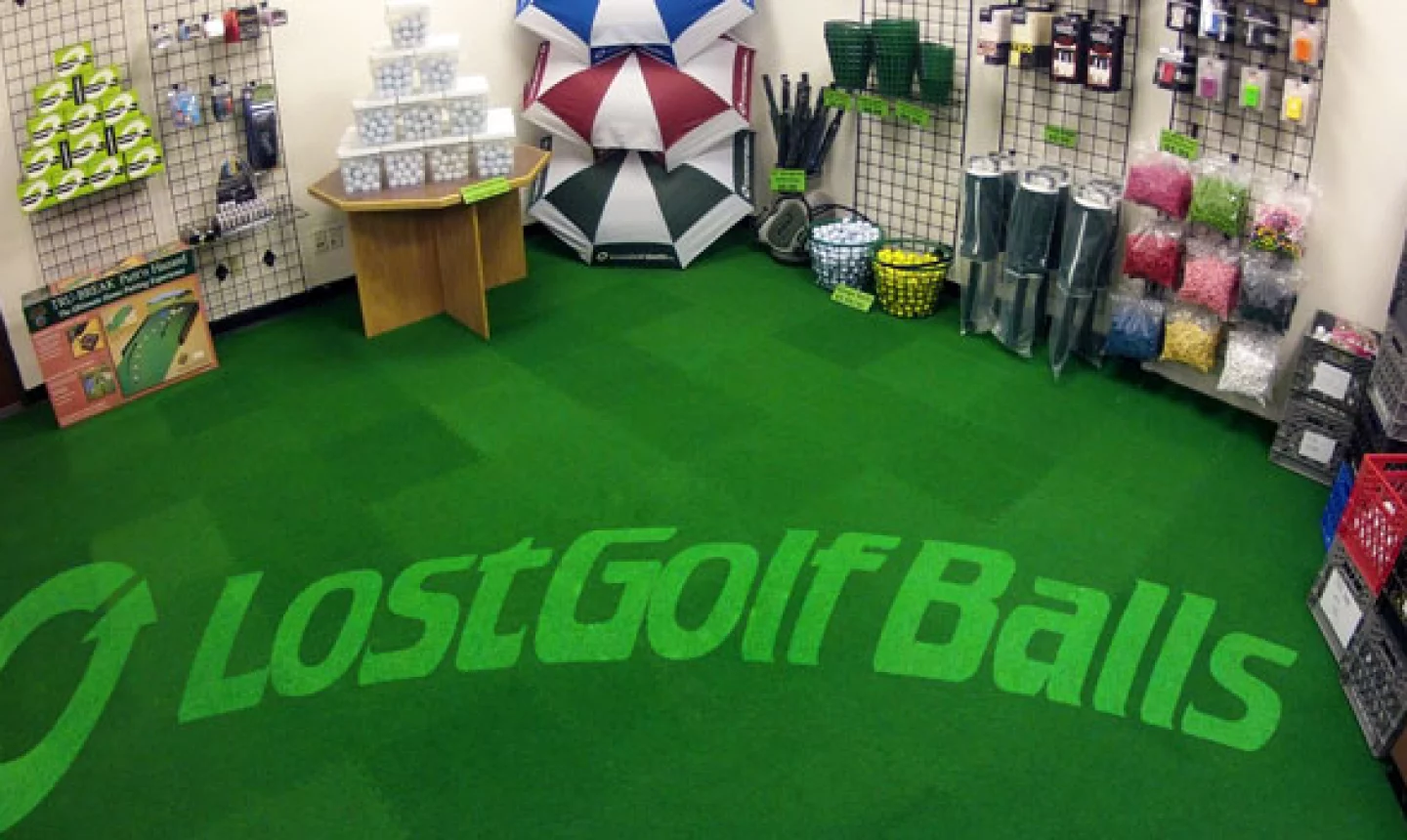
The company also sells a few other products, including a one-size-fits-all golf glove ($10), bulk tees, towels, umbrellas and SuperStroke putter grips. LostGolfBalls.com, however, has no immediate plans to enter the used golf club equipment market.
(Editor's Note: GolfPass may earn a commission on certain purchases made via links posted in our articles. GolfPass does not receive compensation for product reviews.)
Stay in the Swing with GolfPass!
Get exclusive tips from the pros, in-depth course reviews, the latest gear updates, and more delivered straight to your inbox.



Comments (80)
Great article Mike! Personally, as long as I can bounce it on a wedge and it sounds good I'll feel okay playing it lol. I wrote an article much like this you should check it out! Maybe we can connect. Happy hacking Mike!
http://www.golfreviews.org/do-golf-balls-go-bad/
I ordered balls from foundgolfballs.com Bridgestone 330bs said they were used, every one of them looks new, not a blemish on any of the 54 balls. My question is are they getting balls from China that are fakes & and saying they are found balls? I can not belive any of the balls I got have ever been hit??
Great article Mike! Personally, as long as I can bounce it on a wedge and it sounds good I'll feel okay playing it lol. I wrote an article much like this you should check it out! Maybe we can connect. Happy hacking Mike!
http://www.golfreviews.org/do-golf-balls-go-bad/
I ordered balls from foundgolfballs.com Bridgestone 330bs said they were used, every one of them looks new, not a blemish on any of the 54 balls. My question is are they getting balls from China that are fakes & and saying they are found balls? I can not belive any of the balls I got have ever been hit??
Bought 96 Titleist Pro V1 Mix Bucket. Received 94 Pro V1 from 392 (2003) to 2011; several 4A mint balls . Called help desk to report two issues; they sent ten (10) 5A mint balls. Recommendation: Do not buy any "Mix Bucket".
Have used this business. Excellent shipping and quality of golf balls. Will order again.
Yet to try them
This is Lisa from Ouhua China. We are the leader of producing and exporting golf accessories in China, with stable quality and competitive price which makes our company runs 15 years. Our golf tees are hot-sell to European and North America as also as some other countries.
If you need any samples or offers, please contact me via luoshengm@126.com
My dad taught his dog how to retrieve golf balls, and his course let him bring the dog with him every morning. We always got tons of balls as part of birthday and Christmas presents.
My name is Tim Redman from Martinsville, Va. and I have an invention that if you lose your golf ball you can find it with an app on your iphone or your smartphone and also after you hit the ball, it will also tell you how much yardage you have to the pin just like one of those GPS watches...I just need someone to market my idea...see for yourself and contact InventHome at 1-866-844-6512...my invention is called Golf Ball Hawk...hoping that you might can help me .....If you go to InventHome website, look at the top right and click on log in...put in user name TRedma29691 and password is the same TRedma29691 to look at the presentation of the Golf Ball Hawk.....Best regards and hope you have a blessed day, Tim
My e-mail is shaggin246@gmail.com and cell # is 276-340-3042....
I would like to know if anyone knows where I can get a golf ball striping machine to strip my driving range balls I have over 6000 to strip. Electric would be nice even if its used. Thanks for your attention to this matter.
I purchase used golf balls every year, I watch for the best deals during the winter months, then I buy what I think I will need for the entire season then. Being a 15 handicap and living in Vermont with heavily wooded mountain courses, I go through my fair share, but at the price point that get the balls for, I don’t feel compelled to spend a lot of time looking for them.