


 Back
Back





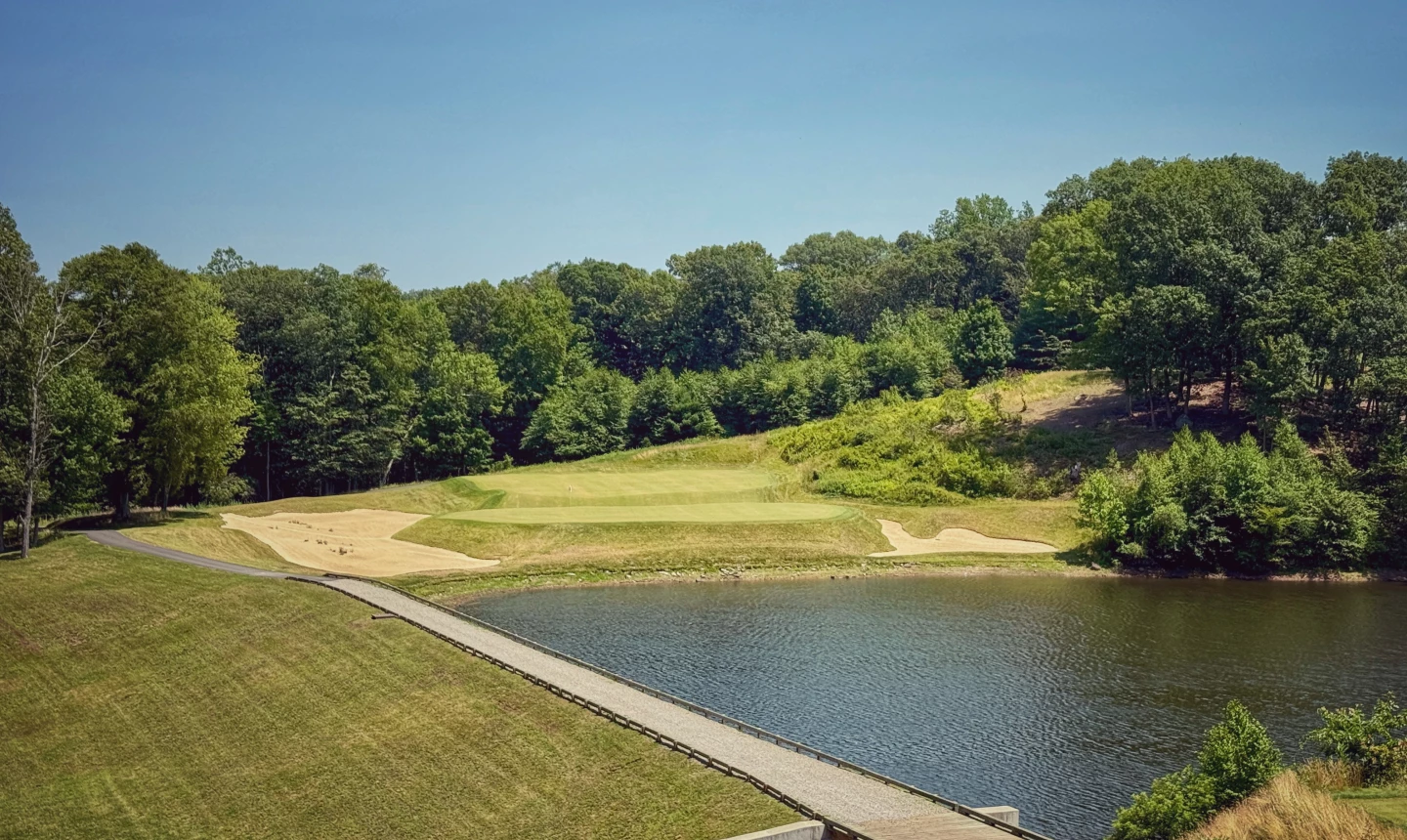
NEW HAVEN, Conn. - It has never been just about pizza around here.
Sure, the Elm City is regarded by many as one of the best places in the world for a slice of "apizza" ('ah-BEETZ'), as it is locally styled. Sally's, Frank Pepe's, Modern, Zuppardi's - there are as many opinions about which New Haven pizza palace is best as there are pepperonis on a million pies.
For nearly as long as those Wooster Street and other havens have slung dough, New Haven has housed one of the best golf courses in America, and the untouchable top dog among college layouts: Yale Golf Course, opened in 1926 and carved by Seth Raynor with input from mentor C.B. Macdonald.
I grew up an hour from Yale; it was the first truly great golf course I ever played when I first set foot on the property more than 20 years ago. Stately corridors framed by old forest and blasted-away rock comprised a golf course at a scale I had never seen or even conceived of. The feeling of being engulfed by its charismatic and rugged landscape helped me fall desperately in love with golf courses as a lens through which to experience the outdoors.
Even though its excellence had always been beyond question, Yale was, for most of my life, a what-could-be golf course. Trees had encroached on parts of the playing field, fairway and green edges had receded from their intended pads and the bunkering had mellowed to mostly pedestrian oval shapes.
The original footprint and features were well-documented, but Yale University seemed to treat its golf course with far less reverence, attention and care than it did, say, its Beinecke Library, home of priceless rare books and considered a masterpiece of modernist building architecture. During much of the pre-COVID 2000s, there were significant greenkeeping efforts focused on tree-clearing and gradual recapturing of green and fairway space. But while many Connecticut golf courses reopened quickly during the pandemic, Yale languished, even going several weeks without receiving more than basic maintenance. This decision on the university's part led to the course requiring a more sweeping reclamation project.
Now, Yale Golf Course exudes the type of attention to upkeep it has always deserved, finally reopened in the wake of a two-year, $25 million restoration project by architects Gil Hanse & Jim Wagner. Among many signs of its renewed stature among Yale's holdings, the Beinecke name can be seen around the clubhouse, recognizing significant donors to the effort - a hopeful signal that it will be cared for in perpetuity.
Old-school Yale Golf Course's new look
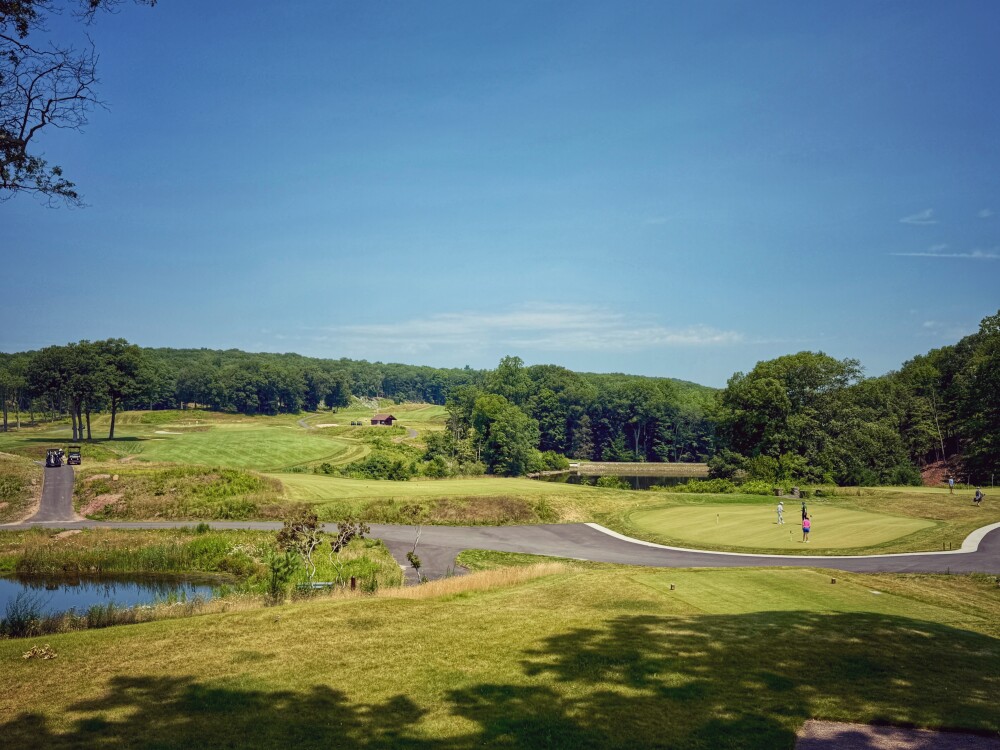
As of its reopening in the spring of 2026, Yale is an even grander, longer and tougher golf course than it was when it shut down following the 2023 season. Hanse & Wagner tacked more than 200 yards onto the previous Championship yardage, bumping it to just over 7,050 yards, with beefy Rating and Slope figures of 74.7 and 144, respectively, against a par of 70. The well-spaced Long (6,361 yards), Regular (5,767) and Short (4,814) tee sets will get most of the traffic.
Hanse & Wagner's original designs tend to challenge golfers with long holes that blur par 4/par 5 lines and their efforts to lengthen Yale largely come in the form of making the longest par 4s longer. A new Championship first tee at the foot of the clubhouse has added 50 yards to the opening hole, which now requires a carry of at least 250 yards just to reach the fairway across Griest Pond. It is a perfectly imperious introduction to the toothier Yale, and an instant deterrent to golfers trying to play from too far back. The 10th, long considered one of the toughest sub-400-yard par 4s in the world, is now an absolute monster at 461 yards, with the approach playing up some 40 feet to a blind, two-level green fronted by a chasm of a bunker.
For low handicappers, the added length recaptures the audacity and extremity that sets Yale apart from virtually all other inland golf courses. The 17th, with its ornery Principal's Nose bunker complex obscuring its expressive, Raynor-template Double Plateau green, got a yardage bump from 437 to 488 yards. One hole that needed no lengthening: the all-world par-5 18th, which plays around, up and over hill and dale in a 611-yard encapuslation of all that precedes it.
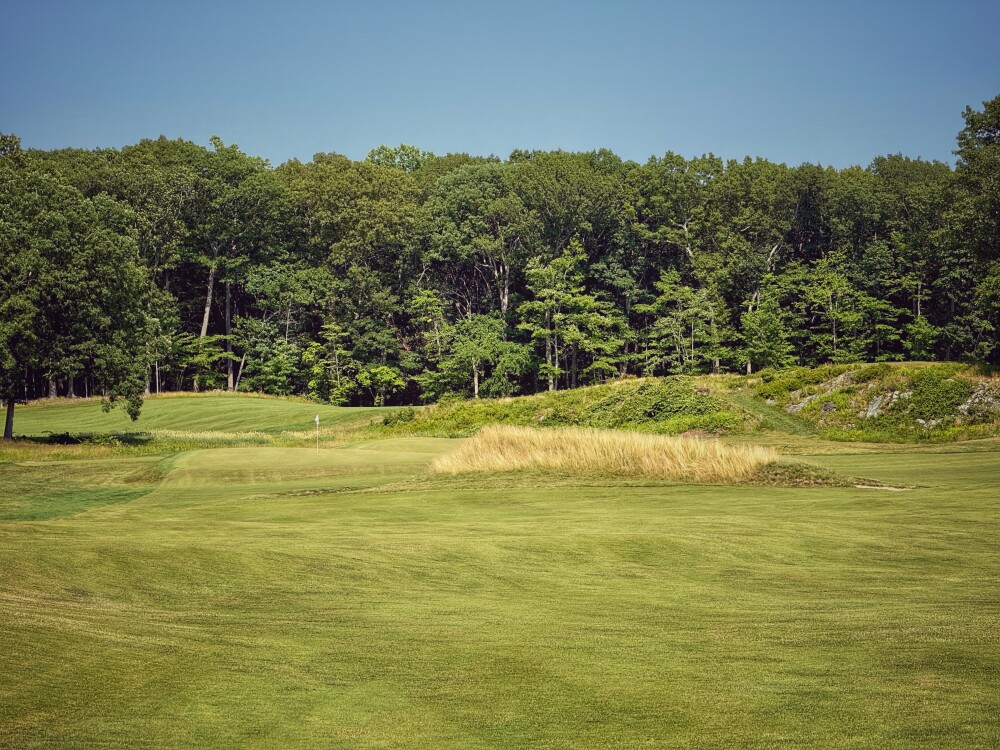
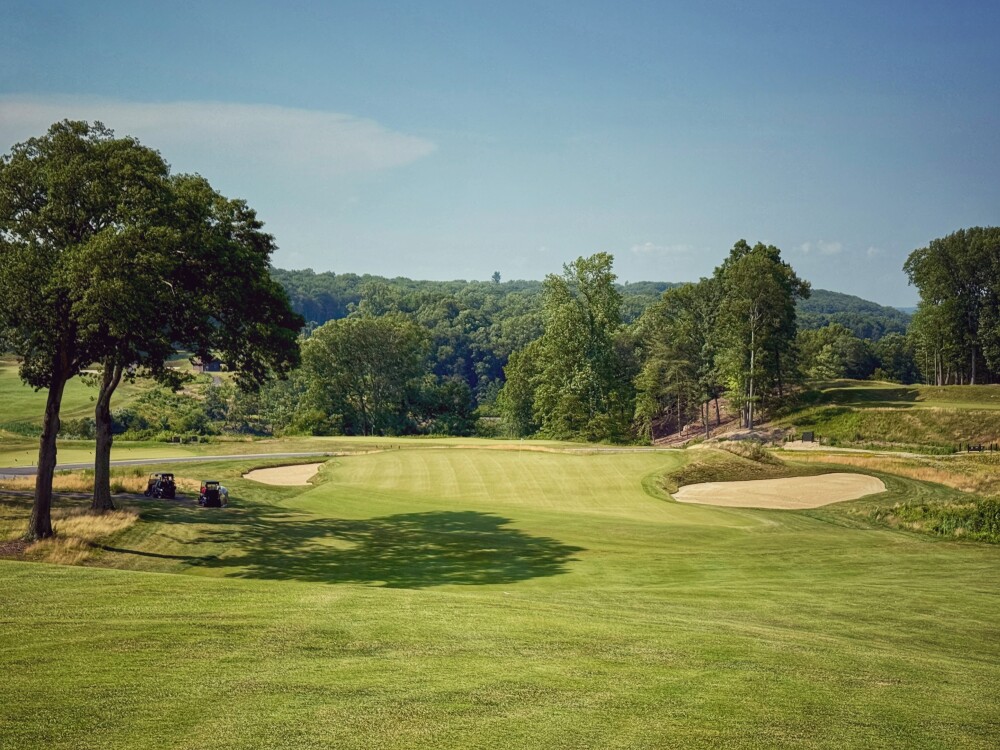
Hanse and Wagner brought Yale's key features back in a big way. Pre-restoration, Yale's putting surfaces were among the largest most golfers could expect to encounter. With nearly an additional 200,000 aggregate square feet of putting green recaptured, they average an incredible 14,000 square feet, with the iconic Biarritz 9th green occupying 22,000 square feet on its own. Golfers who drive the ball in the fairways at Yale can expect to hit a lot of greens in regulation, but their disorienting size makes it challenging to focus even on wedge shots, leading to lag-putting misadventures of all sorts. Stage-fright on such large platforms is a real sensation golfers need to reckon with.
Yale's bunkering has been transformed from imposing to operatic. Greens like the par-4 2nd and 8th holes sit on quasi-bluffs 20 and 30 feet above their greenside bunkers. These hazards stand out from anything else golfers will see outside of the largest-dune links courses of Ireland with the exception of some of Pete Dye's latter-day experiments in torture, which were clearly inspired by Yale and other Raynor works. The crazy depths of Yale's bunkers deter approaches away from them into less in-your-face but often similarly dangerous territory, and emphasize the outrageous size of most of the greens.
Yale was decades ahead of its time in proffering an adventurous brand of golf course architecture on an enormous canvas. Today's architects revere its scale and feel its influence. Many new destination golf courses built in the 2010s and 2020s have gestured towards the sort of grandeur that Yale has enjoyed for a century. However, few have achieved anything approaching the boldness and audacity of the O.G., especially in its fully-realized form.
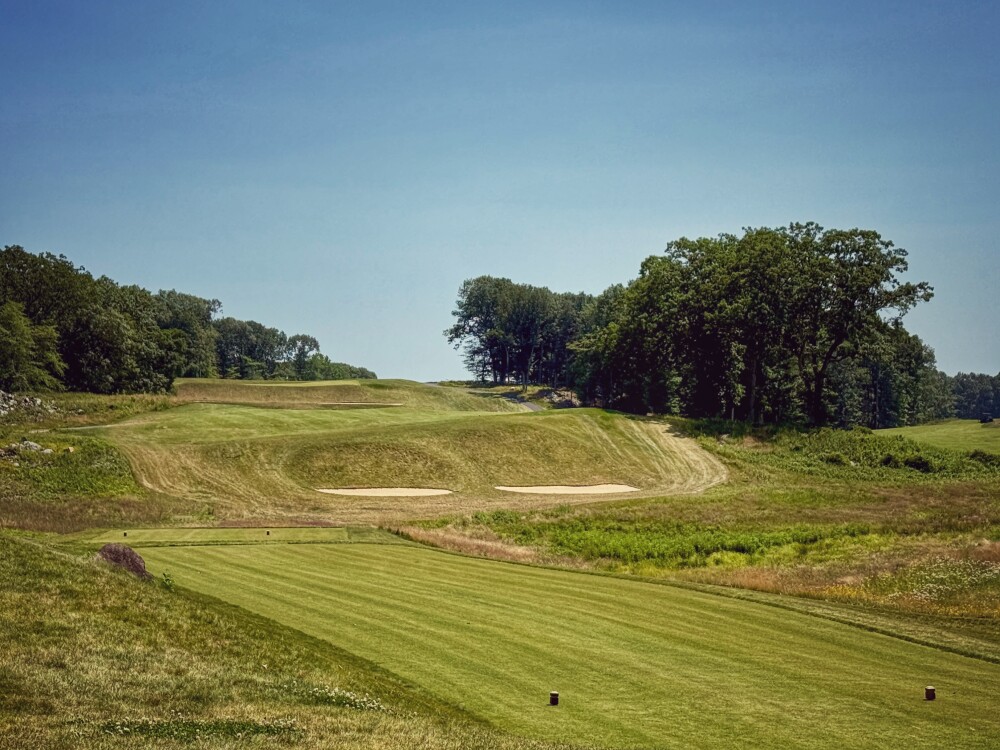
Pre-pandemic, access to Yale Golf Course was mostly restricted to members and the university's community of students, faculty, staff and alumni. Post-restoration, however, public tee times are available. The course is open Tuesdays through Sundays with tee times spaced every 15 minutes. Yale-affiliated golfers can book 14 days in advance; 10 days for everyone else.
Yale Golf Course green fees now top out at $350, making it the most expensive publicly accessible course in Connecticut by a comfortable margin. And while I will not pretend it is not a significant sum of money, I would argue that for avid golfers, and especially students of great golf course architecture, it is not an outrageous tariff in the context of the wider golf landscape. Top-end bucket-list resort golf courses are regularly charging upwards of $400 to $500 or more these days, and Yale is better and more interesting than almost all of them. Anyone who wants to experience the breadth of golf should make every effort to play it at least once.
If you were taking a multi-day golf trip to Connecticut, pairing Yale with some of the state's hidden-gem, sub-$100 courses would help you defray some sticker shock. Plus, you could follow up your round at Yale with some incredible pizza. Not a bad alternative to the increasingly crowded and expensive high-end resorts.


Comments (0)