


 Back
Back




 Play
Play
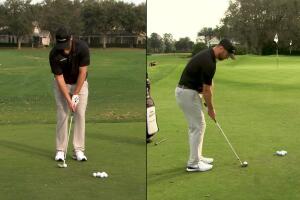





Clay Ballard breaks down some common misconceptions about pitching and gives two simple setup tips that will help you get up and down more often.
Comments (4)
On 7/14/21 I paid you $27
Clay - thanks for these tips. Always struggled with my short pitch/chips (particularly on tight lies). Definitely been keeping the face to closed. Took this to the range yesterday and it felt good - far less digging!!
Question please; when I open the face to use the bounce, doesn’t it set the shot up for a skull? If i lower my hands, doesn’t this close the face, so counter the reason to open the face and diminish the benefit?
in golf, bounce or bounce angle is the angle inscribed by the leading edge of a golfing iron, the sole of the club, and the ground. In plainer terms, bounce angle is an indication of how much the sole, or bottom-most part, of the club head lifts the leading edge.


More Videos
See All


On 7/14/21 I paid you $27
Clay - thanks for these tips. Always struggled with my short pitch/chips (particularly on tight lies). Definitely been keeping the face to closed. Took this to the range yesterday and it felt good - far less digging!!