


 Back
Back





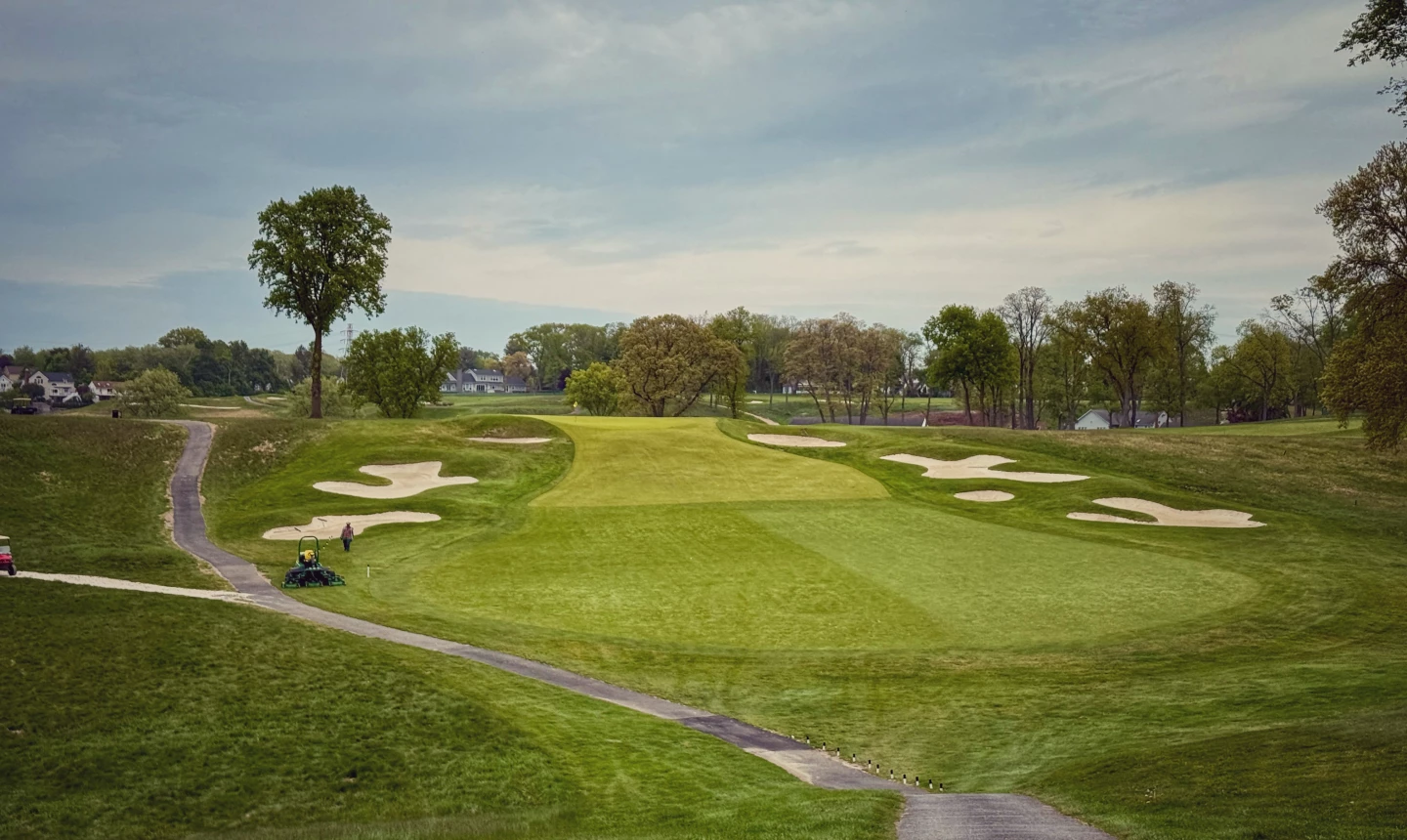
ROSLYN HARBOR, N.Y. - Epic. Extreme. Awe-inspiring.
In a golf context, these words are typically reserved for far-flung courses on rugged seaside or isolated inland pieces of ground. Think Bandon or Sand Hills.
Suburban parkland courses don't usually have the topography to merit those lofty adjectives. But Engineers Country Club does. This 109-year-old layout is one of the wildest rides in inland American golf, an overlooked gem of the Golden Age of course architecture with a largely forgotten history.
Opened in 1917, Engineers is the most famous golf course laid out by one of Golden Age architecture's lesser-known practitioners, Herbert Strong. Hailing from Kent, England, Strong was a solid amateur golfer who competed in three Open Championships, though he missed the cut in each. He emigrated to the U.S. in 1905, establishing himself as a club pro in the greater New York City area. His first foray into golf course design was at Inwood Golf Club, which he redesigned in the early 1910s while serving as its head pro. Strong would work on several golf courses in the metro-New York area, venturing to build and renovate courses as far north as Quebec, as far west as Ohio and as far south as Cuba. He was particularly active in Florida, where he passed away at the age of 64 in 1944.
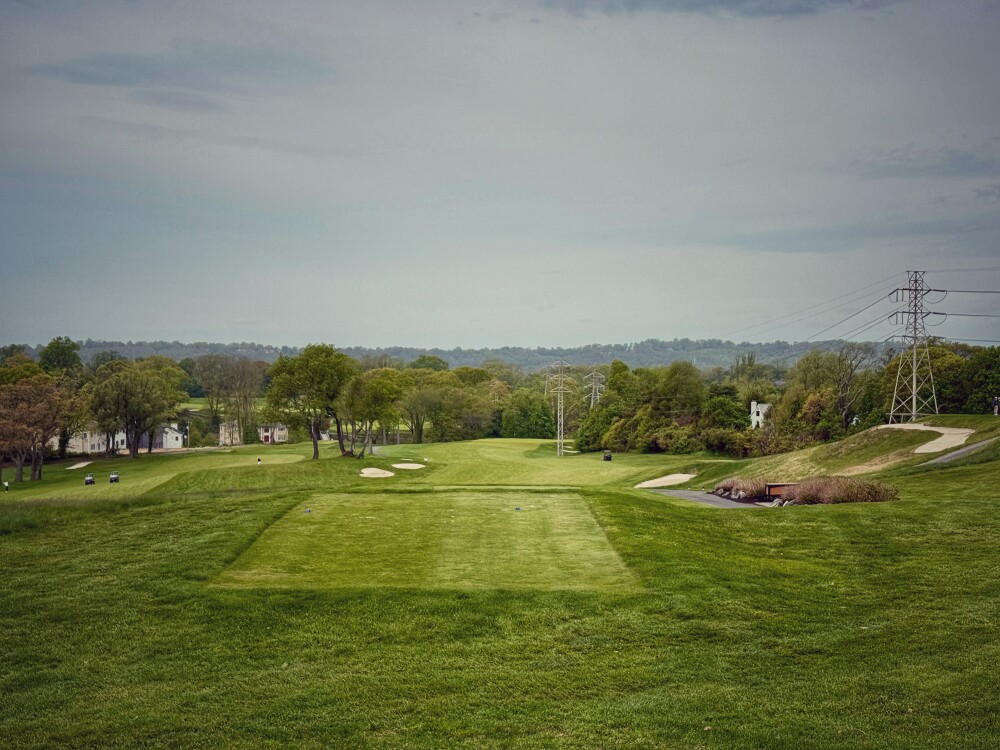
Engineers endures as the fullest expression of Strong's style thanks to one of the most exciting pieces of suburban parkland imaginable, producing some of the most dramatic fairway contours in American golf. Abrupt heaves and ridges make for several blind and semi-blind tee shots and approaches, with several greens only revealing themselves if a golfer finds the correct side of a particular fairway. On the par-4 5th hole, the green sits barely in view from the tee box but completely disappears once one reaches the fairway. Only a perfectly placed drive leaves an unobstructed look over a hill to the sunken putting surface. A bridge soars over a local road to link the course's two tracts - the first and final three holes; holes 2 through 15 - together. Chasms and ravines protect other fairways and greens.
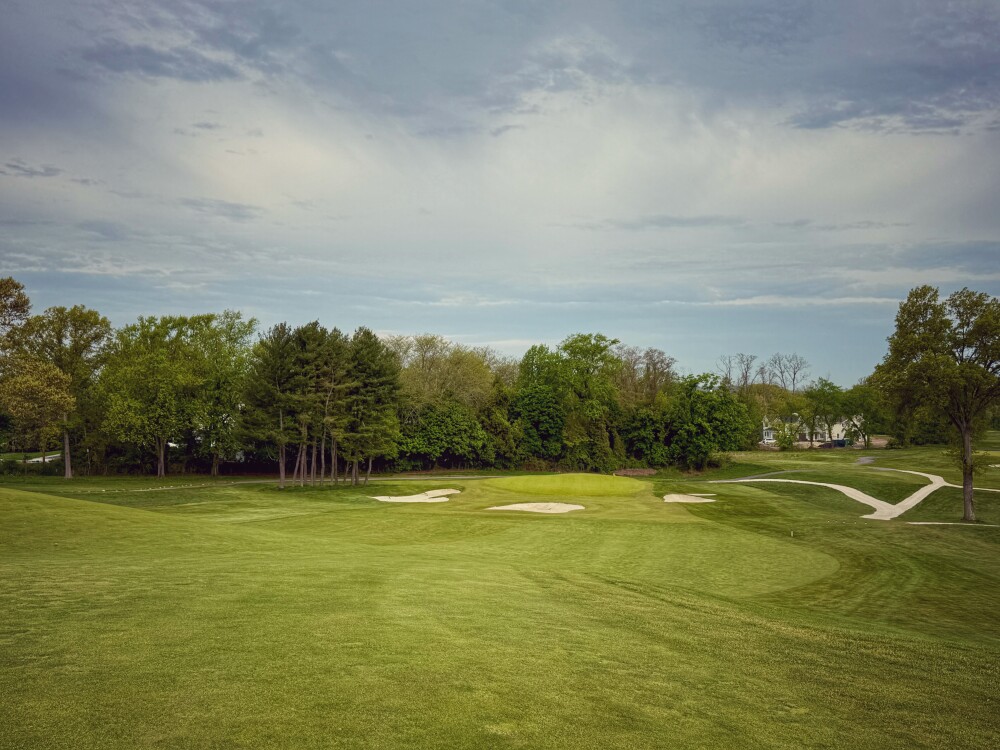
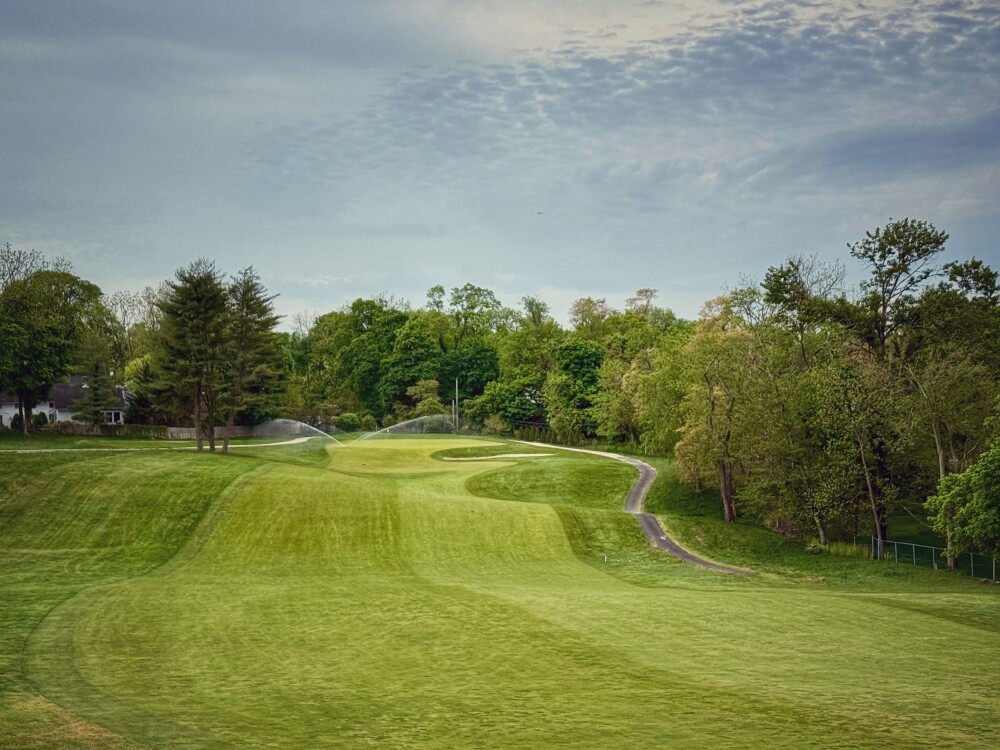
Oh, those greens! Engineers has one of the sets of 18 putting surfaces in the game. New York sports legend Walt Clyde Frazier might call them "eclectic and electric." It bashes players across the face from the get-go: the shortish par-4 first looks innocuous enough until the golfer reaches the 54-yard deep and notes its front-to-back tilt as well as two large ice-cream-scoop depressions in the right half. Any hole location along the left side of the green is nightmarish for anyone needing to putt up a four-foot slope from below. It would be an astonishing green at any point in a round, let alone the first.
Engineers' greens mix tilts, slope types, sizes and styles constantly in a way that never manages to feel haphazard. The enormous first green is just as much at home on the course as that of the famous 120-yard par-3 14th, dubbed the "2 or 20 Hole" after Bobby Jones and Gene Sarazen both struggled to find its tiny 2,000-square-foot green perched on a thumb of land above bunkers and deep gullies, putting up double-digit scores in an early match. Engineers' 14th puts Royal Troon's famous "Postage Stamp" par-3 8th to shame for brutality. Into a left-to-right cross-breeze I hit what I thought was a decently safe short iron, only to find it had one-hopped into a plugged lie in a bunker four feet below the surface of the green, which was sloping straight away from me. I didn't make a 2 or, thankfully, a 20 - I was lucky to escape with a double-bogey 5.


Engineers remains a stiff test more than a century after its founding. Some 21st-century updates by Gil Hanse and Tripp Davis have moderates some of the slopes of the greens for swift modern speeds, but they remain fearsome, especially from above the hole. Director of Golf Chris Carter related a story of 1998 Masters champion Mark O'Meara coming to play the course and coming away shocked at how much the greens at Engineers reminded him of those at Augusta National.
The overall wildness of Engineers lends it perfectly to match play, as suggested by its largely forgotten championship history. Just two years after it opened, in 1919, it hosted the second-ever PGA Championship (the PGA was a match-play event until 1958). There, Englishman Jim Barnes won the second of his four major championships, defeating Scotland's Fred McLeod by a score of 6&5. The following year, Engineers hosted the U.S. Amateur, where legendary am Charles "Chick" Evans won his second title, drubbing fellow legend Francis Ouimet in the final, 7&6.
Like many golf courses and clubs, Engineers endured a series of ups and downs over the decades before finding its footing in recent years. The course's land was sold in 2017 and was targeted for potential development, but with its membership currently full - it is part of the vast Invited Clubs network - any material changes to the course do not appear imminent. That's a good thing - seeing a golf course like Engineers Country Club turned into homes would be a devastating loss for golf architecture and history in metro New York and beyond. It is a special golf course that deserves more recognition.
ENGINEERS COUNTRY CLUB
— Tim Gavrich (@TimGavrich) May 6, 2026
Roslyn Harbor, N.Y.
Herbert Strong, 1917
Private
Course #709
The feared ‘2 Or 20’ mini-monster par 3 is as advertised, but its fame almost obscures an epic classic course with incredible fairway movement & one of the greatest sets of greens anywhere. Wow! pic.twitter.com/oP48u8S6nU


Comments (0)