


 Back
Back






Aaron Rai broke a 107-year PGA Championship drought for his home country of England, and he did it with impressive precision, more than domineering power. In addition to being one of the humblest and friendliest players at the upper levels of professional golf, Rai has the reputation as being as meticulous in his preparation and as hard a worker as any of his peers have ever seen.
That relentlessness paid off at Aronimink Golf Club on a Sunday where firm, tilted fairways frustrated most of the top golfers in the world, who simply could not control their ball as well on approach into firm, undulating greens from the thick, unpredictable rough.
Time and again, Rai's superior driving accuracy left him clean looks at the greens, and he rode some timely holed putts - including an incredible 68-foot exclamation-point birdie on the long par-3 17th - to his first major championship victory.
Rai is a lifer in golf, having started to play seriously at the age of four years old. His fastidiousness comes from his parents, who guided his development throughout his childhood by instilling in him the need to practice and play with a purpose - something every golfer who is serious about improving their own game needs.
In his post-tournament press conference, Rai revealed a development strategy that guided him from ages 7 to 12. "I used to play off a customized course length, which gradually got longer and longer every year from 7 to 12," he said, noting that it wasn't until 12 years old that he began to play the shortest official tee markers at his home course.
The goal was to get Rai used to shooting scores around par before he could graduate to slightly longer holes. This placed most of the emphasis on short game and putting, which any astute golfer knows is the foundation of solid, consistent play.
Why any ambitious golfer should try to play 'Rai style' in order to shoot lower scores
The way Rai honed his game as a youngster is by no means limited to kids golf. In fact, any developing golfer should focus on learning to score first and foremost, while letting their long game evolve over time. Even if that means forgoing formal tee boxes and starting closer to the green on each hole, the downstream rewards will be easier to reap. Too many beginning golfers - adults and kids alike - begin their journeys in the game by whaling away at drives, often feeling frustrated when one in 20 shots flies far and straight. Chipping and putting is a far more attainable skill, and it is far more likely to produce the sort of early positive feedback that turns curious golfers into avid ones.
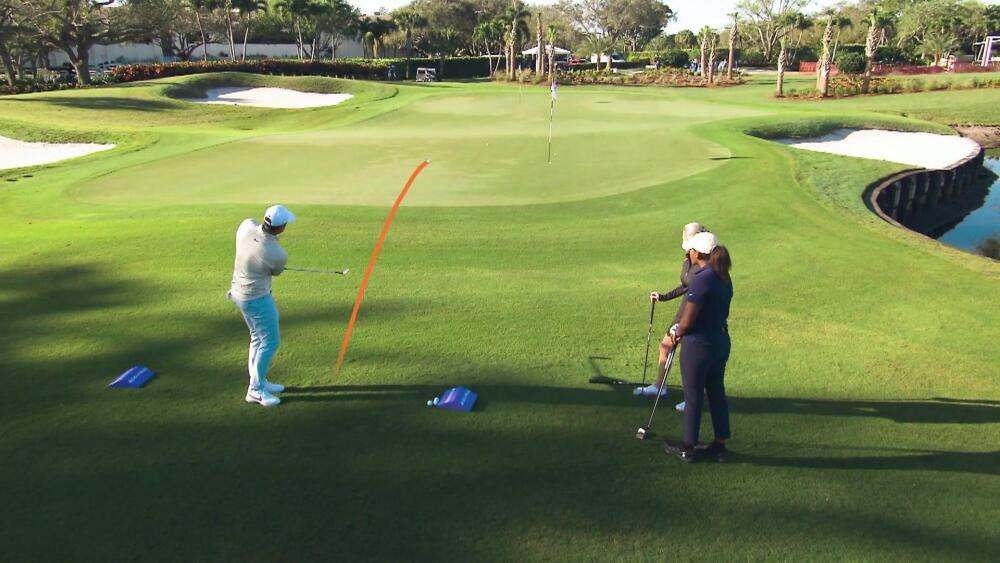
Rai's disciplined approach was essentially a DIY version of a golfer-development system called Operation 36, which creates formal training levels where participating players progress to gradually longer hole lengths by shooting a nine-hole score of 36 or better first from 25 yards out, then 50, then 100, 150, and 200-yard holes before "graduating" to the formal tee boxes at their home course in the way that Rai did. Again, the emphasis here is on learning to hole out efficiently. Once a golfer has a good grasp of short-game skills, he or she can deal with errant long shots far more easily than a golfer who may have hit some decent longer shots and is totally lost on and around the greens.
Operation 36 is an engaging training tool for junior golfers and beginning adults. GolfPass has an entire series that delves into the system, featuring Rory McIlroy and hosted by Lauren Thompson. You should watch it, or send it to your favorite beginning golfer.
 Play
Play





Comments (0)