


 Back
Back





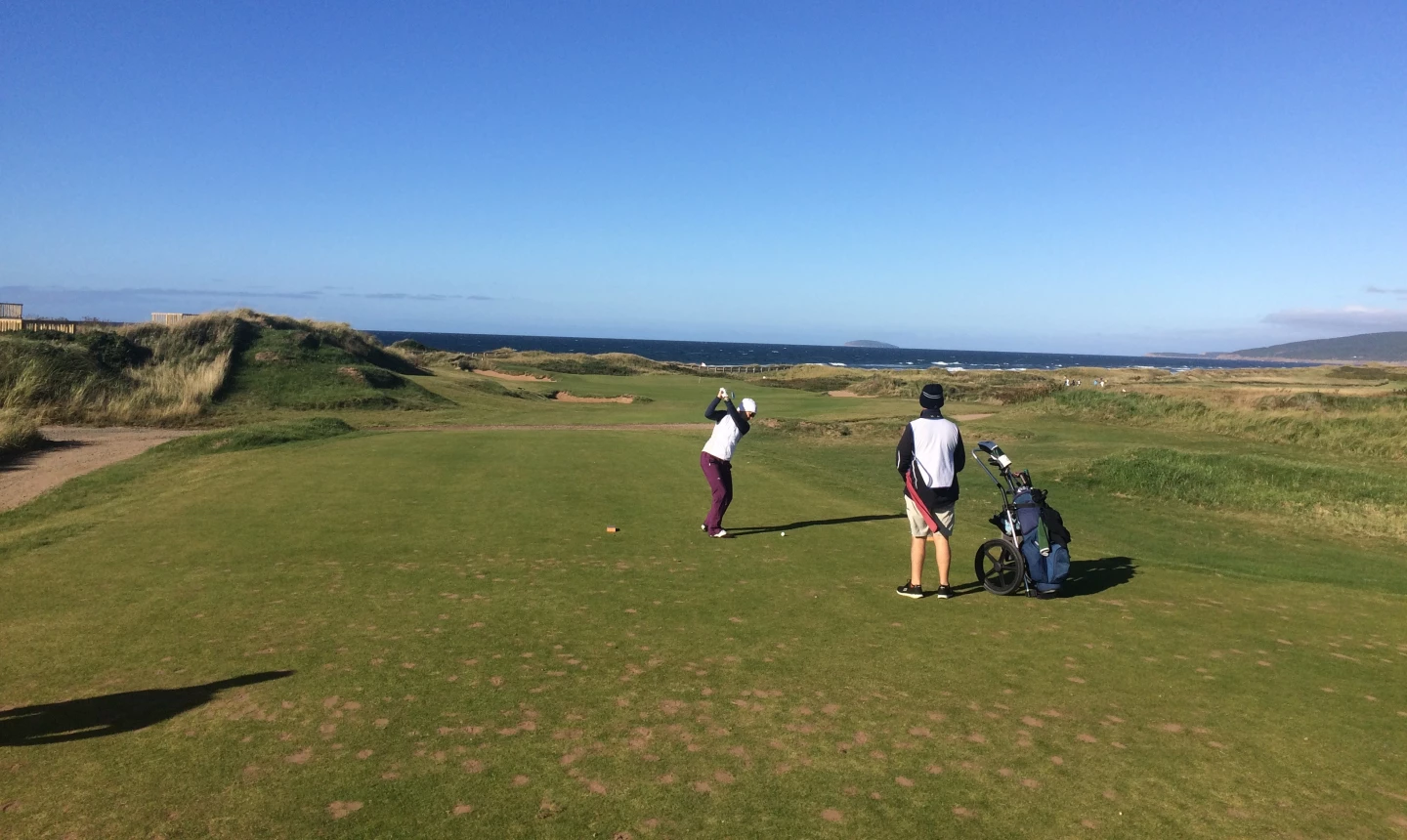

It’s a matter of rampant speculation on the PGA Tour right now if nine-time tournament winner Matt Kuchar stiffed his local caddie at the 2018 Mayakoba Golf Classic in Mexico. When you’ve won $1.29 million and hand your looper a check for $3,000 – as per an unconfirmed rumor – that’s a serious breach of golf etiquette.
With caddie pay on the PGA Tour one of the best-kept secrets in golf, we’ll likely never know for sure about this incident. Here is a fairly widely agreed-upon ballpark estimate of the standard pay structure on Tour for a regular caddie (who covers his or her own travel expenses): about $2,000-$2,500 per week plus 5 percent of winnings, 7 percent for a top-10 finish, 10 percent for a win. It’s a fair discussion whether a local pick-up caddie on Tour merits pay on that scale or something more modest.
But the conversation around Kuchar raises a relevant issue for everyday golfers: How much is a good caddie worth and how much should one tip a looper? There’s also the question of what to do if the caddie proves to be a loser.
I’ve looped at every level, including private clubs as a teenager, on the PGA Tour in my 20s and 30s (on and off) and even in the occasional exhibition opener when I toted for the course designer. I’ve also taken more than my share of caddies at resorts and private clubs, as I generally believe in supporting caddies. At the same time, I occasionally question whether a caddie is worth upwards of $100, which is what the rate ends up when you’re at one of those upscale resorts. And over on Long Island, the tariff can run to $125 per bag at an elite private club.
I've got a few hints for golfers taking caddies. First, ask ahead of time what the going rate is so you get an idea what’s reasonable. That means both base rate and tip. At private clubs it might be $70 plus an average tip of $30. At some resorts you prepay a base caddie fee and then a tip is at your discretion, but is usually in the $40 to $50 range. If that seems stiff it’s because there are many resorts that contract out their caddies to a professional firm that gets upwards of 50 percent of the base fee. If that seems exorbitant, remember that given the complexity of tax and licensing laws in some states, that firm is also taking on the responsibility of training, liability, payroll tax and worker’s compensation. It helps to ask beforehand.
It also helps to have an opening conversation with the caddie about what he or she can do – yardages and ball-spotting are standard; reading greens helpful, though the quality of that skill can vary a lot. And then there’s the matter of the conversation flow between the two of you. I’m generally not interested in my caddie’s life story, or in an account of the great shots played on the course. Some players love that stuff. It’s up to the caddie to figure out the appropriate narrative. But I know I soured on my 30-something looper at a famous resort when, as we walked off the second tee, he volunteered that he had retired from business with an $800,000 nest egg and was just looping for the casual income.


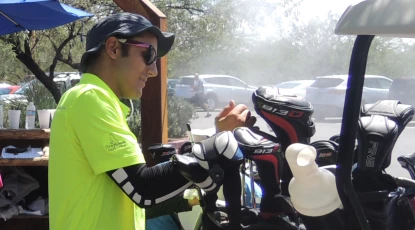

My favorite caddie is a youngster, preferably a wide-eyed high schooler who wants to learn the game and who has found a way to enjoy fresh air while earning some money. At a lot of clubs where the caddie crew is locally organized among area youth you will find caddie rates in the $35-$50 range, plus tip.
All I really want from a caddie is someone who will help, be there, and not get in the way. In short, someone I don’t have to worry about and can rely on without having to double-check. In fact the core competency of an effective caddie is not simple; it includes everything from keeping up, keeping a watch, being dutiful about divots and raking bunkers and not over-advising. Everyone is different about yardages and shot-making. I prefer yardages to the middle of the green and don’t need to be pin-seeking. I also haven’t hit a fade in 35 years, so it shouldn't take a caddie more than two holes to figure that out.
It also helps to offer simple reads on putts. It doesn't take a paragraph to indicate the line and speed of a putt. The greatest green reader I ever had was at Olympic Club in San Francisco, and all he would do was point to (without touching!) the starting point and suggest the speed by saying “85 percent” (for a fast putt) or 110 percent percent for a slow putt.

Caddies lose points with me if they try to take over and become the show. Or if they start offering swing advice without first asking if it’s okay. The main criterion to grade a caddie’s performance on is whether you felt comfortable with them, whether they helped you and whether they made you feel more rather than less secure over a shot.
In those rare instances when I’ve had a disastrous caddie I will register a complaint with the caddie master or the pro shop. But generally a tip is the way you show your regard for the job they did, though I’m also aware that if you give a relatively modest tip – say $15 on a loop – any message you are trying to convey will get lost. They’ll just dismiss you as a cheapskate.
If your intent is to save money, don’t take a caddie at all. Be prepared to spend a little, even if you think it’s a lot. A good caddie can save you a few shots a round, especially on a course you don’t know. If they have, then an additional $10 or $20 above the normal gratuity seems a reasonable way to say thank you. That’s especially the case with young caddies, whom you want to come back and take up the game.








Comments (47)
So Brad, I’m curious to know how the round actually went with the semi-retired caddie in his 30’s.
I get that it’s not useful information for him to pass along on the first hole, but that in itself doesn’t preclude him from being a solid looper.
The best caddie I ever had was at Bay Hill
So Brad, I’m curious to know how the round actually went with the semi-retired caddie in his 30’s.
I get that it’s not useful information for him to pass along on the first hole, but that in itself doesn’t preclude him from being a solid looper.
The best caddie I ever had was at Bay Hill
I am very disappointed to hear about Matt Kuchar and the rumour of him low-balling his caddie. I hope that it is a false one, but the odds of the story being told here on this site makes me feel that it is probably true. As a total amateur, I will never have the problem of needing a caddie , nor ever winning a money tournament - but I do believe in people being treated with respect and paid properly for the work they do. I hope that the PGA addresses this issue of cheap golfers - otherwise it undermines their profession and the game.
Did you ever think, there are people with regular jobs that play golf? I’m a firefighter, make decent money but definitely can’t afford to pay someone $100 to carry my bag plus a greens fee of $100+! I know I can’t play every course but to hear you guys talk about being cheap etc is absurd. Yes there are people that are cheap, but can’t we play some of these courses, carry our own bag, and not have to tip out $100? It’s getting absurd. Have to tip the guy loading my bag, cleaning my clubs, etc. not everyone that plays this great game is rich!
I played The New Course at St. Andrews one year. The group in front had 4 laddies. That’s 8 people one one hole. To me that’s a cluster. I enjoy the a more solitude game.
I enjoyed your article very much. I've been playing golf over 60 years from the golf pastures to the deluxe country clubs and your information was right on. But, I was shocked when you opened the article about a "rumor" that Kuchar stiffed his caddy. To me that is unforgivable that you would bring down such a good name over a rumor. And, even if it was true, does anybody know the whole story or circumstances. Either way, please leave the rumors to politics. I believe golf still is a gentleman's game.
I played 7 rounds in Scotland last year with a group of 4. They used caddies all the time, I alternated 3 times with a caddie and 4 without. I used my GolfLogix app on all. My best round was at Castle Stuart without a caddie (78 on a windy day). I had never used a caddie before. My impression was that their very first priority was speed of play and not helpful performance - and we are a foursome that currently walks Saturday mornings under 4 hrs, sometimes under 3.5. I played the Old Course without a caddie and Jubilee with and there was no difference. I over tipped on all, but was only happy with my high school aged caddie at Tain - not for golf quality, but for enjoyable attitude.
Also understand if you are in a foursome and are in a cart. Do NOT be asking the caddy any questions if you are not going to tip . And the tip should be $20.00 not $5.00. you can afford it so don't he right thing.
My god... ask what is customary. Then go above or below based on your experience. Communicate what you want from your caddie - they are humans not mind readers. I am sure you all have amazing relationships with your spouses. :). If they do something you don’t like - tell them they will learn that as a data point.
I look at Caddies same as I do a waitress in an expensive restaurant.
I chose their world, pay the rate!
You choose to play at expensive courses same as you choose expensive restaurants.
You should Tip according to their rates not your feelings.
Public courses offer the same results as eating at McDonald’s,
Cheap with little advice, It is your choice!!