


 Back
Back





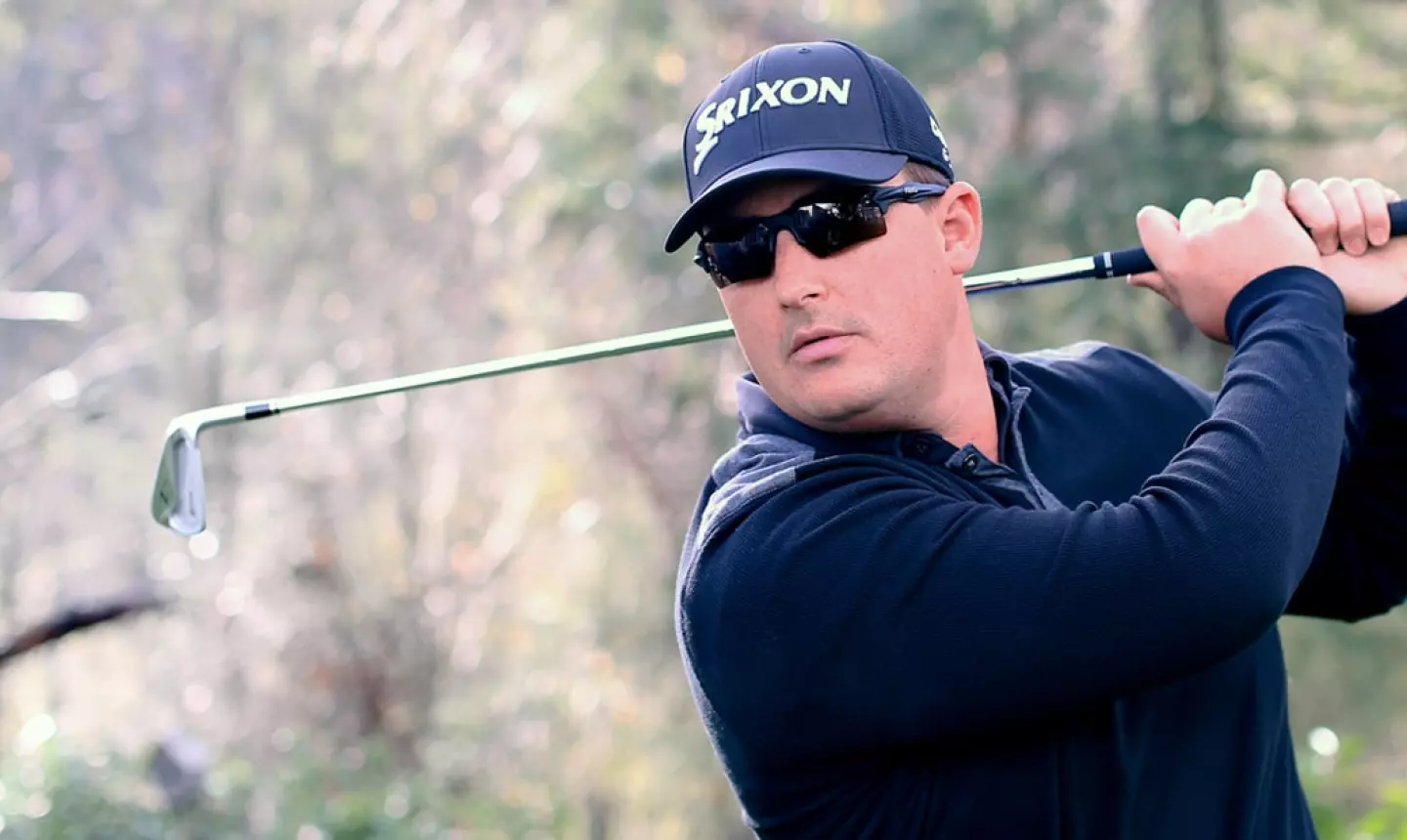

Unless you wear contacts, the majority of the cool sunglasses out there for spectacled golfers are off limits. For folks who don't wear prescription lenses, almost nothing is out of bounds, from the $20 Wal-Mart pair that if you lose, won't get you too upset about, to the designer brands that costs hundreds of dollars, the options are limitless.
But for those of us who can't play golf without corrective lenses (not counting contacts), our options are limited. The good news, though, is that they're a lot less limited than they used to be. Yes, you can find cool-looking and effective prescription sunglasses that work well for golf. And there are a style and brand to fit every golfer.
Here is a quick guide on how to choose a pair.
Can you get prescription wraparounds?
This is a bit of a loaded question because it really depends on how you define wraparounds. But the short answer is yes, although they usually don't wrap around as much their non-prescription counterparts. The difficulty lies in the algorithms of the curvature of the lens vs. the prescription itself. Several companies offer wraparound style lenses. I got a pair of Nike Golf X2s from SportRX, which specializes in prescription lenses for sports. The Nike X2s have large wraparound lenses and work quite well. With that said, they do taking some getting use to versus your regular glasses in terms of depth perception. In golf, I've found that to be the case with any prescription lens that's shaped differently than what I normally wear.
How much do prescription lenses cost?
As you might expect, prescription sunglasses designed specifically for golf can be hundreds of dollars, but for the right pair they are certainly worth it (The Nike Golf X2s I got retail for around $400, which isn’t out of line for a good pair of prescription lenses.) But they can be as low as $125 from one brand that I'm particularly fond of – REKS.

REKS Sling Blade
REKS does both regular and prescription and can do prescription lenses in several styles, including a wraparound for as little as $125 for single vision. And here's the best part: they're virtually unbreakable. That's a big plus in my book because I have ruined at least five pairs over the last 20 years in various ways. The frames are made with a special polymer that easily bends and snaps back into the position. And the freeform digital lenses feature computer controlled lens surfacing equipment that's more precise than traditional lens manufacturing techniques providing wider field of vision and increased clarity in every pair of its prescription sunglasses, the company says.
REKS orders come with anti-reflective coating, choice of tint, a one-year warranty on scratches, a two-year warranty on the frame and a 30-day money-back guarantee.
Can you (and should you) get progressives?
For the over-50 crowd this a great question. Progressives, if you're not familiar with them, are basically no-line bi-focals or tri-focals. If you're like me, you can't read your scorecard with regular prescription glasses and need the progressives (or a separate pair of cheaters) to do that. When I first got progressives, I had a hard time getting used to them. But after three months or so, I don't even notice the difference anymore; everything just looks clear to me. Somehow your brain trains your eyes on how to look through the lenses depending on what you’re trying to do (you just have to trust me on this one).
Some manufacturers won't do progressives in golf sunglasses, but REKS will. Again, REKS is economical, about $225 for a pair of progressives. It's really a personal preference, but it sure is nice to be able to read the scorecard at the end of the round when you're tallying up your winnings or losses.
Video: How to protect your vision on the golf course
Tints and polarization
This is a matter of personal preference mostly, but there are arguments that certain tints make green reading easier. I've used amber tints before, and while I wasn't able to read the greens any better, they certainly work better in cloudy conditions than darker tints. My Nike X2s were done in a special rose tint, which allows just that.

Nike X2 Pro
Polarized lenses are also an important consideration because they filter out UV rays from the sun. But they also contain a special filter that blocks light reflected from surfaces, such as a flat road or smooth water that can create an annoying and glaring light.
Many argue that polarized lenses shouldn't be used in golf. For example, the folks at company called Electric Sunglasses say that polarized lenses reduce the contrast, which can alter green reading and depth perception. Instead, Electric features Melanin infused lenses that block harmful UV & HEV blue light to relax the eyes, providing vivid, crisp, clear, haze free vision. Electric also recommends rose as the best tint for golf.
What about Transition lenses?
This has been my go-to for the past few years, a pair of Nike frames with Transition lenses. One problem with Transitions has always been that they don't darken in cars when you're driving because the UV rays are filtered out from your windows and the lenses aren't activated. But the new ones do darken, just not as much. That best thing about Transition lenses on the golf course is that when the sun goes away, the lenses lighten accordingly. I have found, however, that the new Transition lenses tend to be a little too dark in daytime cloudy or rainy conditions.
A pair of good progressive Transition lenses can easily run $500. But like any other prescription lenses, a vision plan can certainly offset the costs as can a Flexible Spending Account, which is about the only advantage the near- and far-sighted have over those with perfect vision in the sunglasses department.




Comments (20)
Want to order Golf prescription sunglasses. In the order process there is no place to make a comment. My current prescription is for trifocals, I want my Golf sunglasses to only have distance and reading, no intermediate adjustment. Is that possible?
I just got prescription sunglasses and I see great, except my depth perception must be off because I suddenly began topping a lot of shots, especially with irons. I don't know if I should simply practice with the glasses on or discard them. I never wore glasses for distance before these and I assume the ball now looks closer that it really is.
Want to order Golf prescription sunglasses. In the order process there is no place to make a comment. My current prescription is for trifocals, I want my Golf sunglasses to only have distance and reading, no intermediate adjustment. Is that possible?
I just got prescription sunglasses and I see great, except my depth perception must be off because I suddenly began topping a lot of shots, especially with irons. I don't know if I should simply practice with the glasses on or discard them. I never wore glasses for distance before these and I assume the ball now looks closer that it really is.
Is there a solution to the depth perception problem while wearing prescriptions when golfing?
wow! This is such great information, especially on the progressives part. I have some info on prescription sunglasses for golf on my blog too and you can have a peak... http://golfpitches.com/
Thanks for the information Mike. I live in the Houston area. Do you know any optometrists or ophthalmologists who are best for golf? I have prescription distant glasses but I can’t focus at 5 feet if you know what I mean. Thanks for you gelp
Where can someone purchase these Reks sunglasses
For my 'activities' sunglasses I went progressives, but was treated to a lowered midpoint. This increases the area of your primary magnification but still allows reading - the best of both worlds. They are fairly new, but so far, so good.
I'VE BEEN GOLFING AS LONG AS I'VE BEEN AN EYE DOCTOR...SINCE 1975. I'VE HAD ALL TYPES OF BIFOCAL DESIGNS SINCE I HIT MY 40'S. NONE LET YOU SEE THE BALL CLEARLY UNLESS YOU HOLD YOURN CHIN DOWN AND WE KNOW THAT'S BAD FOR A FULL BACK SWING. ON MY PERSONAL GOLF GLASSES I PUT THE BIFOCAL ON THE TOP RATHER THAN THE BOTTOM. THE BALL IS CLEAR AND I CAN READ MY SCORE CARD AND SEE MY GPS LOOKING THROUGH THE TOP AREA. MANY PRO TEACHERS-ON DVD'S AND YOU-TUBE VIDEOS- ADVISE AGAINST BIFOCALS. ASK YOUR EYE DOCTOR.
I have a pair of progressive sun glasses and it’s great for golfing. I tried line bifocal and single vision .Progressive was the ticket. I could tell you what kind but you might think I am trying to help A company.
I had cataracts and my lens replaced in both eyes.. I have just recently started playing golf again and I have no distance vision and virtually lose the ball after 50 yards. Will corrective sun glasses help?