


 Back
Back






Last week's column by Jason Deegan on the golf courses that pull on our heartstrings received loads of nostalgic comments from our readers. One of them was a special request inquiring about walking courses:
"Jason, how about an article on best walkable courses in U.S. and/or best executive or Par 3 muni courses? Right now with COVID-19 many courses are walking only...kind of refreshing for those of us that can still enjoy a good walk spoiled in comfort / without achy joints!"
I'll share a handful below. But while curating the list, my mind immediately raced to two golf courses in particular:
Lions Municipal Golf Course, my home course in Austin.
Cape Breton Highlands Links, a Canadian national parks course I've journeyed to play on three separate occasions.
On the surface there isn't a whole lot they have in common. Lions is a compact routing and about five miles start-to-finish. On a rare day when the course is empty, I can hoof it comfortably in under two and a half hours. Highlands Links, meanwhile, is a trek deep into a remote national park that is closer to 8 miles out and back. You don't rush a round here. It's a good reminder that some golf courses built before the golf cart were still pretty brawny treks, as described to me once by Graham Hudson, longtime general manager at Highlands Links.
"Golf was an all day affair," he said. "The golfers would take caddies and bring a picnic."
Most of the holes at Highlands Links are self-contained. Walking courses are sublime when you feel alone in the wilderness. But they can also be a joy when you feel like a part of the community the whole round. Nowhere is this more evident than at St. Andrews. But a lot of town courses around the world have a bit of this flavor as well (Niagara-on-the-Lake and Audubon Park, two short courses, come to mind immediately). Lions, just minutes from a bustling downtown metro, has a community golf feel on a 140-acre, trapezoid parcel. Many holes on the sub-6,000-yard layout play parallel to another. There are various converging points in the routing, such as the water coolers at the 5th and 7th tees, and on the back nine at the 16th tee. At a local course where every group seems to know one another, it's a fun and social feature.
The routing is also such that it's easy to bounce around and skip holes, which is particularly great during twilight. The 5th, 9th, 12th and 16th greens are a short walk to the clubhouse.
No-can-do at Highlands Links, which is an out-and-back routing with sparse evidence of human civilization. But bustling Lions and yawning Highlands Links absolutely share some elements that make their walks stand out.
Reveals are an essential element to a memorable walking round. Possibly the greatest "reveal" hole in golf is the trek up the hill of the 9th hole at Royal County Down which reveals the town and Mountains of Mourne. Or maybe it's the 8th at Pebble Beach or the 6th at Lahinch or the 15th at Cabot Cliffs.
Highlands Links' reveal comes early. After a modest opener, from the woodsy tee of the par-4 2nd hole, you see a sliver of a fairway that bends down to the right. As you enter the fairway, you turn the corner and see distant mountains, the ocean and beach. Suddenly you feel very small and at the edge of the continent, which you practically are. Reveals are nice in a golf cart but the anticipation that builds step-by-step is goosebumps-inducing.
Lions, to its credit, has a similar, Hill Country-style reveal on the 6th. Off the tee, you challenge a beautiful live oak on the right and then turn the corner to see the west Austin hills and my favorite green on the course, an optical illusion that always baffles new players to the course. I'm so fond of it that it's on my Twitter header.
Green-to-tee walks: Short green-to-tee distances are a perk of comfortable walking courses, but a routing can and should have an exception or two, especially if the walk is beautiful. I always look forward to the somewhat elongated walk at Lions from the 11th green to 12th tee. You pass by the signature 16th hole (the "Hogan" hole) and then stroll down the hill and under one of the finest live oaks on the course. A short par 5 eagle opportunity awaits at the end.
As for Highlands Links, the leafy trail beside the Clyburn River bank from the 12th to 13th is peaceful and solitary. A great walking course doesn't tire, it invigorates. To architect Stanley Thompson's credit, as rugged the course's terrain is, the walk doesn't beat you up.
Pretty much every old seaside links is a pleasant walking course thanks to one very important element: temperature. Golf can be enjoyed walking basically anywhere as long as it's not too hot or humid. Give me a party-sunny skies, a gentle breeze and temps in the 50 or 60s and I'll surely be smitten by the walk. But if it is hot, some well-placed trees for shade always come in handy. Both Lions and Highlands Links have no shortage. I've noticed that as I age, I spend less time on the course looking at my scorecard and more of it admiring trees.
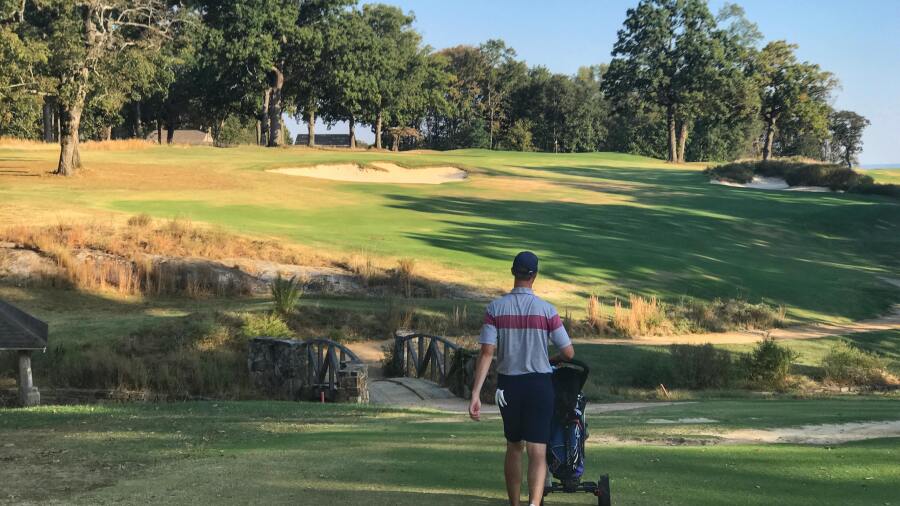
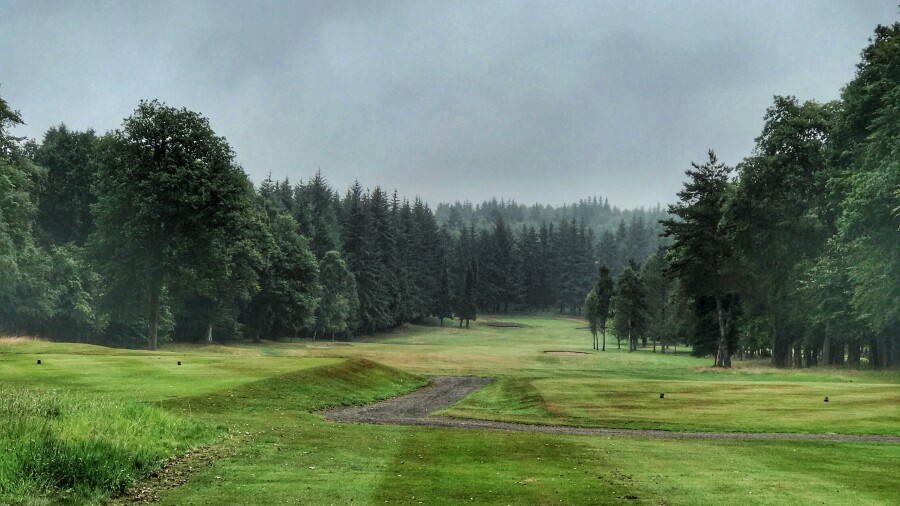
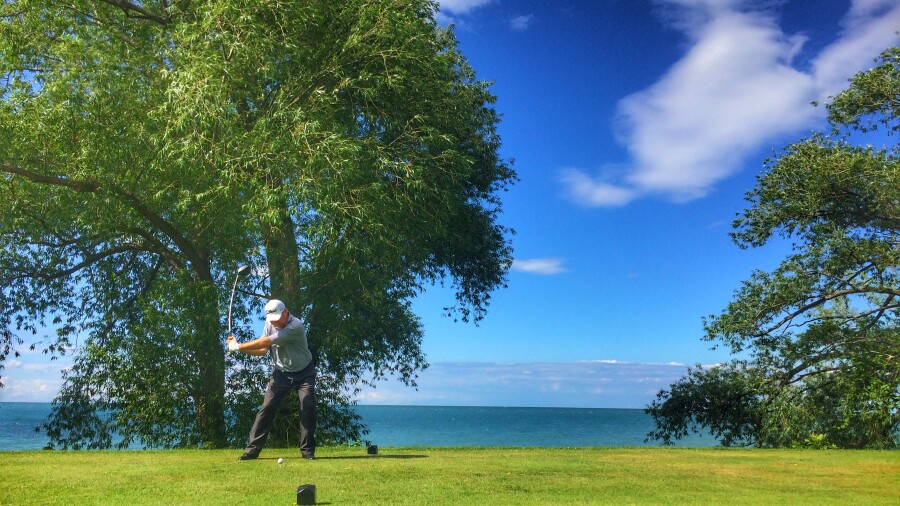
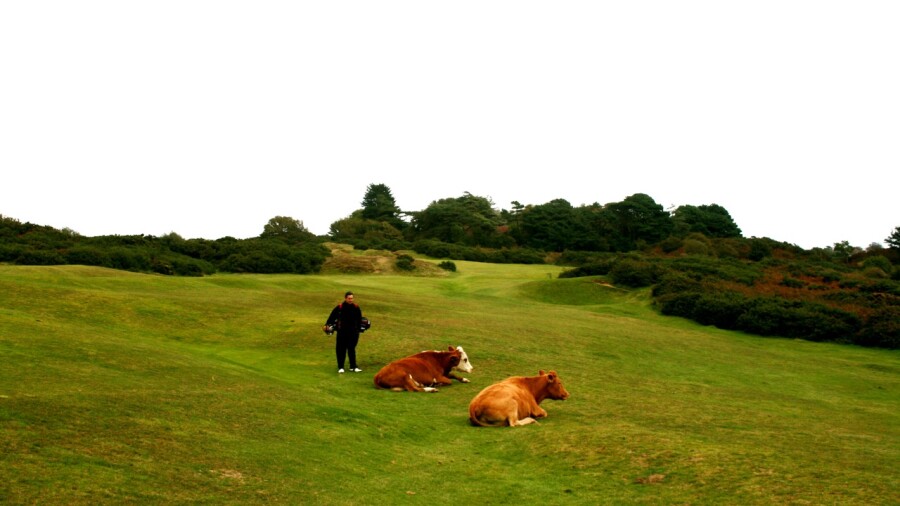
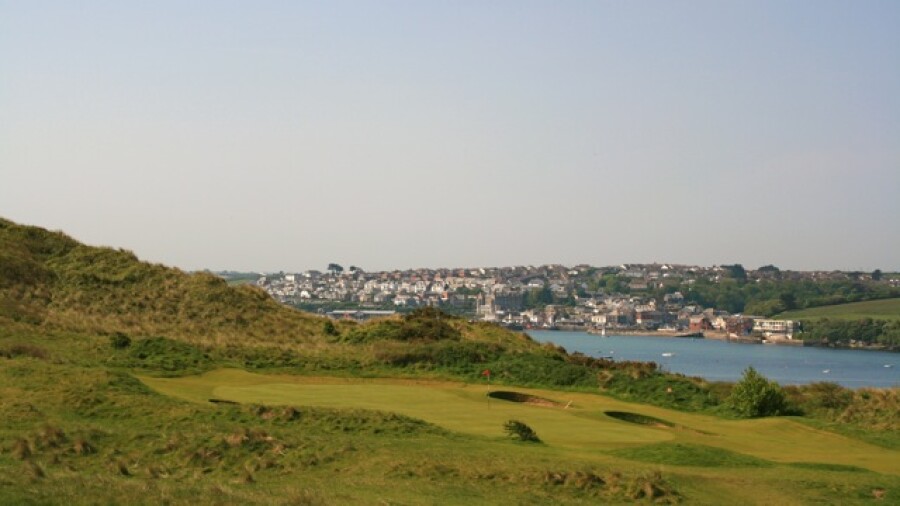
Without further ado, here are some favorite courses I've walked: It is by no means a definitive list - instead more of a roster of the first ones that came to mind when I first pondered the question. Some, Jerry, are short golf courses. I'd love to hear your favorites in the comments below.












Comments (19)
Brandon, thanks for the article and discussion. I prefer to play when and where walking is allowed, except when a mandatory cart invitation is too good to pass up. I was schlepping until age 60 when I relented to a push cart (timely Father's Day gift). Totally agree with you - green to tee proximity and reveals for sure make for an extra special hike!
A great resource is The Walking Golfer Society - https://thewalkinggolfer.com/
I lived in Austin a few years and Lions was my home course, and I hope SaveMuni survives - Jimmy Clay, Roy Kizer and Blue Bonnet Hill are very fun walks as well.
Living in Denver, we are good-walk spoiled with many choices - some of my favorites are Riverdale, Meadow Hills, Green Valley Ranch, Coal Creek, Indian Peaks, Raccoon Creek, and Fox Hollow.
Memorable public course golf walks for me are too many to include them all. Some that stand out in my brain: Montauk State Park NY; Duke University, NC; Caledonia, SC; The Bandit, New Braunfels, TX; Papago, AZ; Singing Hills, CA; OGA, Pumpkin Ridge, OR; Shuksan, WA; Bemidji Country Club and Chaska Town Course, MN; Brown Deer State Park, WI; Black Lake, MI; Glen Mills, PA; Neshanic Valley, NJ.
Being retired military, I also have a penchant for military courses, too many going extinct.
Nothing beats finishing up a good round, hiking it into the 19th hole, at twilight on a June evening!
Golf is always better walking. I will try and walk even on trips were cart is included, in Wisconsin two great courses to walk is whistling straights with great views of the lake. Sand Valley’s Mamonth Dunes is also a great walking course. Not really any great scenery, but just nice gentle rolling hills that hide holes from each other and super easy to walk. Always love to walk my home course Cedar Creek with great views of Mississippi valley.
Brandon, thanks for the article and discussion. I prefer to play when and where walking is allowed, except when a mandatory cart invitation is too good to pass up. I was schlepping until age 60 when I relented to a push cart (timely Father's Day gift). Totally agree with you - green to tee proximity and reveals for sure make for an extra special hike!
A great resource is The Walking Golfer Society - https://thewalkinggolfer.com/
I lived in Austin a few years and Lions was my home course, and I hope SaveMuni survives - Jimmy Clay, Roy Kizer and Blue Bonnet Hill are very fun walks as well.
Living in Denver, we are good-walk spoiled with many choices - some of my favorites are Riverdale, Meadow Hills, Green Valley Ranch, Coal Creek, Indian Peaks, Raccoon Creek, and Fox Hollow.
Memorable public course golf walks for me are too many to include them all. Some that stand out in my brain: Montauk State Park NY; Duke University, NC; Caledonia, SC; The Bandit, New Braunfels, TX; Papago, AZ; Singing Hills, CA; OGA, Pumpkin Ridge, OR; Shuksan, WA; Bemidji Country Club and Chaska Town Course, MN; Brown Deer State Park, WI; Black Lake, MI; Glen Mills, PA; Neshanic Valley, NJ.
Being retired military, I also have a penchant for military courses, too many going extinct.
Nothing beats finishing up a good round, hiking it into the 19th hole, at twilight on a June evening!
Golf is always better walking. I will try and walk even on trips were cart is included, in Wisconsin two great courses to walk is whistling straights with great views of the lake. Sand Valley’s Mamonth Dunes is also a great walking course. Not really any great scenery, but just nice gentle rolling hills that hide holes from each other and super easy to walk. Always love to walk my home course Cedar Creek with great views of Mississippi valley.
Your colleague Tim may agree that The Fenwick Golf Course (Old Saybrook, CT) is a great nine hole walk. Not many hills to climb (if any?) and you're treated to great waterfront scenery as well as a jaunt through a fantastic, classic New England neighborhood. Instagram has a few photos (link below) and this reminds me that I owe Golf Advisor a review of this place!
https://www.instagram.com/explore/locations/252820171/fenwick-golf-course/
If you get a chance to get to South Africa head to Gary Player CC in Sun City as it runs along Pilansberg National Park and you never know what you are going to see. Its a good walk and the course will challenge you.
One of the most enjoyable rounds I ever played was on a little known course near Vancouver, BC called Sandpiper (yes, another Sandpiper), in Harrison Mills. I played it on the last great sunny warm day in mid-October, finishing in shirt-sleeves as the sun went down. A shorter course, but mostly through the woods with some finishing holes along the river. What really made it special that day were the small streams that run throughout the course were filled with salmon swimming up to spawn, some in only inches of water. As a result, it hosted probably 100's of eagles in the area, feasting on the easy catches. Add a few deer to the mix and can it get any better? Yes. When teeing off on one hole, an eagle was perched on a branch about 40 feet above my head. Just as I was about to swing, it swooped down right in front of me, its 7 foot wing span whooshing up the fairway between the trees.
Book a round there (and a stay at the accompanying Rowena Inn and cabins) for an early to mid-October date. You won't regret it.
My favourite walk, up to the green, was and hopefully can do again, is the 18th at Radium Hot Springs Resort, in Radiaum Hot Springs British Columbia CANADA. The green reminds me of 18, at Augusta with the Sunday backstop, just behind the pin. Rarely, was the pin anywhere else, when I played. I loved admiring my approach, as it hit, just beyond the pin and drew back to the pin. My shots never went into the hole, but just the excitement of the action on the ball, doing exactly what I had hoped for, was priceless,
Highland is a great course. I haven’t played it in years and I know it occasionally has maintenance issues. It is a LONG walk and the one you describe at the 12th hole is a good half mile from green to tee, but— you know, it is a quite lovely walk along the river. Scotland has many good 9 holers. My favourite is Tarland, in Aberdeenshire , an Old Tom Morris creation which is a nice walk with brutal successive holes at 4, especially 5 and 6. I also love Rosehearty which I played for the first time last year. Golf as it used to be. Clubhouse was closed, no trolleys, you paid in the pub across the road, wind was up, blind holes, etc, what fun all for £15.00. And Scarista! ——I could go on.
Thanks Brandon for the interesting article of walking golf courses. I would like to note that Otter Creek (Trent Jones Sr. 18 and Jones' son Reese did 9 more) in Columbus, Indiana, is one of my favorites for walking (has relatively close green to tee walks). It is a wonderful challenging layout. Although, after Cummins Engine donated the course to the city maintenance has been something to be desired, unfortunately.
I agree with Tim on Fort Myers Country Club. A classic Donald Ross course that opened in 1917. Much more fun to walk than ride. I also enjoy walking Maple Leaf Golf Course in Linwood, Michigan. A 1960’s vintage family-owned and operated course that offers 3 different 9-hole experiences. A beautiful walk during the fall colours. And the course I consider my home course, Burlington Springs Golf and Country Club in Burlington, Ontario, Canada. Another great family- owned course that is a great walk in all seasons
Sandpiper Golf Course in Goleta, CA is a good as it gets.