


 Back
Back





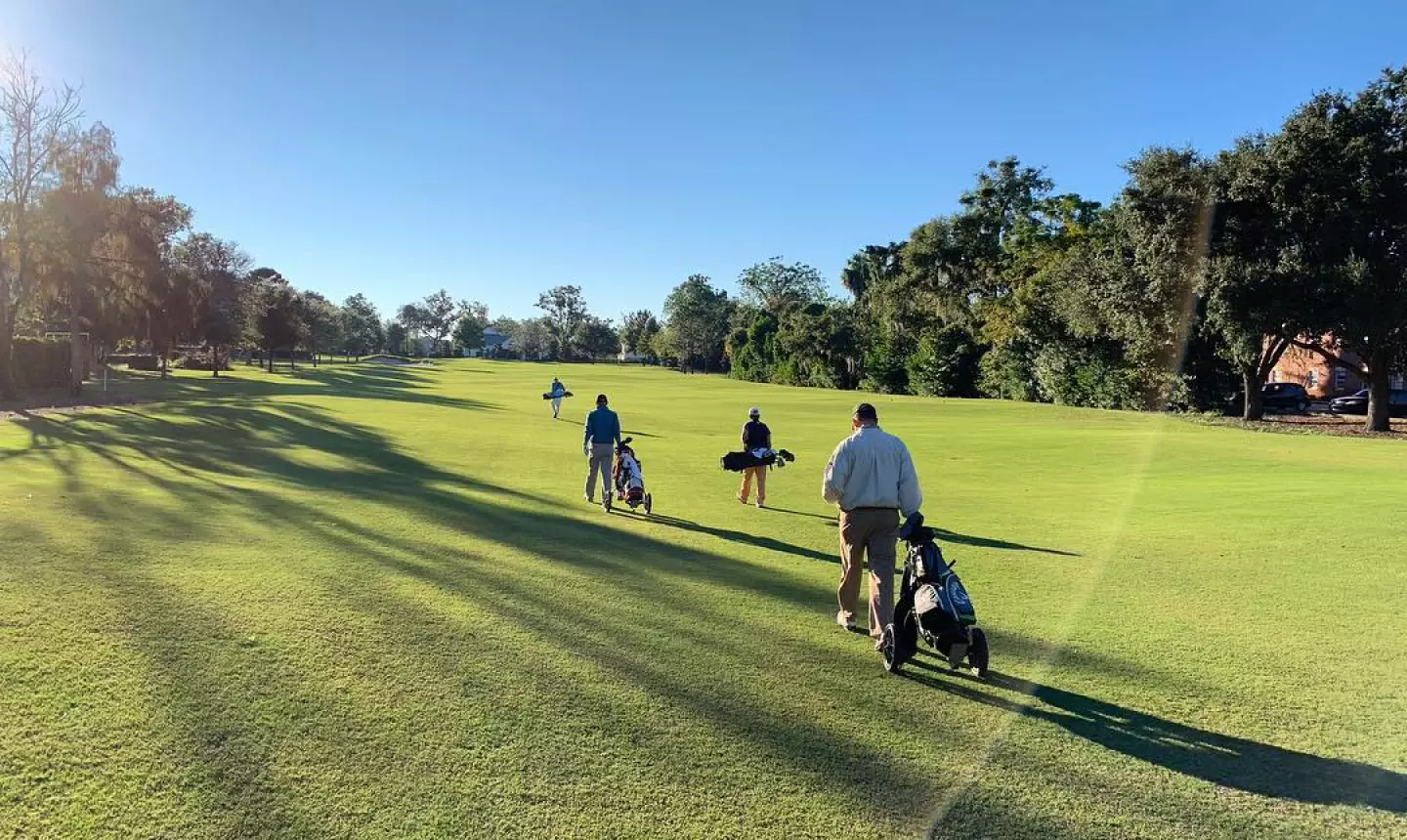
This week continues to be good for the golf industry.
Three days after Tiger Woods won his 15th major - and first in 11 years - at a Masters for the ages, the National Golf Foundation released its 2018 Golf Industry Report indicating that golf participation increased incrementally for the first time in 14 years. An estimated 24.2 million people played golf on a course in 2018, up from 23.8 million the previous year.
Even though participation remains well below the all-time high of 30-plus million golfers reported by the NGF in 2003, this is welcome news for a sport that many critics claim is dying. Golf is an $84 billion-dollar industry, according to the NGF.
"It sure was nice to see it on the upside versus on the downside," Joe Beditz, NGF's president and chief executive officer, said on a conference call.

This uptick went against the fact that rounds were down 4.8 percent in 2018 compared to 2017, a downturn blamed on the "third wettest" year ever in America, according to NGF.
A new category created this year called "golfer dedication" asked four questions to determine if players were "golf nuts" or "casual golfers." The data suggested that 7 million highly dedicated golfers play more than half (52 percent) of all rounds.
"Most of the people who would leave golf have already left golf," he said. "Even less-dedicated golfers are sticking around. We have reached stability at about 24 million (golfers)."
Most of the statistics released in the report were generally favorable with course closures being the outlier. A total of 198.5 18-hole equivalent courses in America closed in 2018, while 12.5 new 18-hole equivalent courses opened, a net reduction of 1.2 percent. More courses have closed than opened every year since 2006. Beditz said he expects 1 to 1.5 percent of U.S. courses to close every year over "the next few years".
"We had net growth every year since 1947 (prior to 2006)," he said. "That's almost 60 years of continuous growth. Ultimately, we reached saturation. We had to give back some of the supply."
A main point of contention within the industry remains what role entertainment facilities like Topgolf have in the game. Should the NGF really be counting people who go to Topgolf as "golfers"? The NGF has created a category called "off-course golf" to include them. The NGF points to double digit growth in "off-course golf" and the diversity of that clientele - more women and more minorities participate than in traditional golf - as good signs that some of these people can become golfers over time. When the NGF adds the number of on-course golfers (24.2 million) with off-course golfers (9.3 million, up from 8.3 million in 2017), it totals more than 33.5 million players, up from 30.1 million in 2014. Beditz emphasized the NGF's belief that Topgolf doesn't "cannibalize" rounds at actual courses.
"We haven’t lost the millennials to golf," he added.
The NGF remains bullish on golf's future for other reasons:
* Golf welcomed 2.6 million beginners in 2018, the same as the previous year, and a number that remains at or near an all-time measured high.

* Roughly 74 million people watched or read about golf, putting the game’s total reach at about 107 million — more than one-third of the U.S. population. This number is up 10 percent from 98 million in 2017, a meaningful jump probably spearheaded by the return of Woods to the top of the leaderboard. Wins by Woods at The Tour Championship last fall and the Masters tend to spike interest in TV ratings and social media buzz about the game.
* There were 2.5 million junior golfers last year, and another 2.2 million in that age group (6-17) who played exclusively off course. Accounting for about 10 percent of all on-course golfers, the junior ranks are more diverse than ever: 36 percent are girls compared to 15 percent in 2000, and almost one quarter are non-Caucasian while 6 percent were minority participants 20 years ago.
* Only one-third of baby-boomers have reached the traditional retirement age of 65, meaning that there's still growth opportunities to entice seniors to play once they retire and have more leisure time.
* When surveyed, 15 million people who don't play indicated they were "very interested" in golf and 33 million were "somewhat interested" in the game.
"We have a deep well of potential golfers," Beditz said. "We wonder if there is a significant effort made, how much growth could we achieve?"
That's a billion-dollar question with no easy answers.
Do you agree with the NGF's sunny outlook about golf's future? What needs to change for golf to grow? Let us know your thoughts in the comments below.









Comments (16)
Very interesting analysis of the condition of the game today. Great use of historical data. The question needs to be addressed: How does playing golf do against competing venues of entertainment? That's the scarry question with the younger generations....we'll have to wait and see.
Good on you for posting a photo of walking golfers to introduce this article. I and my buddies are fortunate to be able to walk our public course here in beautiful Western NC. It's my hope that more people in golf management see fit to include walkers. It's good for our health and good for the health of the game!
Very interesting analysis of the condition of the game today. Great use of historical data. The question needs to be addressed: How does playing golf do against competing venues of entertainment? That's the scarry question with the younger generations....we'll have to wait and see.
Good on you for posting a photo of walking golfers to introduce this article. I and my buddies are fortunate to be able to walk our public course here in beautiful Western NC. It's my hope that more people in golf management see fit to include walkers. It's good for our health and good for the health of the game!
The price point of pay to play higher end courses needs to come down. At $225-350 per round only corporate or the elite with be participating on a regular basis. Golf needs to be more accessible and affordable. Do we expect a young 17 year old from an urban area or the country to shell out $550 for a new driver?
In order to reach seniors a corps of ambassadors who are seniors needs to address them. And courses should have quality equipment available to use as well as transportation to and from the course.
Seniors have to see peers participating and the benefits of the activity.
Thanks for listening.
L
I see no mention here about the time it can take to play a round of golf. Many courses back in the day put as many golfers as they could on a course and created situations where five or six hour rounds became the norm. That's what drove golfers away and will again if too many people are enticed into playing again. I played today with my buddies(four of us) and were done in 3.5 hours. That's fun, not five and six hours! Non of us is spring chickens either, our youngest is 70 and the oldest is 81.
Tiger is back... popularity will grow again... he was the reason golf reached the ‘common’ folk
The bigger problem is affordability for the game. I'm in Vegas and the average round here is about $65.00 in high season and $45 in Summer. The food and beverage cost are off the charts. I have paid as much as $7.00 for 1 can of beer ??????? and $3.00 for a soft drink (this is why a growth in bags with cooler compartments built in) Understanding the course maintenance is indeed expensive to keep it well manicured but green fees must come down to make the game affordable especially for beginners and Jrs.
How does USA golf participation compare with other Countries...?
Is this participation information available by age group...?
I live on a golf course and I practice a lot on the range. At both spots, the number of people who don’t understand the golf swing is scary. And the comments on the range with people telling their friends what they are doing wrong is scary. Until golf instruction improves, a portion of the population that would take up the game won’t because they are too frustrated.