


 Back
Back






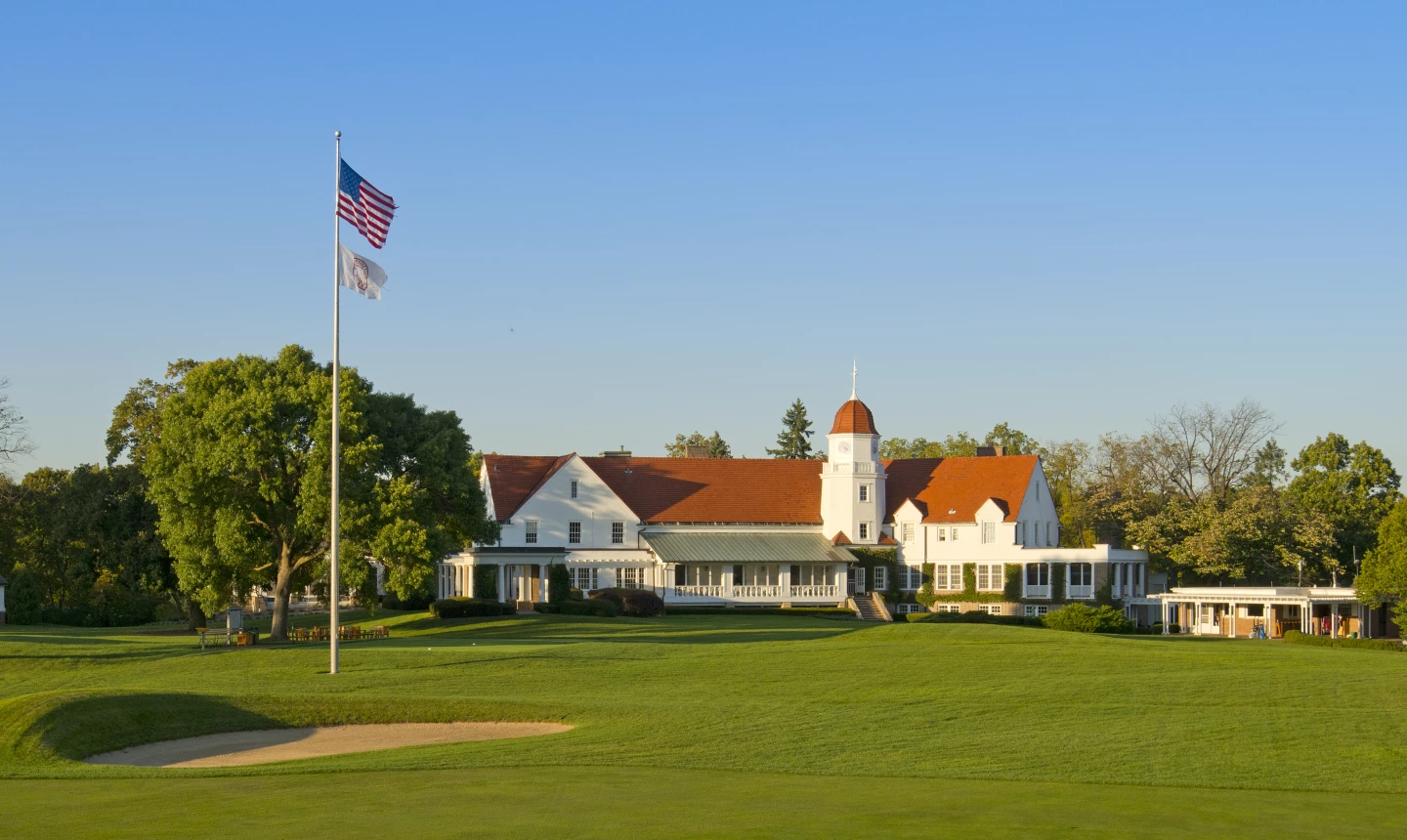
Prestigious golf clubs founded prior to the turn of the 20th century are more synonymous with Great Britain than North America. But this week's host of the U.S. Senior Women's Open, Chicago Golf Club, is a reminder they can be found in the "New World," too.
Chicago GC was one of the five founding members of the USGA in 1894 - the home club of C.B. Macdonald - and to this day, it's one of the most prestigious big-city clubs you can join. There is a stark difference between the well-known, 19th-century privates of the U.S. (National Golf Links, Shinnecock Hills, et. al) and with what remains of those that are publicly accessible. Whereas the old private clubs have a combination of elite memberships, Top 100 acclaim or even major championships, these old publics typically have far humbler - but no less interesting - histories. Considering many have endured a century-plus of threats, everything from wars to depressions to possible redevelopment, in many cases it's a miracle they remain at all.
But stumbling upon a 19th-century course you can play - even what's left of it - can still be rewarding. Our Golf Advisor course database has about 300 North American courses with opening dates prior to 1900, and more than half of those are fully private.
I recently visited two semi-private golf courses in the Great Lakes that predate 1900. Neither will be in line for a Top 100 ranking anytime soon, and playing them with modern equipment felt a bit out of place. That said, they were two of my most memorable rounds in awhile.
Niagara-on-the-Lake Golf Club
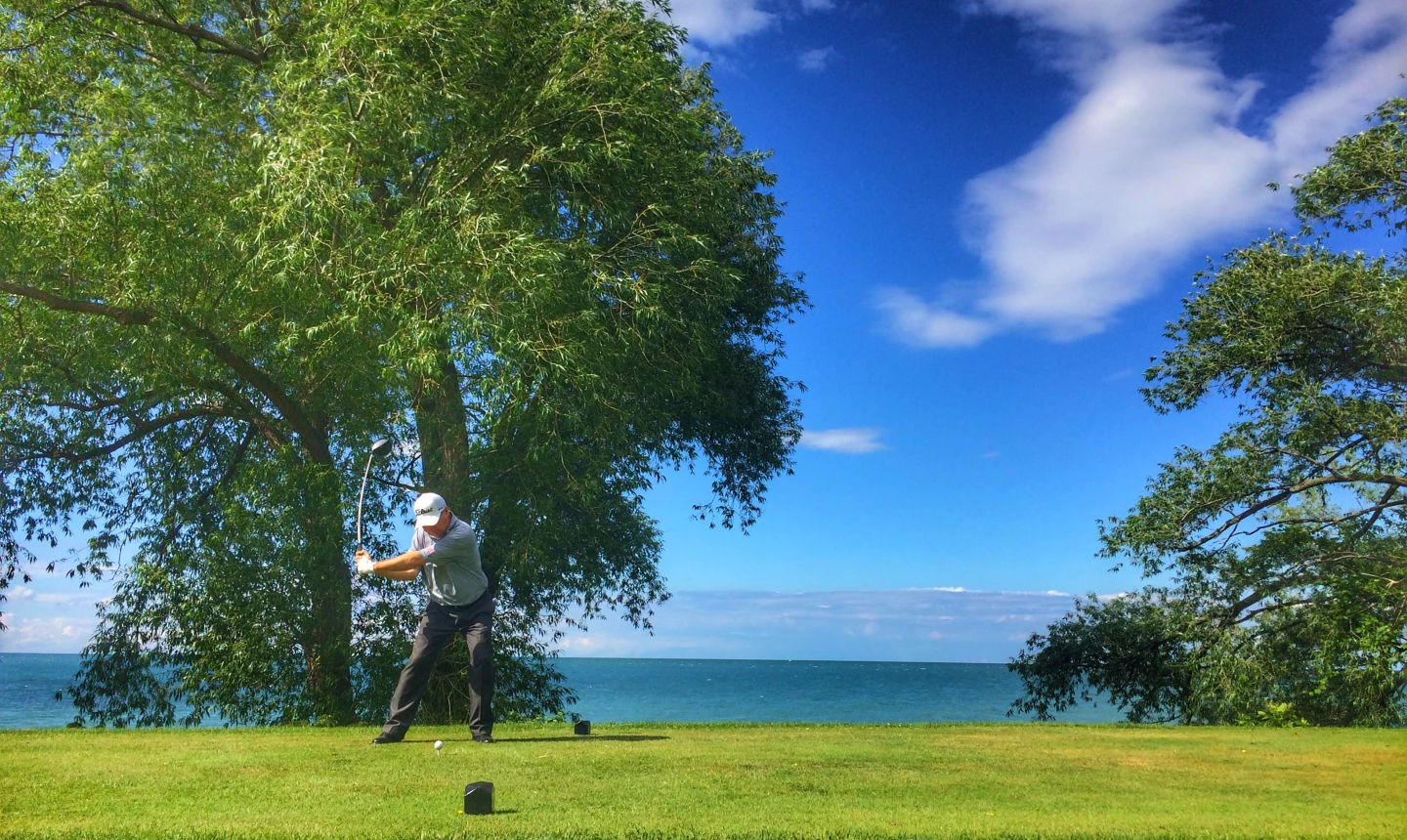
Considered to be the oldest continuously operated golf course in North America (1875), the nine-hole Niagara-on-the-Lake Golf Club is just minutes from Niagara Falls and was one of the true highlights of my summer. The ambiance of the club on a sunny afternoon was complete with a festive clubhouse atmosphere and nine short but interesting holes sandwiched between the historic town and shimmering Lake Ontario. You'd be hard pressed to find a better 19th hole in Ontario. NOTL's ties to C.B. Macdonald are strong, given he was born in Niagara Falls. Macdonald didn't design the course, but he did come back to visit and play and won the first ever international golf competition in North America, staged there in 1895. These days, a hickory clubs tournament is held here in his honor.
Whereas NOTL has gone through many changes in its history, the other pre-1900 club I visited has been generally untouched. In fact, it's located on an island that has eschewed the automobile all together:
Wawashkamo Golf Course on Michigan's Mackinac Island
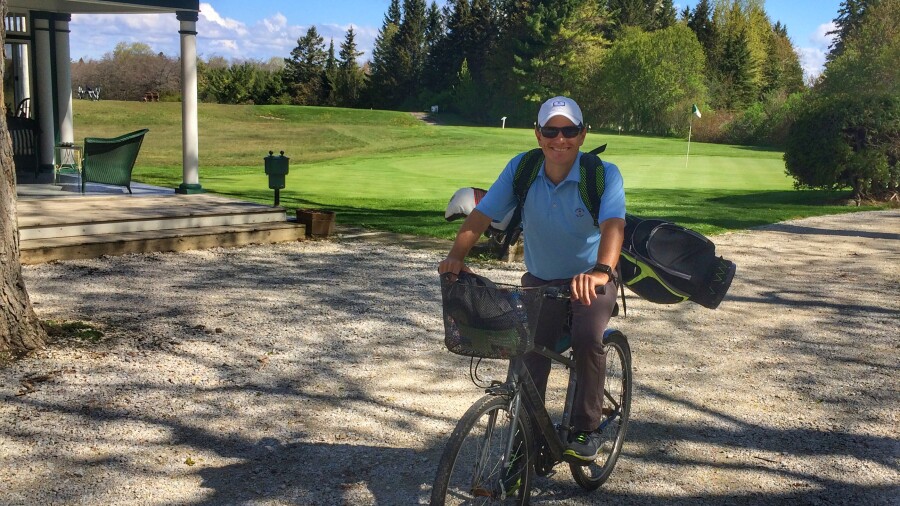
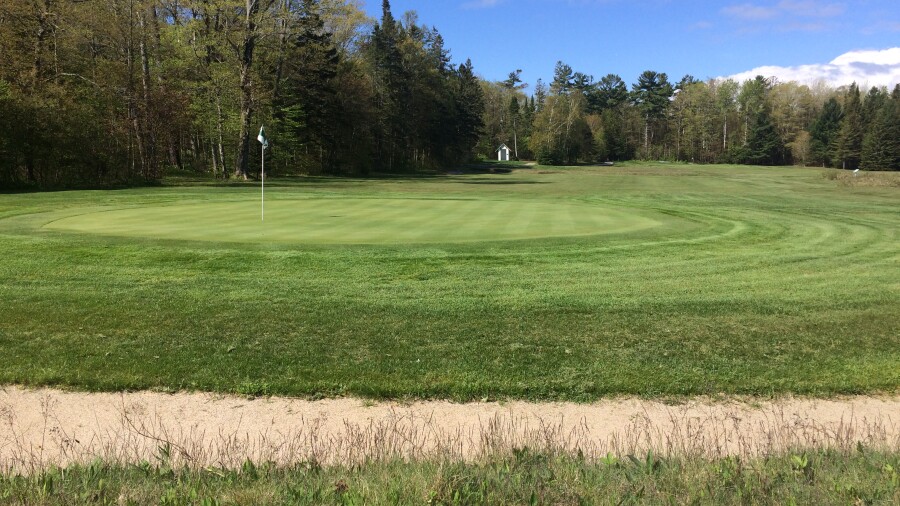
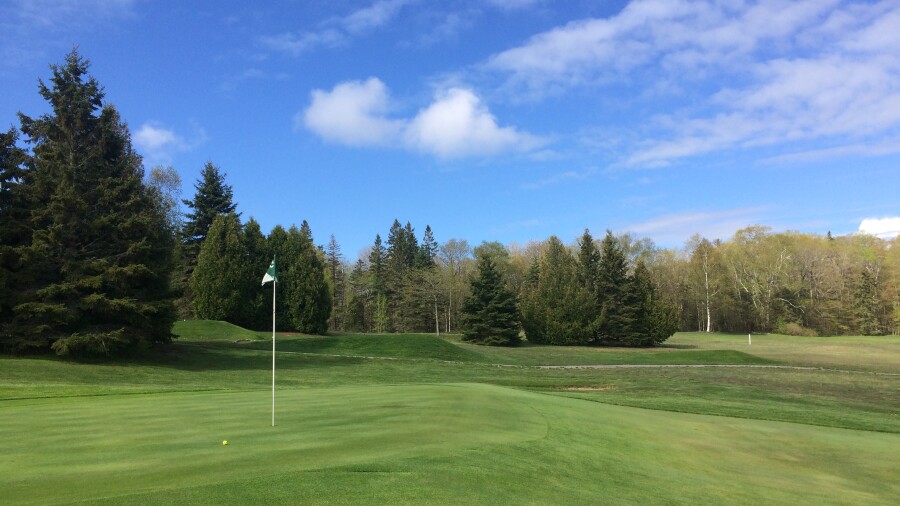
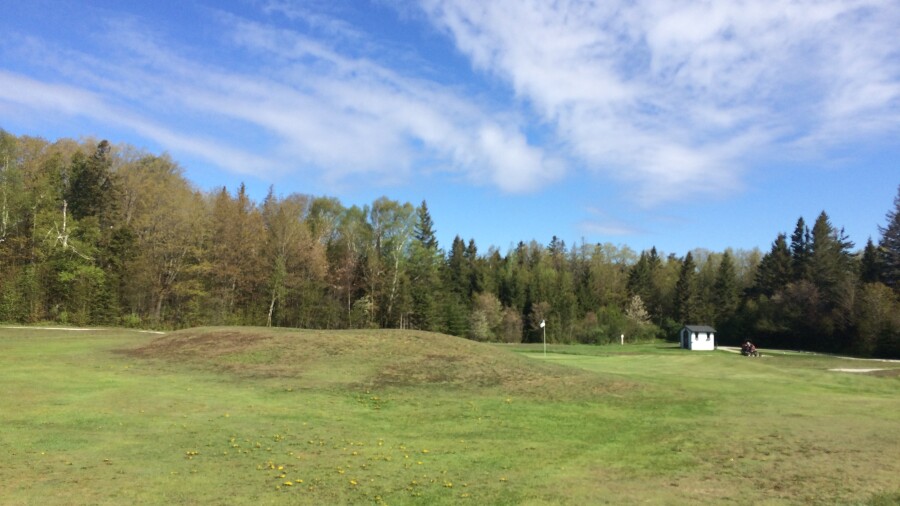
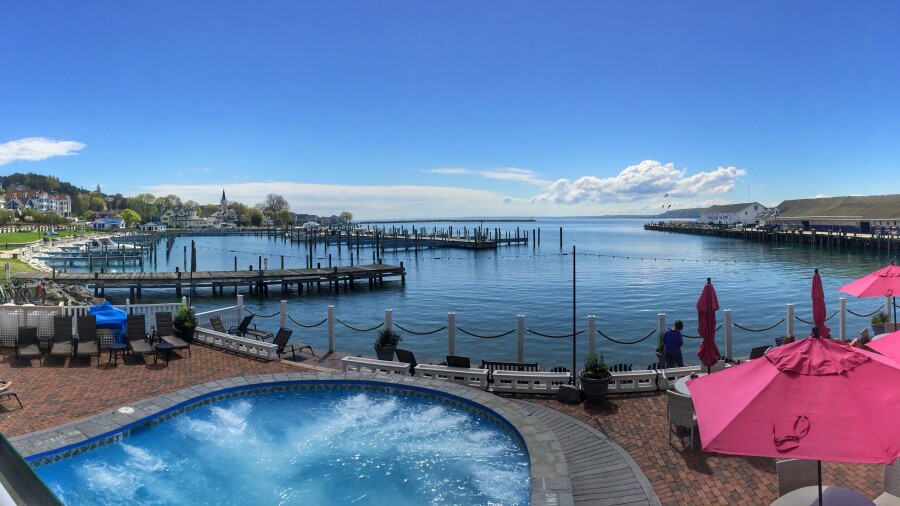
To get to "Wawa," located in the middle of this car-free island, you either take a horse taxi or ride a bike to the club (and yet upon arrival, there are golf carts for hire). It was founded by vacationing Chicagoans and today remains efficiently-but-lovingly managed. There is one manager for the shop (and his dog) and two workers for the grounds. Only the greens are irrigated, which gives the turf a good bit of springiness by midsummer. The layout, designed by Alex Smith (who would go on to win the U.S. Open), has been generally unchanged over the years with little greens and is just under 3,000 yards. It's a simple design, with tiny greens and some little bumps and slopes here and there. Then there are oddities like the "circus ring" on the 3rd hole:


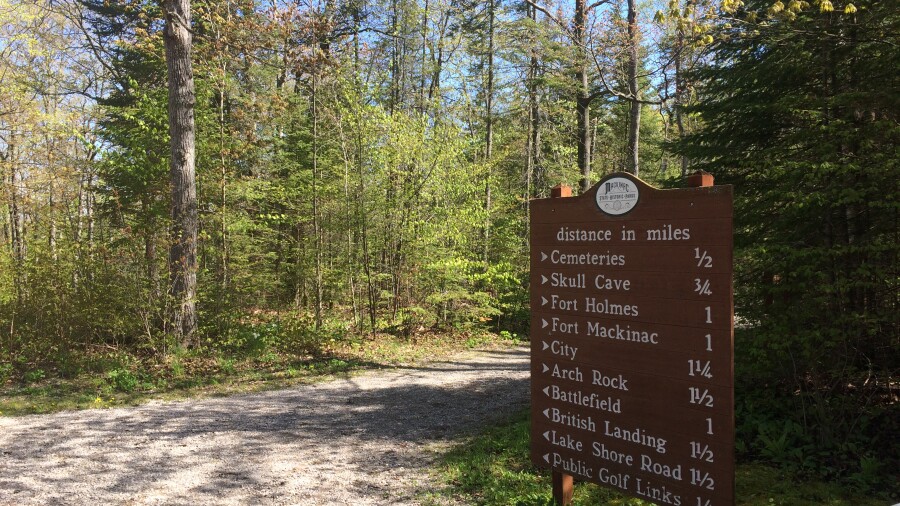
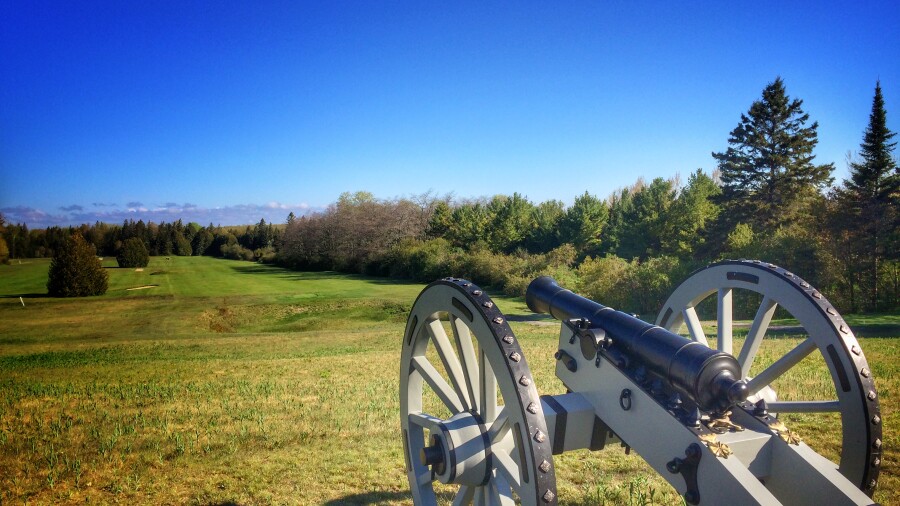




Wawashkamo was the site of a battle years earlier between the British and Americans and a cannon by the first tee commemorates the occasion. Truth is, many of the earliest courses in the U.S (and around the world for that matter) have military ties. San Francisco's famed Presidio Golf Course (1895) was the result of golf set up on an army base. Another 19th century military course can be found quite literally on an island in the Mississippi River: Arsenal Island Golf Club. Today it's operated by the Department of Defense's Morale, Welfare and Recreation fund as a military facility. Civilians can play the course for $23. Highlights, according to reviewer TSmitty2, include:
The drive to the course is incredible. Military memorials and retired tanks are just some of the features. Once I got to the course, I was very impressed with the views of the Mississippi River.
The eastern seaboard has the greatest concentration of 19th century courses. Highland Links Cape Cod, a nine-holer on the coast of Massachusetts, is regarded as one of the few "true links" courses in the U.S. The Omni brand of hotels and golf resorts is a steward of three courses, the Old Course at Homestead Resort and the Old Course at Omni Bedford Springs, as well as Omni Grove Park Inn (each have been updated since). The Greenbrier, meanwhile, added the Oakhurst Links (1884) to its portfolio in 2012 when it was under threat.
What is the oldest golf course in the United States? It is certainly disputed depending on criteria. Chicago Golf Club is considered the oldest 18-hole course in North America (although the club's original site has public golf, nine-hole Downers Grove, which dates back to 1892). Van Cortlandt Park in the Bronx considers itself to be the first public golf course in the U.S. (1895). Yet, even west of the Mississippi, golf did exist in some form before this. Mare Island (California) and Gearhart Golf Links (Oregon) posit to be the first golf course in the west. Even Catalina Island had golf as early as 1892 and nine holes can still be enjoyed.
The 19th century public courses in North America can often times be a little rough around the edges (I live close to what's left of the original Austin Country Club - est. 1899 - and it's not pretty). It can also be tough to know exactly how much of the original layout is still intact (usually not much). But what these old gems might lack in polish, they're worth savoring due to layouts that are typically very walkable, affordable and require less maintenance on fewer acres than larger, showier courses.
Those that remain in some form are prime examples that it really does take generations of exceptional stewardship and protection from owners, members and the greater community to survive.





Comments (41)
Kebo Valley up in or near Bar Harbor, Maine. Beautiful 18 holes links course. Est. 1888
Actually, the oldest golf course in America is nearly a full century older than the one in Chicago, the Country Club of Charleston, built in 1786 by Harleston Green
Kebo Valley up in or near Bar Harbor, Maine. Beautiful 18 holes links course. Est. 1888
Actually, the oldest golf course in America is nearly a full century older than the one in Chicago, the Country Club of Charleston, built in 1786 by Harleston Green
Preakness Valley Golf Course Wayne ,NJ
How old by comparison to other US courses. I golf as a youth and played competition in High School at the old course. 1895?
Hello Brandon
Back In 1995 I was Centenary Captain of Duddingston Golf Club in Edinburgh Scotland. When we had finished our Centenary celbrations I felt we should have something to remember this milestone of our club. I hit upon the idea of clubs formed in 1895 having reciprocal arrangents between themselves.
In March 1996 along with the captains of Craigmillar Park and Torphin Hill who were based in Edinburgh and also celebrating their Centenaries we convened a meeting at Handsworth Golf Club Near Birmingham England which 19 clubs attended. It was agreed to allow all our members access to free golf at each others courses subject to certain rules so as to make sure the system was not abused.
In the last 23 years the 1895 Club membership has increased to 50 clubs mostly in the U.K. but others based in France,Belguim, Australia and New Zealand. Unfortunately no American clubs have joined us and it may be something you might want to make golfers in the United States aware of that when they are visiting Europe or Australasia.
Our Idea has been copied by other golf clubs celebrating their foundation and between them all there is now in the region of 300 clubs who now have mutual arrangements. To find out more go into the internet and search The 1895 Club (Not to confused with the USGA's Open dining facility.)
If you need any further information contact me on email or phone ++447872674988.
Regards
Bill Flockhart
Pisstogne
Golf Digest recognized The Dutcher Golf course in Pawling N.Y. as the oldest Municipal Golf Course in the United state, established in 1885 and public in 1890....
Foxburg Country Club in Foxburg Pennsylvania, near Emlenton, claims to be the oldest, established in 1887. They have a historical society plaque along the road.
Brandon: Nice piece on vintage golf courses in America. I love playing "old" golf courses. I was surprised Otsego Golf Club in just outside Cooperstown NY was not mentioned. I have played the course several times and was told it was the oldest original layout of any course in the US. Not sure that can be proven or not, but the club dates back to 1894. www.otsegogolfclub.com It's a fun 9-hole layout, however, overshadowed by the Leatherstocking Golf Club resort course in the village of Cooperstown on the south end of the lake.
I would also like to mention Burnet Park Golf Course owned by the City of Syracuse originally built in 1901, renovated and reestablished in 1988. At $6 for golfers and $3 for seniors and $3 for juniors, I would bet it is the most affordable 9-hole golf course in America.
Correction. The oldest continuously played golf course in North America is the 'CLUB DE GOLF ORLEANS" in Ste-Pétronille, Ile D'Orléans, Québec, just outside of Quebec city. It was founded in 1868 and is still played today on the same grounds (9 holes)
Siasconset Golf Club on Nantucket is as old school as it gets. Opened in 1894 & recently had the quaint original clubhouse renovated. Don’t forget to put your ball in the rack, there are no tee times or golf carts.