


 Back
Back






LA ROMANA, D.R. - It felt like stealing.
I had come to Casa de Campo mainly to play and study its restored, renowned Teeth of the Dog course, the resort and community's Caribbean Sea-sprayed masterpiece by Pete Dye. But that was tomorrow. I had enough time on my arrival day for some early bonus golf, so I headed out for an afternoon round on the Links, Dye's follow-up course on property. It opened in 1975, four years after Teeth of the Dog debuted.
Links is a classic little-brother golf course: a second 18 added to compliment the big name without even remotely threatening to upstage or outshine it. The reviews I had read beforehand reflected that stereotype. I expected a less-cared-for, watered-down Dye course where I could at least get some swings in before the main event to come.
Wrong. The Links is a fantastic golf course in its own right - a fun, strategic challenge that winds through some of the longest-established parts of the Casa de Campo property. The houses are set far enough back from fairways and greens that they never feel intrusive. Rather, there is a strong sense of harmony between holes and homes.
Surprisingly, the routing and land plan of the Links reminded me of my favorite Florida golf course: Mountain Lake, a classic Seth Raynor situated in one of the earliest examples of master-planned golf communities.
The Links is an artifact of Pete Dye's early period of more understated but highly sophisticated design, and he clearly put no less effort into its design than the understandably more attention-grabbing Teeth of the Dog. A fun passage from Dye's autobiography Bury Me in a Pot Bunker describes the construction process, where Dye associate Lee Schmidt staked out an initial routing of the course, which Dye reviewed on a subsequent sight visit.
"[Schmidt] asked me how things were going at the Links and my answer drained every bit of color from his face," Dye wrote, going on to say that he had completely reversed Schmidt's holes, proposing greens where Schmidt had intended tee areas and vice versa.
Dye's decision pays early dividends, as the par-4 3rd hole at the Links is one of the best of the 90 holes on the Casa de Campo property. A mid-length par 4, its rock-walled tee complex gives way to a fairway that glides uphill, tapering to an elevated green benched into a hillside and guarded by a nasty, deep bunker short and left, as well as a sneaky one high-right. Gravity and the right-to-left sidehill lie players confront on the approach all conspire to pull the ball towards misery. Reaching the green safely means getting a gorgeous long glimpse of the Caribbean Sea just over a mile to the south and 140 feet downhill.

Golfers who lose a sleeve of balls to the Caribbean at Teeth of the Dog will appreciate Dye's restraint on the Links; there really aren't many likely lost-ball opportunities until the back nine, when two ponds come into play on all but two full swings from the 12th through the 16th. Luckily, there is always plenty of room to play wide of the water.
The Links is the type of golf course I would gladly play regularly without ever getting bored. The variety in shot demands, the strength of the routing and the interest on and around the greens all impressed me, perhaps more so because I had heard very little in the way of praise for the course prior to seeing it.
To be fair, I had not yet seen Teeth of the Dog, but even after the following day's round, I still was in love with the Links, appreciating its contrast to the headline course not just in terms of architecture but overall vibe. The Links is the only course at Casa de Campo where caddies or forecaddies are not required for visitors, and while I appreciate caddie culture very much, I also like the opportunity to be let out on my own or with friends to discover the charms of an interesting course. It's nice that the resort offers that option on the Links.
I could not believe that I had the Links practically to myself on the March afternoon I played. I took my time, even sitting patiently through a couple of passing showers, and still finished in barely more than three hours. The complete peace and enjoyment of that round will be very difficult to top the rest of my year. Long live the Links, my favorite all-time little-brother golf course.

3 other favorite little-brother golf courses
Blackwolf Run (Meadow Valleys)
Destination Kohler is another wonderland for Pete Dye fans, and while its Straits course at Whistling Straits and River Course at Blackwolf Run tend to get the most publicity, it's the secondary layout at the latter site that captivates me, partly because its back nine was part of the property's original 18 holes. But the current Meadow Valleys front side is valuable, too, since it is the most open and user-friendly nine at the resort, with generous fairways and large greens that still retain plenty of interest. A good little-brother course is generally something of a breather, providing a slight respite from the rigors of the headliner. Meadow Valleys nails that assignment.
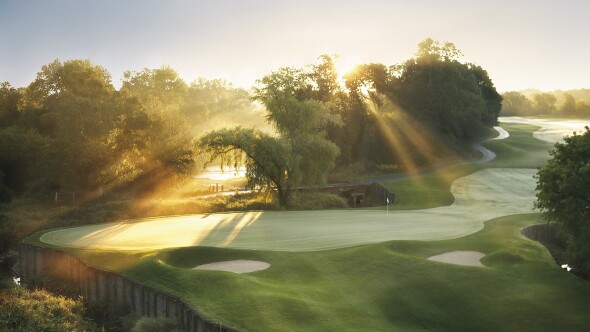
Little-brother golf courses going out of style?
Many of the high-profile multi-course golf resorts built recently have taken a different approach, aiming to create parity between all of their layouts in order to stoke debate among visiting golfers. A great example is Streamsong, where there is no real consensus pick among its Blue (Tom Doak), Red (Coore & Crenshaw) and Black (Hanse & Wagner) courses. And with a new big course by David McLay Kidd, Bone Valley, coming online in late 2026, that debate should only get more convoluted. Similar course parity (and uniformly high quality) exists at Bandon Dunes and Sand Valley, too; these resorts' developers hold all of their courses to a similar sky-high standard, and end up reaping the benefits by charging the same uniformly high green fee across all of them.
Nemacolin (Shepherd's Rock)
Another Pete Dye-dominated complex, another solid second-fiddle course. Mystic Rock, opened in the mid-1990s, is one of Dye's best from that era, something of a golf-course-sized homage to Frank Lloyd Wright's iconic Fallingwater home 11 miles away. Shepherd's Rock came about towards the end of Dye's life, heavily influenced by longtime collaborator Tim Liddy. It replaced an underwhelming older secondary Nemacolin course, and tackles some severe terrain with aplomb, resulting in some one-of-a-kind holes in the Dye portfolio. Bronze statues of sheep in various funny poses by the tee boxes adds a sense of whimsy in keeping with the resort's eccentric atmosphere.
Sea Island Golf Club (Plantation)
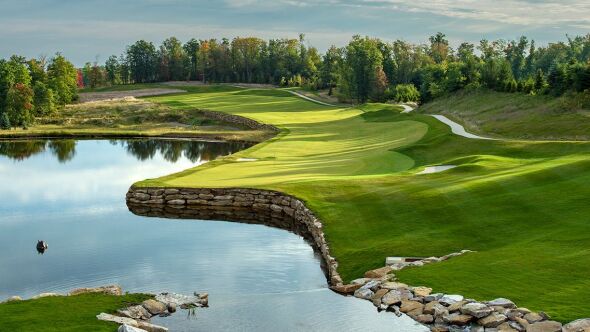
At the risk of making this entire article about Pete Dye, I'm putting Sea Island's second-in-command course ahead of Dye's Valley at TPC Sawgrass, which I find to be too big of a step down from the phenomenal Players Stadium course. When longtime Sea Island don Davis Love III's design firm renovated the Plantation in 2018, the course took a major leap forward in variety and charm, nearly rivaling the more famous Seaside layout. The fact that it is strong enough to host one round of the PGA Tour's RSM Classic while also serving members and hotel guests is a testament to its quality. Given 10 rounds to split between Sea Island's top two courses, I would be tempted to go 5-5; that's how highly I think of this course.



Comments (0)