


 Back
Back







It is a bittersweet time to be a fan of golf courses and course architecture.
On one hand, the average quality of courses is undeniably on the rise. New course construction is happening at a trickle, but practically every brand-new course coming online is consequential. In reaction to the radical slowing of new course construction, renovation and restoration of existing courses has accelerated, giving us not just improved private and resort courses, but courses-for-all like Winter Park outside Orlando and Keney Park in Hartford.
However, there are still many golf courses closing each year, and there's no reason to believe that correction is going to stop anytime soon.
And it's not just mediocre courses succumbing. Even the greatest conjurers of grass and sand have not been immune from the sight of some of their works returning to nature or being plowed under for housing.
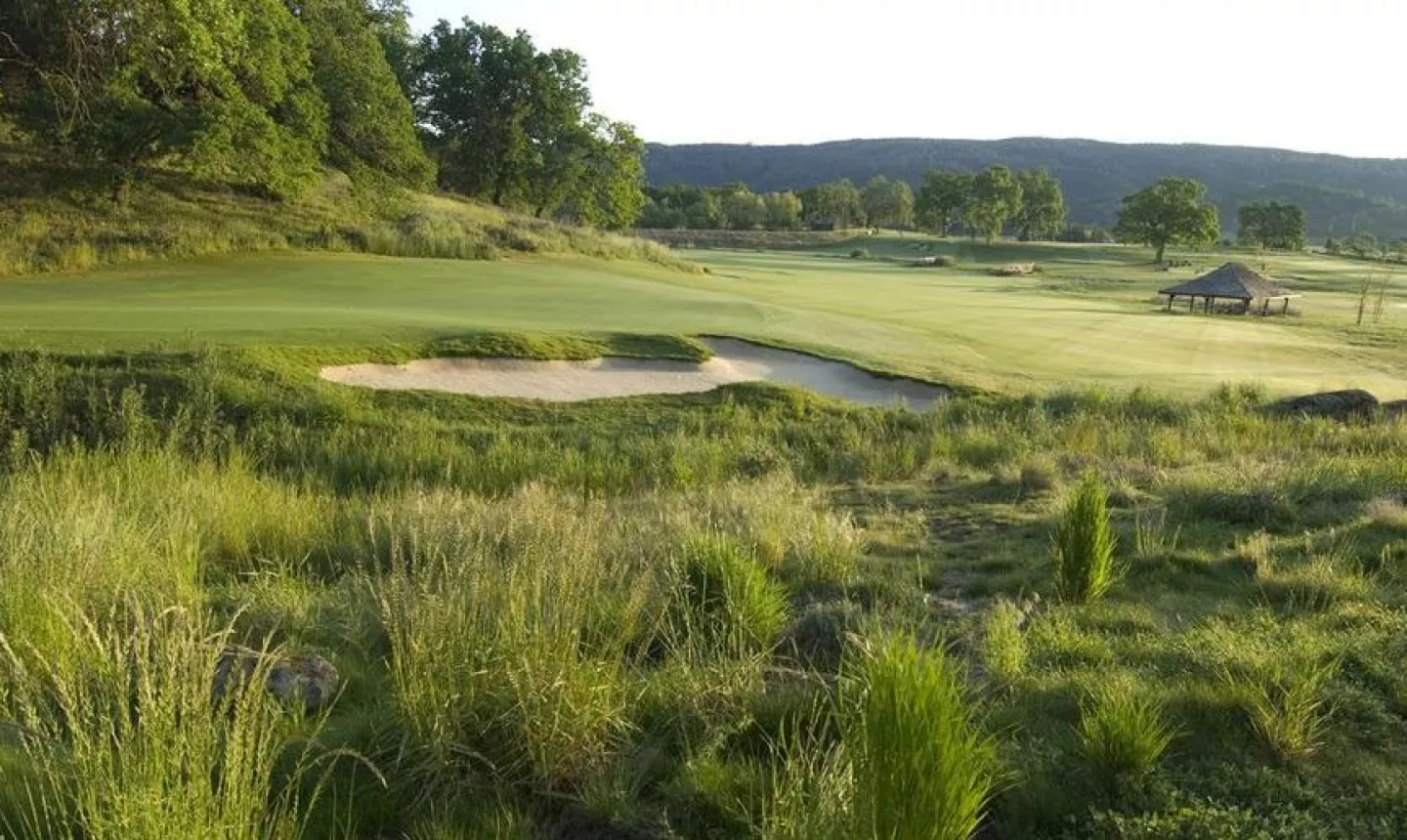
News broke recently of the imminent closing of Aetna Springs Golf Course, a nine-holer in a quiet Napa canyon. The course was thought to be one of the oldest west of the Mississippi, but when Doak and his Renaissance Golf Design team renovated it in 2008, it became another feather in the Michigan native's colorful cap. One Golf Advisor reviewer, dojousa, praised it as "a wonderful no frills very scenic course...if you're in the mood for relaxed setting with great golf you can't go wrong here."
Unfortunately, Aetna Springs' beautiful and secluded setting worked against it. The owners of the course were denied permitting by Napa County to build resort accommodations on the property (which would almost definitely have led to the course expanding to 18 holes), and after years of low numbers of rounds (there were fewer than 5,000 in 2017), they are looking to sell the land, which will likely be developed into houses.
Doak and team have designed or significantly renovated just more than three dozen courses since 1989, with some of them - Pacific Dunes, Old Macdonald, Ballyneal, Sebonack, Rock Creek Cattle Company, Streamsong Blue and Tara Iti in New Zealand - counted among their respective countries' greatest designs. Doak and his associates' eyes for creating fun, engaging golf in a classical mode have won them justified acclaim, and a fairly steady stream of exciting new projects even in these times of lean new course opportunities. Even their less famous early designs are solid (the Heathland Course at Legends Resort in Myrtle Beach, for example, is terrific).
For one reason or another, however, a half-dozen Doak/Renaissance courses have closed in recent years:
- High Pointe Golf Club (Doak's first design, in 1989) in Williamsburg, Michigan, closed in 2008
- Charlotte Golf Links in Charlotte (1993), North Carolina, closed in early 2014
- Beechtree Golf Club (1998) Aberdeen, Maryland, closed in late 2008
- Aetna Springs Golf Course (2008) in Pope Valley, California, closed in early 2018
- Bahia de los Suenos (2009) in Baja California, Mexico, closed in 2013
- Simapo Island (2014) in Haikou, China, never officially opened
Bahia de los Suenos struggled from the start and never even held a "grand opening" due to financial difficulties, and Simapo Island foundered because of the Chinese government's periodic vehement opposition to golf development. The first four, however, enjoyed plenty of acclaim and loyalty from visitors while open, but in the end were unable to stave off an early demise.
Video: Golfing World spotlight on Tom Doak
A few other Renaissance courses have had their share of problems but have so far staved off the reaper. Black Forest at Wilderness Valley in Michigan, Quail Crossing in Indiana, and Apache Stronghold in Arizona have all had their struggles to varying extents but are nevertheless well-respected by architecture buffs. If you enjoy high-quality golf course design and are willing to put up with not-quite-pristine conditions, you should enjoy all three courses. What's more, your green fees should help keep the lights on and the greens mowed.
(Note: Tom Doak is also credited with designing the baker's dozen greens at the famed BallyBandon Sheep Ranch, which is due to be turned into an 18-hole course in the coming years, likely designed by Gil Hanse.)
Doak far from only acclaimed architect whose courses have closed
Tom Doak is by no means the only important modern architect to see some of his courses closed or threatened. Late 2017 threatened to claim two courses by the late, great Mike Strantz, whose Royal New Kent and Stonehouse courses outside Williamsburg, Virginia were reported in December to be under contract to be sold and potentially turned into housing, though more information on their fate is expected in February. Their demise would be a significant blow to the legacy of the artistic architect, who passed away from cancer at age 50 in 2005, leaving behind a small but hugely impactful body of work: just eight wholly-built courses and one renovation. Standouts from his portfolio include Caledonia Golf & Fish Club and True Blue Golf Club in Pawleys Island, South Carolina, and Tobacco Road Golf Club outside Pinehurst.
Another Strantz design, Tot Hill Farm Golf Club in Asheboro, North Carolina, has struggled in recent years partly due to its somewhat isolated location, but per recent reviews is coming around again. It doesn't have Tobacco Road's geographical advantage, but it is well worth playing if you're in central North Carolina, with several utterly unique holes and features and a character that will tickle the fancy of any open-minded golfer. The par-4 12th is one of the most fun water holes you will play, with a massive backstop on the rear part of the green that can sling your ball next to the hole for a thrilling birdie.
Even Gil Hanse, the former Tom Doak associate whose own solo career is taking off, has seen two of his original courses shuttered: The Capstone Club in Alabama and Tallgrass Golf Club on Long Island. Despite nearly two decades of acclaim as one of the Empire State's best public courses, Tallgrass' long-sought-after land is being repurposed into a solar farm.
Any golf course closure is a sad event, but when it's a design attributable to one of the luminaries of the field, it hurts us golfers that much more. Those who played Aetna Springs praised the rustic look of the course and the gorgeous, peaceful setting. It looks like no one will get to play the darling little par-3 4th hole in its own cozy corner of the property ever again.
In the case of Royal New Kent and Stonehouse, their uniquely gifted creator is not around to simply build a new course somewhere else. Strantz was one of a few true mold-breakers in the history of golf course design. If indeed his two Virginia courses fall out of play, it would be a loss for golf. Think of supporting courses like Tot Hill Farm as akin to contributing to the upkeep of a Da Vinci work. There is a finite, dwindling supply of its like; we need to preserve it.
It's inevitable that more golf courses will close in the coming years, and that some of these will be noteworthy designs. I plan to do my part, whenever possible, by patronizing some endangered courses on my travels. I hope you'll do the same, so that we keep the letters "NLE" ("no longer existent" - a common way we architecture nerds to refer to closed courses) away from golf's masterpieces.


Comments (28)
Really enjoyed Aetna springs. What a gem.
Paris Grand, a fantastic course in Paris, Ontario, near Cambridge, closed at the end of last season to be developed. So sad.
Really enjoyed Aetna springs. What a gem.
Paris Grand, a fantastic course in Paris, Ontario, near Cambridge, closed at the end of last season to be developed. So sad.
High Pointe was one of our favorite courses in Michigan, it was a real shame when it closed.
When Royal New Kent and Stonehouse first opened they were the places to play in the area. The local golfing community found both courses very challenging but expensive to play. As time went on the prices declined as a way of increasing play on the courses, but so did the conditions. The courses were already tough challenges to play for the average golfer, but add in poor maintenance and you are going to lose a lot of business. It is a shame what is happening to some of these upscale venues but it is a sign of the times that golfers are more caring about where they spend their money. They want a test of their skills but they also want to shoot decent rounds and not spend an arm and leg to do it on a poorly maintained course. There are other courses in the area that offer affordable golf with excellent conditions and they are a good test of any golfer's game. These courses are on Golf Advisor's site and would love to have you play there. The Strantz courses were nice layouts but they were not made or priced for everyone in the area. Golf is a game to be enjoyed by all, not just those who can afford it.
I don't have experience to draw upon regarding the listed courses, however, I play resort courses and semi-private courses around the country and find most of the players I am paired with are in the 50-80 age group and the courses do not have adequate forward tees to accommodate seniors who actually have money to support the courses. This is especially true for women (of any age) and as a result I often hear complaints about slow play and frustration partly caused by golfers attempting to hit shots far beyond their range and ability. My experience is that courses are built and maintained for a level of golf I rarely see exhibited. Nicholas advertised a year ago against slow play and yet his courses are designed to promote 5 and 6 hour rounds with players interested in speeding things up, just picking up and playing with the ball in one's pocket.
I agree with many others on this post. I've only been golfing for around 4 years and love the game. Green fees around the Seattle area are rising and the courses are very crowded. The only new course to open around here in the last 5-10 years was Chambers Bay where the open was played a few years ago. Been told by many that the biggest problem is with the environmentalists who influence the local governments to not issue any new well permits for water. One of my favorite 9 hole courses closed last year called Jade Green. This was a great course and very affordable. Not your typical 9 hole as some of the holes were over 250 yards. Having to spend over $100 for two people to play is ridiculous!
Why so many Golf Courses being closed??? What is it....Poor Management, Green Fees Too High,??? Only made for the Rich and Famous??? Try taking less fees and giving more service...This always works in any good Business.....Guest I will have to build my own Golf Course and have a Great Place to Play.....
Royal New Kent is an absolute Golf diamond. I have loved every Mike Stranz golf course I have played. He so beautifully evoked Ballybunnion with some of the holes at Royal New Kent. To play them in the Virginia Piedmont was wondrous. And I knew every hole must pay homage to some United Kingdom classic if I had but played them. I live in New York so I can't do much to support that wonderful golf course. But if it's open this spring I will make it a point to give them my business on my way to Myrltle where True Blue and Caledonia await. We put so many of these fine modern golf course builds in out of the way places to save money on land. But a course like Royal New Kent requires a solid playing constituency to stay afloat - and the financials just don't stack up when compared with housing. I so hope someone saves that course. I am going to retire this spring and it is on my list of golf courses I must return to.
What a bummer. I loved Aetna Springs. Unfortunately perhaps didn't patronize it as I should have. It was a great place to take all family members, serious golfers or not. I helped organize a woody tournament there for the Shivas Irons Society and what fun, playing a before 1900 course with clubs from the '20-'50. Weep with me.
Tim - agree Black Forest does need some "love" from folks....probably just to keep it open after this coming season.....who knows it may not even open. It's a wonderful routing that has some ridiculously fun architecture. But several of the green complexes are so "over the top" it's a nightmare to maintain....the contours and small little swales of just the 1st two green surfaces are unbelievable. That has put off the first timers who have gone up there to play what was billed as a "bucket" pristine condition experience the last few years and now won't go back. Alas the difficulty results in a course you have to play several times to really appreciate Doak's early genius.
I"ll make sure to play Black Forest again in late May/early June...and I hope others will too. High Pointe was a neat track as well (got to play there several times) but pales in comparison with what Black Forest was and still could be. Golf Advisor report in a few months......