


 Back
Back






If you enjoy golf enough to interact regularly with its media apparatus - be it televised coverage, sites like this one, social media, print (which still exists!) or some combination, you've probably encountered a certain three-word phrase so many times that it elicits a nasty Pavlovian response now:
Grow. The. Game.
This phrase has been around for decades, but in recent years it's taken on a special vapidness, as it has been hashtagged to near-death. A coup de grace against the phrase came during the recent European Tour event in Saudi Arabia, when professional golfers had either the audacity or plain cluelessness to use it in relation to what any sane outside observer would see as a PR stunt by a sinister foreign power. Big-name pros like Dustin Johnson, Justin Rose, Bryson DeChambeau and others accepted six- and seven-figure appearance fees in exchange for playing golf and running media interference for a regime that didn't even let women drive cars until June of 2018.
"It's amazing what Saudi Arabia is doing," DeChambeau said in reference to the tournament. He applauded the European Tour for "growing the game internationally...especially in a place like Saudi Arabia."
If giving a platform to Saudi Arabia constitutes "growing the game," it's easy to see why the phrase has turned so many people off. The viral infamy of Sergio Garcia's unacceptable on-course behavior during that event helps bring the emptiness of this point home. Furthermore, tone-deaf displays like these undercut the very real good that professional golf does in the philanthropic sphere.
Sergio Garcia’s meltdown in a Royal Greens bunker a day prior to his disqualification for vandalism work on five greens. Story by @SkySportsGolf fills in details. Translations welcomed! https://t.co/UoGmPtTOz4 pic.twitter.com/dQMDN7y2PC
— Geoff Shackelford (@GeoffShac) February 4, 2019
It's clear what "growing the game" means in the context of the big tours: revenue and audience. Royal Greens, the course where the event was held, is geographically isolated to the point that there were barely any spectators in-country. It is part of an economic development zone that appears to be in the Abu Dhabi/Dubai mold. In a generation or two, sure, there might be a few thousand golfers in Saudi Arabia and a few thousand annual golf tourists. But are we supposed to believe that anyone who tuned into the event was inspired to run out and buy a set of golf clubs or bump their once-a-week golf habit up to twice a week?
Surely not. The real "growth" here is in the number of places eager to use golf's shiniest assets - its players and the big tours they play on - to spread corporate messaging. In this case, the corporation is the Kingdom of Saudi Arabia. There is particular value in cozying up to a sophisticated developed-world organization like the European Tour, even for entities with a less appalling human rights records than Saudi Arabia.
So remember: when you hear a professional golfer talk about "growing the game," the real "game" is the one by which professionals and the tours increase their own revenues.
Of course, the tours are not the only ones with skin in the #growth of the game. Anyone who works in the golf industry has a vested interest in promoting the game. Golf is a $70 billion-plus industry. It employs millions of people worldwide. It's natural for an industry to advocate for its own increase. As someone who is paid to write about the game, I'd be a fool not to admit that growing golf is good for me personally. Feel free to take the golf industry's self-advocacy with a grain of salt, but also be open to the idea that in spite of that, golf is a good thing for people to do.
Here's why:
What really growing the game requires, and why it matters
"If you were to design a game that was incompatible with modern culture, it would look exactly like golf," said Golf Advisor's own Brad Klein on "The Erik Anders Lang Show" podcast several months ago. "It takes up a lot of land, it takes up a lot of time, it's very frustrating, there's no carryover from one success to the next and it's outdoors. It's as perfectly antithetical to modern life as you can get. That's why I like it."
This sums up a lot of golf's broad appeal well. In a world where green space is disappearing from the grasp of the people due to urban sprawl and increased indoor demands on one's time, to name just two factors, golf represents a verdant counterpoint.
If we truly want to increase the current approximately 20 million strong (in the United States) cadre of golfers toward 30 million, we have to acknowledge there will be no quick, easy solutions. Real, sustainable growth will happen when two big projects come together. The first is concerned with taking existing golfers and deepening their connection to the game, and the second is about converting non-golfers into golfers.
The product of golf
As it currently exists, the product of golf is mostly terrific, but there is room for improvement, and many people are hard at work dreaming - and realizing - a future in which the game is even more addictive than it already is.
The secret to turning casual golfers into avid ones and avids into diehards is in the courses. Even fairly straightforward golf courses are interesting because the intrigue of the pursuit of better golf can exist on a driving range, independent of the individual features of a particular course. But a fun, compelling design works its way into golfers' hearts the way an earworm song gets into the head. Straightforward golf is fine, but something happens to a golfer who is asked to constantly make decisions, confront interesting obstacles, and plan his or her way around the course, with a balance of exciting rewards and thorny challenges.
The last decade-plus has seen significant progress on this front, with restoration, renovation and redesign all but replacing from-scratch builds as the main way to bring "new" golf to people. There are scores of success stories, from high-profile private club projects like Inverness to popular municipal rejuvenations like Winter Park. These projects energize their respective communities and stimulate golfers to find more excuses to tee it up.
Even though the supply of courses is still correcting - more than 100 courses closed yet again last year, and this year should be no different - the overall average quality of the American golf course is on the rise, and that is good news for those who believe in golf as a Good Thing To Do.
The perception of golf
As much as we adherents of the game think it's great, golf has significant PR problems. And while "blockin' out the haters" is necessary in moderation, there are certain messages golf tends to send that turn people off, despite having no bearing on what makes us who enjoy golf, enjoy golf.
"Golf is exclusive/elitist" is the most important perception the game's advocates needs to dismantle. At a time when historically entrenched and fraught social and cultural dynamics receive more public scrutiny than ever before, golf risks continuing to stand out as a stuffy old man's game. Those of us on the inside know the reality is far more nuanced, but this nuance has not yet made it to the attention of the non-golfing public.
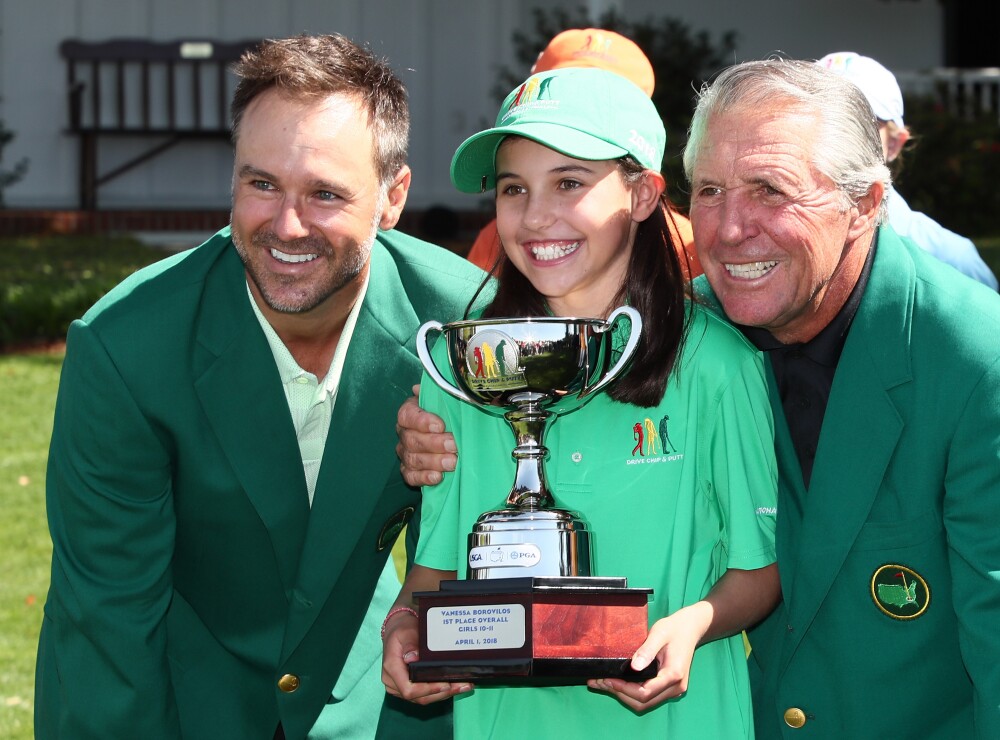
Ask any non-golfer to name a famous golf course and the most likely answer is Augusta National, whose contributions to the game are no doubt significant. But historically, there have been reasons for the wider culture to find it problematic: it was staunchly whites-only (except for the caddie corps) and male-only for a long time, and that past bears on its perception. Recent changes in membership makeup and initiatives like the Drive, Chip and Putt and the founding of the Augusta National Women's Amateur have provided big and important reasons for people to look at Augusta National, a pillar of golf, with new eyes.
The perceived expense of playing golf is related to the elitism/exclusivity factor, but it is significant enough to merit its own category. Because the most prominent courses tend to be expensive and brand-new, top-of-the-line equipment is not cheap - and these highfalutin entities tend to have the strongest marketing engines - there is a sense that the financial barrier to entry into golf is steep. But thanks to eBay, I could put together a very solid set of clubs for someone for $200 or less, and there's a cheap-and-cheerful public-access course within reach of a huge percentage of the population. With par-3 and executive courses receiving renewed attention, smaller-footprint facilities offer fun golf at even lower prices. Yes, golf is more expensive than many other hobbies, but there is a lot of fun to be had for a pretty modest investment.
Finally, there's the notion that golf is difficult. Which golfers, of course, know is part of its charm. But the apparent crushing difficulty of golf is a reason to not want to try it. What would make it more appealing is not any change to the way the game is played, but the way beginners might see a way to learn it. The PGA's Get Golf Ready program made inroads in the early and mid 2010s but seems to have fallen by the wayside. The way in which it proposed a planned entry track - five group lessons with fellow beginners - seemed to take the pressure off a hypothetical individual wanting to learn how to play golf but apprehensive about being the lone newbie on a driving range somewhere, with more experienced players casting a judgmental eye from all directions. Perhaps Get Golf Ready needs to be marketed differently or altered, but I wouldn't give up on it just yet.
Golf is great fun, and the values it is known to instill in its players are commendable. If you're reading this, chances are golf has been a pleasant part of your life. Maybe it has made you a better person. However it has touched you, the spirit of community golf fosters is worth sharing, and not just on social media.


Comments (20)
As for the event in Saudi, let's not be two-faced about it. Law enforcement around the globe know for a fact that HSBC (a major sponsor on tour) is one of the single biggest money laundering banks for terrorists and drug cartels. The tour also loves that sponsorship from Wells Fargo, a major player in the financial collapse of '07-'08, and a bank that has twice SINCE THEN been found guilty of ripping off its' customers to the tune of millions of dollars. Yeah. The PGA tour isn't really too picky about who sponsors them, as long as the money is right.
Cost per round and slow play. Despite what you say about putting together a "solid" set of clubs on ebay for $200.00, the reality is that those clubs will be dated, probably need re-gripped, and possibly not the best fit for the individual. I can get you a used car on ebay for $200, but do you really want that? Additionally, I just about choked when I saw a Groupon for a local (FAAAARRR from upscale) course and they wanted $50.00 for 18 with a cart - believe me, this is a 35 dollar layout if there ever was one. Also, don't think for a moment that a potential newcomer to golf won't be turned off by your publication (and others like it) who ONLY extol the virtues of $150.00 plus green fees and $500 Drivers, $300 putters, etc. You bear some of the burden for keeping up the perception of "exclusivity". Recently I completed a five year project in the Tidewater (VA.) area where I literally brought 5 guys from the nuke shop and 3 guys from the motor shop into the game, helped them get set up & fitted with decent sticks and told them pointedly to ignore the magazines and ratings, because you all get to play these course without spending a dime of your own money, which is why you've lost sight of the difference between cost and value. I'll keep bringing people to the game in my work travels while you guys keep telling them why they don't "belong" because they don't have deep pockets.
As for the event in Saudi, let's not be two-faced about it. Law enforcement around the globe know for a fact that HSBC (a major sponsor on tour) is one of the single biggest money laundering banks for terrorists and drug cartels. The tour also loves that sponsorship from Wells Fargo, a major player in the financial collapse of '07-'08, and a bank that has twice SINCE THEN been found guilty of ripping off its' customers to the tune of millions of dollars. Yeah. The PGA tour isn't really too picky about who sponsors them, as long as the money is right.
Cost per round and slow play. Despite what you say about putting together a "solid" set of clubs on ebay for $200.00, the reality is that those clubs will be dated, probably need re-gripped, and possibly not the best fit for the individual. I can get you a used car on ebay for $200, but do you really want that? Additionally, I just about choked when I saw a Groupon for a local (FAAAARRR from upscale) course and they wanted $50.00 for 18 with a cart - believe me, this is a 35 dollar layout if there ever was one. Also, don't think for a moment that a potential newcomer to golf won't be turned off by your publication (and others like it) who ONLY extol the virtues of $150.00 plus green fees and $500 Drivers, $300 putters, etc. You bear some of the burden for keeping up the perception of "exclusivity". Recently I completed a five year project in the Tidewater (VA.) area where I literally brought 5 guys from the nuke shop and 3 guys from the motor shop into the game, helped them get set up & fitted with decent sticks and told them pointedly to ignore the magazines and ratings, because you all get to play these course without spending a dime of your own money, which is why you've lost sight of the difference between cost and value. I'll keep bringing people to the game in my work travels while you guys keep telling them why they don't "belong" because they don't have deep pockets.
Hi Tim: Just a small add-on to your article from a UK perspective. The R&A and European Tour conspired to "grow the game" by taking The Open Championship away from the BBC (free to view) and giving it to Sky TV (pay to view), who massively out-bid the BBC. At a stroke they cut the viewing audience by 80%, but gained vast wealth ... to "grow the game". I'll leave you to decide if massively cutting your TV audience is in the interests of growing the game.
Nigel Butler
Sure, YOU could put together a decent (used) set of equipment from Ebay, but a newbie couldn’t. Similarly, I would put together a new set for $400-500, but they would be knock-offs. Newbies will go to Golf Galaxy and find out they what they want you to buy will cost over $1000.
The difficulty and cost of enough instruction to actually play the game is very high—especially for adults taking up the game. Get Golf Ready is a start, but all it really teaches is familiarity how to get into the course and familiarity with what a full swing is vs a chip vs a pitch vs a putt. It teaches very little skill.
If the PGA really wants to grow the game, they should take 10 percent of the prize money (from the top earners, not the bottom) and use it to fund free group golf lessons for anyone.
Similarly, they should make it a requirement to keep your tour card (for the top 50 percent of earners) to support golf instruction for free some number of hours per year, probably on a sliding scale based on how much your money you made (with the top earners required to give the most).
Meanwhile, Titleist could donate free clubs to courses that anyone can borrow to play, with a limit of how many times a person can borrow.
Yes, there are some kinks that would need to be ironed out of anything like this, but it would significantly lower the barrier to entry for newbies and encourage occasional players to play more often—which is what you need to do if you want to grow the game.
Tim - as an owner and an activist on various association boards, I think you have captured much of the issue. The solution is more elusive. The starting point has to be where the associations join with the owner/operators to treat them as the prime customer of their association business. I see it far too much that some associations view themselves as the central point of the game, while treating the operators as a cross between a pain-in-the-butt along with a cash machine combined with someone who should just deliver their programs with no input on the front end. I cannot blame the associations for this - they have inherited from the old golf system. But the new golf system has to embrace the key players and get them involved in the path forward. The operator understands the player. Not in every way. To the disaffected senior - there are lots of 6,000yard courses with 4 tee decks and a tee-it-forward program so that you are not playing a course too long fore your game. For the golfer who feels like an ATM - vote with your feet - there are lots of friendly courses out there wanting to listen and entertain you. There is dynamic pricing that will let you see when rates are higher or lower - you choose. As operators we are trying. But golf needs to develop a grass-roots brand that everyone will adopt and have it become a reason they are playing/more. It has to be like the frog in the pot - the golfer/consumer can't quite understand why they are playing but they can't not play!
I live in toronto canada and l am a senior. I find the majority of courses do not cater to us old guys such as no senior tees etc.when you look at 60 to 70 percent of the golfers are of senior age.all the owners should take a trip to myrtle beach to find out how to treat your patrons.i have voiced this opinion to a number of so called important people in the game. But im just a dumb old golfer with a 6 handicap also 80 years young.these course owners dont know how to grow the game.they only want your money
Golf is to expensive from the course to the equipment and takes to much time. 500.00 for a new driver 125.00 for a round of golf 5 hour rounds the industry shot itself in the foot.
Tim---
As fellow golf writer, I couldn't agree more (and in fact was wondering whether the ceaseless "grow the game talk produced the upchuck response in others the way it does in me). As for the Masters, I expressed similar misgivings in a previous post: http://theaposition.com/tomharack/golf/845/masters-mien-sends-mixed-message
Depending on where you live (I am in suburban Philly) public golf venues are still crowded on weekends, resulting in the dreaded 5 hour round. High end equipment manufacturers are charging upwards of $ 500 to 800 club for a new Driver. Yes, for one club. So, in some respects, in light of an exploding baby boomer population, the game remains in high demand. But what happens when my generation fades into the sunset? Will my kids, who are now parents, play the game? Not in its current format. While there are campaigns to reintroduce the 9 hole round back into the mainstream, there needs to be more. Today's young families are stretched too thin already with after school and other extra-curricular and academic activities. Theirs will be the first generation to have no tolerance for the time commitment their parents and grandparents gave to golf. So, it's not just that the game is hard. The game was hard long before the advent of game-improvement clubs and low spinning balls. It just takes up too much time......the narrative and solutions therein, cannot be simpler than that.
Tim, you provide a very good perspective of the broader meaning of growing the game. All too often, we hear that banner waved proudly by those who want to appear to be working for the good of the sport but clearly are just using the call to action for their own profit or products.
The Saudi event has been beaten more than any desert drum, but what got the most tiresome of all the noise was the golf pundits piling on the players as the only ones whose choices should be questioned. Soapboxes were eagerly put in place and new pages of the Thesaurus were rapidly scoured for ammo as they seized upon the no-risk opportunity to grab the mic and fire some social-media shots by pointing out the "shocking" participation of the players. Yet, in their seemingly endless hours of pontification and postering, they had not a single word about the participation in the event of golf industry sponsors - some of the same top brands and sponsors that run spots on their channel and place ads in their publication. Total silence on that, like a gallery on the 18th green. But no surprise, really. We know these guys have zero game as real journalists.