


 Back
Back






The sounds of golf - birds chirping, mowers in the morning and the whack of a ball - are being replaced at courses everywhere by the melodic beats of Jay-Z, AC/DC and the Dave Matthews Band.
For better or worse, depending entirely upon your perspective, music is carving out a much larger dedicated space in golf. Technological advances of the iPhone, streaming music services and the connectivity to Bluetooth speakers makes it easier than ever for any golfer to become a foursome's deejay. Walking, riding, doesn't matter. The tunes are here to stay, and likely to get even more popular, creating clashes between golfers who love music on the course and traditionalists who want their peace and quiet in nature.
Just last year, a golf writer buddy of mine pulled out his speaker during a media day outing for the Safeway Open in Napa and fired up The Eagles, a safe choice for all ages and tastes. Unfortunately, a retired golf writer (who shall remain nameless) didn't agree. "Shut that off," he barked, threatening to quit if the music didn't first.
Golf Advisor's review database is filled with more than 700 comments from users referencing music. Most of them are complaints, calling out another foursome's tunes for being too loud. Florida Advisor 'tomik17' is against music on the course altogether, writing in a review at an Orlando resort course: "Loud music from the cell phone (this is a misbehavior that should definitely be forbidden on golf courses!!!)."
Others can't wait to crank their favorite tunes. "How can you not like to have music in your cart (with) 50+ stations", said user 'Sweess' about the experience at Indian Wells Golf Resort in California.
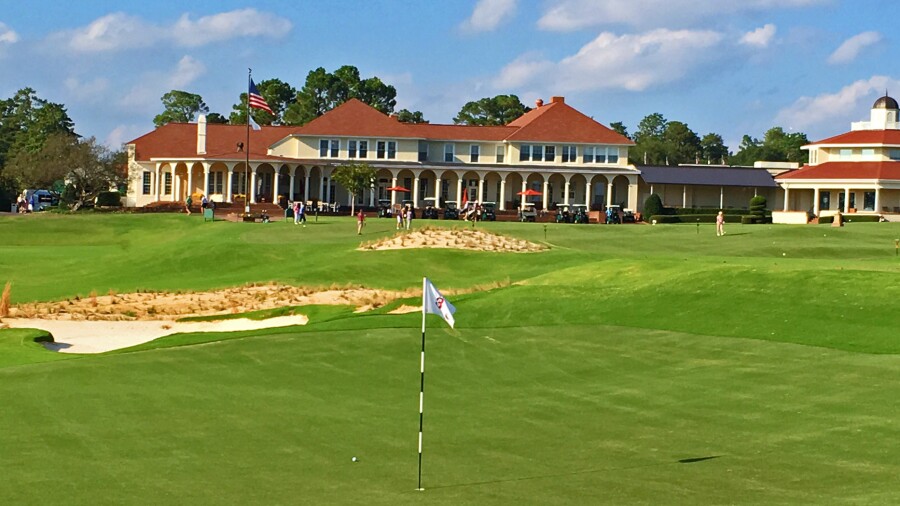
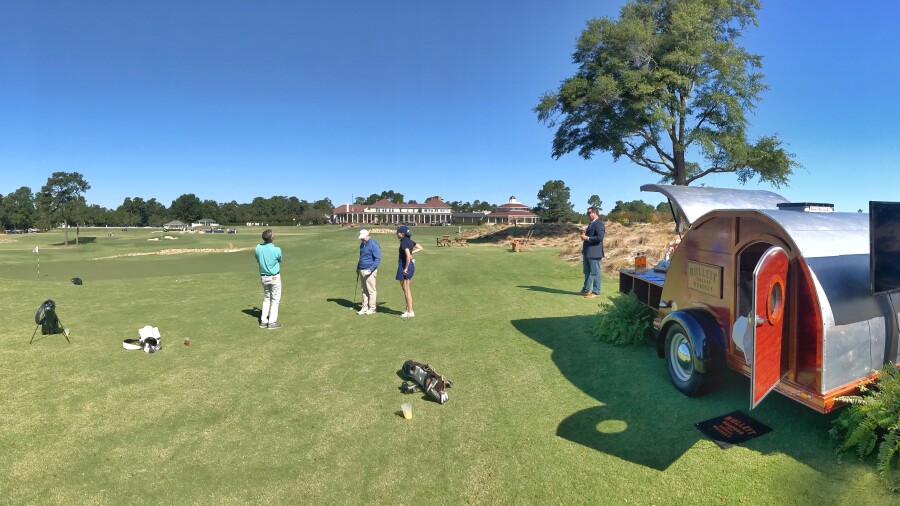
Some facilities have gone all-in on music to liven up the atmosphere, piping rock onto the driving range and turning it up a tad more at the 19th hole. Even a place as traditional and iconic as Pinehurst Resort has gotten on the bandwagon, wiring its par-3 course, The Cradle, for music. Is Donald Ross rolling over in his grave or tapping his toes to the beat?
Are the differences in opinion simply generational?
Pinehurst President Tom Pashley thinks the philosophies on music might be more regional than anything. "My personal experience has been music is much more prevalent on the West Coast than the East Coast," he said. "It's well over 50 percent out West, while it feels like 25 percent here (on the East Coast) have music in the foursome."
Where the music started
Music helped elevate the 36-hole Grayhawk Golf Club in Scottsdale into one of the most popular winter getaways in golf. That, and the club's early affiliation with Phil Mickelson and hosting of the PGA Tour didn't hurt. Joe Shershenovich, its director of golf, credits General Manager Del Cochran with coming up with the idea to broadcast music on the range when the first 18 holes debuted in 1994. A Huey Lewis concert rocked the range at the grand opening. Today, the classic rock set list plays through outdoor speakers camouflaged as rocks.
"He challenged me, 'Let’s reset the (golf) business. Let’s create it'," Shershenovich recalled. "We also did an electronic tee sheet. That was big in 1994."
Grayhawk's rock-n-roll vibe became a model for other public courses looking to stand out in their markets. A rebranding made music a focal point at the Whistler Golf Club in British Columbia in the late-1990s, said General Manager Alan Kristmanson. The club's tagline is "Palmer's design, Whistler's attitude."
"Whistler is a world class resort where people come to test their limits a little bit, whether that is skiing or mountain biking," Kristmanson said. "We wanted golf to be a part of that. We are right in the heart of the village. We felt music would be a big part of it. We have it at the deck (the 19th hole) and our entry. We have it at the range. It is a buzz we feel good about. We see golfers listening to the music and singing along. It is not about being silly and goofy and annoying other guests. It really fits our brand."

More recently, Palm Beach National in Lake Worth, Fla., has gone all in on promoting fun on the course, music included. Every paying guest gets the use of free Bluetooth speakers and a USB cord, so they can listen to music in their carts. The Paradigm Golf Group, which manages the club, also uses social media and music videos to promote PBN as the "place to be" in south Florida.
"This place is a blast! Music playing in staging area, friendly service, great conditions. What more can you ask for??" wrote user Maddenmorosini.
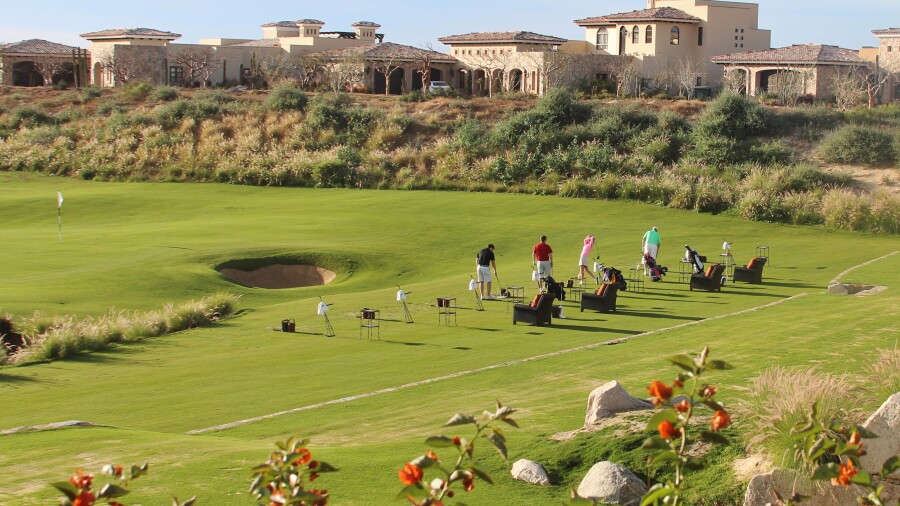

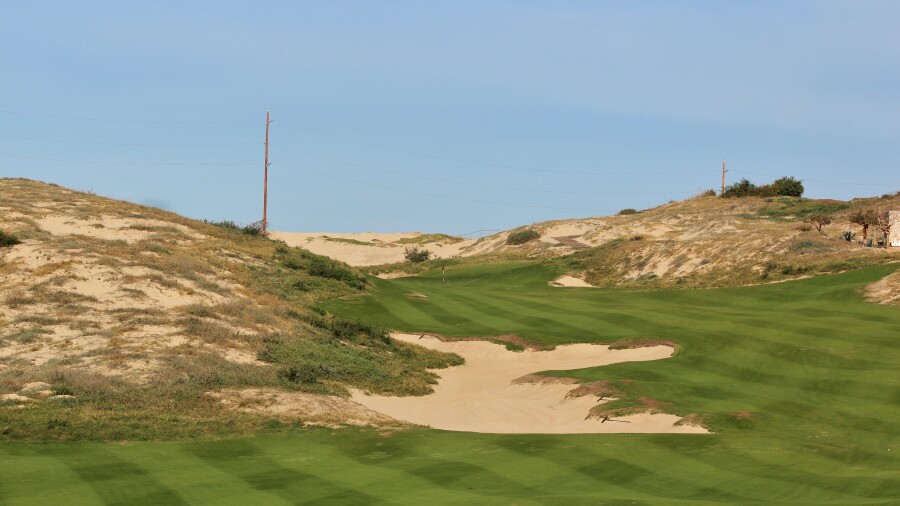
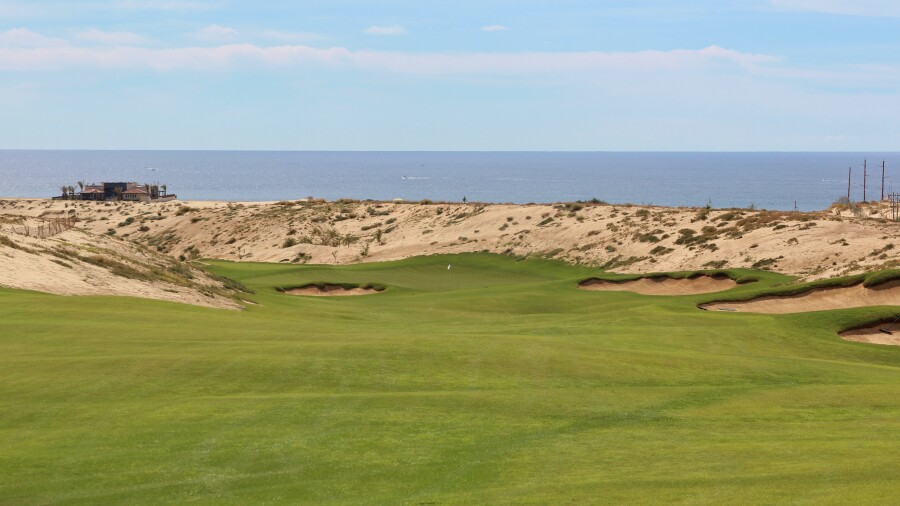
The range for the Dunes course at Diamante Cabo San Lucas - a high-end private club/resort in Mexico home to courses by Tiger Woods and Davis Love III - feels more like an outdoor golf party than a practice facility. A slider bar serves free food and drink, while music rocks. Comfy chairs welcome golfers to hang around a while. Boulders create private hitting bays on the range at El Cardonal.
Carts as rolling jukeboxes
There are more ways than ever to bring music onto the course. In 2017, Greg Norman launched the Shark Experience, an entertainment hub of music, sports highlights, golf instruction videos by Norman and GPS capabilities available on an high-definition touch screen in Club Car carts. Since then, more than 3 million rounds have been played with the Shark Experience. It is available in more than 17,000 carts at 278 courses, including standouts like Bear's Best Las Vegas and The Phoenician in Scottsdale.
The Shark Experience speakers, which can play music on Slacker Radio, were designed to keep most of the noise in the carts, almost like theater surround sound. Course managers can even control the maximum volume allowed to keep things from getting out of hand.


Personal speakers, however, are tougher to police. Golf-related speakers come in all shapes and sizes. I owned a Sound Caddy, a speaker shaped like a golf club head, until it was stolen from my checked golf travel bag during a trip (Tip: Always carry it on). Ampcaddy and the Rokform G-ROK Golf Speaker come highly recommended by MyGolfSpy.com (unbiased reviews from 2018 and 2019). Prices range from $40 on the low end (the BagBoy Bluetooth Speaker) to the Puma Soundchuck Mini ($80) up to more than $150. The newest one might be the coolest. The Wingman by Bushnell Golf not only plays music; it can be programmed to broadcast yardages to the front, middle and back of the green. Its BITE magnetic mount sticks to any cart.
“Our position on speakers overall is we have a lot of respect for the game," said John DeCastro, the Global Product Lane Director for Bushnell Golf. "This is a game that is built on discipline and being polite. If I ever have the privilege of playing at a course that doesn’t allow music, I’ll keep it in the bag. Typically, it is a fight for who is going to control the music. If I’m paired up with people, I ask them if they prefer music. If not, I leave it in the bag. So I don’t know that we have a stance on music (on the course), but we want to give people the option, whatever they prefer.”
Musical golf courses
Music came to Pinehurst's The Cradle simply by accident. At the grand opening, speakers were set up at the first tee to liven up the event. At his post-round speech, Architect Gil Hanse mentioned how much he enjoyed playing golf with the music, a comment that caught Pashley's attention.
"I started to wonder if we shouldn’t have it play all the time?," Pashley recalled. "At that point, it was a question mark. The speakers were removed, but a month or two later, we brought them back. It contributed to the overall vibe. It really set a tone that was consistent with fun. That’s what we have been preaching about."
Wiring the entire nine-hole short course post-construction wasn't easy. Trenches were dug running cable from the starter building to three different zones of speakers near the first green, the fourth green and the sixth hole. The concept has been so universally accepted that Gamble Sands in Washington state has already announced that its new 14-hole short course, Quicksands by David McLay Kidd, will be wired for music as well.
Pashley takes a fatherly approach toward the music. He monitors the playlist, the volume and how often it plays.
"Music at 8 a.m., it doesn’t feel right to me," he admitted. "I want to hear lawnmowers. I want to hear morning sounds. We’ve made the decision to start the music at 12. Once noon comes around, we let our hair down."
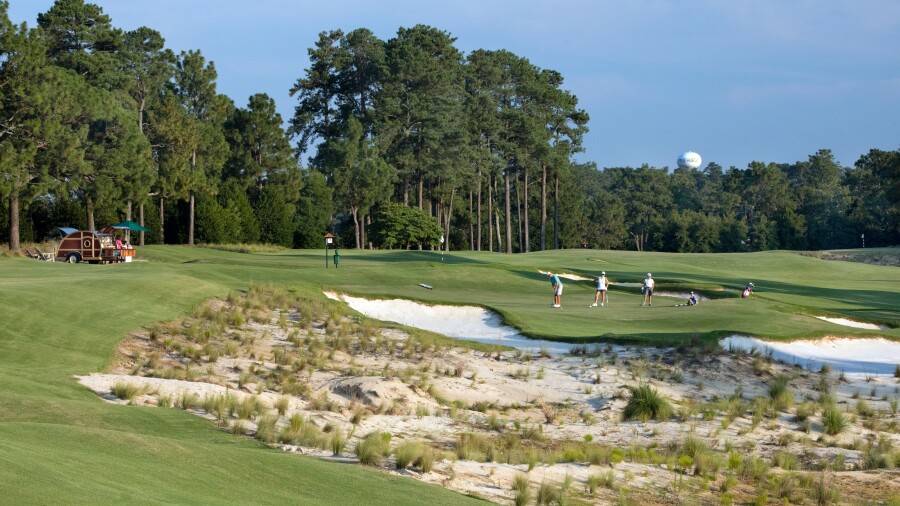


The playlist comes courtesy of a music service, Mood Media, which Pashley said plays everything from Motley Crue and EDM (Electronic Dance Music) to Frank Sinatra. He wishes his staff had more control over the songs.
"We are never satisfied with our playlist," he said. "It is a constant source of fun and needling. Sometimes, I hear too much of a certain genre. With commercial music services, you have to take whatever you get delivered. It is not your personal Pandora (account)."
Fortunately, all three men say they rarely field complaints about music on their courses. Kristmanson said the issue of whether music should be accepted on the course ultimately comes down to following the game's code of ethics.
"Do we get complaints (about music) on the course? Sure, if guys aren't being respectful," he said. "It's got to stay within your foursome. That’s like any type of golf etiquette. It’s got to be about being respectful to the course and the people around you. That time is yours. Do what you want, but it has to be within the etiquette of the game."
What's your stance on playing music on the course? Is it getting out of hand? Let us know in the comments below.






Comments (302)
I think the "Music on the Course" movement is a direct result of the popularity of near-golf experiences like Top Golf. I have played with people attempting to live out their dream of being on-course dee-jays on several occasions, and coincidentally these players weren't attempting to break 90, or even really card a score. Golf is a game of concentration and precision and listening to someone else's infinite playlist typically is a hinderance to that endeavor.
I understand the desire to have the game appeal to new younger players, but music should be limited to the driving range. If a player wants to rock out on the course, they should invest in a good set of ear buds. Playing music from a loud speaker, even if it is only in the golf cart, introduces a laundry list of issues that are all subjective:
--What kind of music does everyone want to listen to?
--Should music be muted during teeing off and putting?
--How loud is loud enough to enjoy without disrupting other groups?
--Someone hits a bad shot because they are distracted by the music, what happens?
All these questions get extremely testy if the round has a Nassau or Skins attached.
The alternative is to play the round with nature's soundtrack and have some pleasant conversation with your playing partners, the way it's been done for hundreds of years.
Like so many other things, it's not the music that is the problem, it's the inconsiderate idiots that have no respect for others. If you want music, bring headphones. I prefer courses that frown on it and avoid those that don't.
I think the "Music on the Course" movement is a direct result of the popularity of near-golf experiences like Top Golf. I have played with people attempting to live out their dream of being on-course dee-jays on several occasions, and coincidentally these players weren't attempting to break 90, or even really card a score. Golf is a game of concentration and precision and listening to someone else's infinite playlist typically is a hinderance to that endeavor.
I understand the desire to have the game appeal to new younger players, but music should be limited to the driving range. If a player wants to rock out on the course, they should invest in a good set of ear buds. Playing music from a loud speaker, even if it is only in the golf cart, introduces a laundry list of issues that are all subjective:
--What kind of music does everyone want to listen to?
--Should music be muted during teeing off and putting?
--How loud is loud enough to enjoy without disrupting other groups?
--Someone hits a bad shot because they are distracted by the music, what happens?
All these questions get extremely testy if the round has a Nassau or Skins attached.
The alternative is to play the round with nature's soundtrack and have some pleasant conversation with your playing partners, the way it's been done for hundreds of years.
Like so many other things, it's not the music that is the problem, it's the inconsiderate idiots that have no respect for others. If you want music, bring headphones. I prefer courses that frown on it and avoid those that don't.
I can’t stand the hard rock noise at the range of our Club Corp club. It’s difficult to focus. Apparently, this noise is a signature of Club Corp.
I avoid the noise by going to a local public course’s range. It has a quiet, new and a quality range. Of course, I’m paying to do that, in addition to all I’m paying my private club.
Outlaw it. Way too many rude people who have it blasting throughout round. I prefer to enjoy the course, surroundings etc. They can listen to music at their house, in their car, in their yard. Don't screw up the golf course. Also about 75% of todays music is terrible!!!!!!!!!!!!
Sorry but I guess I'm a purist. Music, like politics, on a golf course is bound to cause issues with other golfers. One man's hip-hop might be another man's cacophony. Loud talking is not welcome on the course. Why should unwanted music be?
Growing up the son of a PGA Teaching Professional and Club Pro, I have a traditionalist's point of view of golf in regards to music. As a Market Manager for Logitech, which owns Ultimate Ears and Jaybird, I've somewhat broken tradition and have a speaker sitting in my golf cart's cupholder playing music at a respectably low volume. While practicing, I have my earbuds on streaming a Spotify playlist I created just for the occasion. If I'm playing alone, I'll have them in during my round. Music has always been a part of my life and as the technology becomes more readily available, having it on the golf course just seemed natural---my Dad's old school links protocol's nonwithstanding. I do cringe when I come across golfers that blast their music during their rounds and I do think it's rude to also do so at the driving range and practice areas, but don't mind if the course does it over their speakers. It should be interesting how things will look going forward as bluetooth speakers get more popular and prevalent.
Give me a break! Why is music needed on the course? Want music, go to the bar or a concert.
My experience has been negative. Unfortunately Music is very polarizing. I prefer no music. I’ll go along with it once but then choose not to play with those people again. The problem is when you get paired with people you don’t know. I’ve had to listen to some pretty raunchy stuff. Who gets to choose? Pretty awkward. Wireless earbuds may be a solution. Those that want music can listen and those that don’t aren’t forced to listen. Just like on airplanes, in waiting rooms, and at home when your family prefers not to listen to what you are. Listening to.
For those complaining about music on the golf course: you probably have never been at a course when someone is playing music or you just didn't know it. I play my tunes on a Puma Soundchuck hanging from my bag on a pushcart. It is reasonably loud when I'm right next to the cart but I can't hear it when I'm on the green and certainly not across the fairway. Absolutely no one can hear it on another fairway. I don't play every round with it but on a Sunday afternoon with a beer and my buddies, it is kind of a different vibe. Give it a try!
I really find it disturbing to hear music at the Golf Course....The tranquility of the golf experience is unique to this sport. I can listen to music virtually anywhere If "I choose".
If a golfer wants to hear it on the course use the earphones to respect the wishes of others.
Hearing offensive lyrics or rap is not what I expect when we play the "Gentlemen's Game"!