


 Back
Back






The history of golf course architecture has played out over a series of eras. From the steeplechase-like hazards of the Victorian era to the early 20th century “Golden Age” up through the current revival of its classical strategic principles and naturalistic aesthetics, broad trends and movements have ebbed and flowed over decades. As with most art forms, tastes and sensibilities often shift in response to changes and events in the wider world.
Where golf courses are concerned, the first quarter of the 21st century is in its third act, and things are really getting interesting. Two major world events and forces – the late-2000s global economic recession and the 2020 COVID-19 pandemic – have shocked and reformed the golf industry, including the practice of creating its playing fields, such that we can break down the last 25 years into these three eras:
1. Pre-Recession: 2000-2008
2. Post-Recession: 2008-2020
3. Post-Pandemic: 2021-present
As always, there is some bleed-over between eras, as well as counterexamples to the prevailing trends (including the earlier-2000s work of architects like Tom Doak, Bill Coore & Ben Crenshaw and Gil Hanse & Jim Wagner) but these three brackets of time are useful to think about both when looking at how golf course architecture has evolved during this century and when pondering where it might be headed in the decades to come.
Pre-Recession golf course architecture: More is more

This first of the 21st century’s three main golf design eras can be seen as an extension of the explosive growth the game enjoyed all the way back to the 1980s and ‘90s. This broader epoch saw the profession of golf course architect go from niche to downright glamorous, especially in the case of “Signature” architects, world-renowned players who began to hang their own shingles in design even while still competing at the highest levels of the game.
Jack Nicklaus touched off this trend when he collaborated with Pete Dye on South Carolina’s Harbour Town Golf Links, which opened in 1969. In nearly 60 years since, Nicklaus’ name has been associated with more than 400 golf courses worldwide, making him not just one of the greatest to ever play the game, but one of the most prolific figures in spreading golf courses across the globe. In time, contemporaries like Arnold Palmer, Gary Player and even less-mainstream names like Mark McCumber have gotten involved with laying out and building golf courses.
Modern golf architecture is not the sole territory of tenured players. Architects like Tom Fazio, Pete Dye and Rees Jones and brother Robert Trent Jones, Jr. became luminaries in their field, winning high-profile opportunities to shape millions of cubic yards of dirt to their will. During this time, these architects also brought their sensibilities to several existing courses in the form of renovations, with Rees Jones earning the nickname "Open Doctor" for his work toughening up numerous courses for high-level play, including Bethpage Black, Torrey Pines, Bellerive and others.
By the beginning of the 21st century, a booming economy and a skyrocketing golf industry, buoyed by the global popularity of Tiger Woods, ensured there was plenty of design work to go around, especially in the form of master-planned golf-and-real-estate projects. Golf was part of the rampant speculation and overbuilding that eventually contributed to the Recession in the later Oughts; hundreds of courses lined by rows of homes sprang up. Many ultimately closed while many of the survivors faced new, more austere operational realities in the years after the dust finally settled.
At its peak, Pre-Recession golf course architecture reflected the excesses seen in the housing market. There emerged a sort of arms-race to see which architects and courses could bring more ostentation and premium trappings to the table. Courses regularly boasted the amount of dirt their architects were able to move, the number of bunkers they were able to scatter and the acreage of lakes that came into play, as well as the square footage of their clubhouses. Naturally, golf course lengths increased, not just to prop up Rating and Slope figures but to maximize golf course frontage for homesites, whose values rose right up until the bubble finally burst.

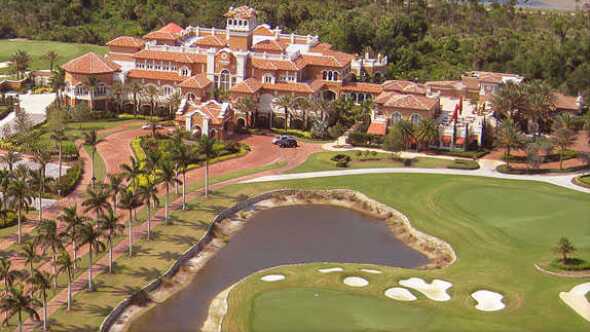
Many high Pre-Recession golf courses make the golfer feel small by design. Large features, stately corridors and a persistent sense of danger envelop players, punishing them for playing the wrong sets of tees and confronting them not just with amped-up golf features but also arrays of million-dollar homes with back patios ripped straight from the golden era of HGTV.
But if this description makes golf courses from this era sound like joyless slogs, the reality is more nuanced. Sure, many of them have a reputation for brutality, but for a student of golf, playing these golf courses now is a quaint experience. Many have been modified because their original designs required a level of maintenance that is no longer sustainable. The best-preserved Pre-Recession golf courses are still fascinating to explore as a counterpoint to today’s prevailing style. One admirable aspect of this era is that the large budgets architects were given enabled them to push the boundaries of what golfers can tolerate across a given hole or course. There is something inspiring about the aspirational element of Pre-Recession golf, even if it is sometimes overwhelming.
3 archetypal Pre-Recession golf courses you should seek out

Reynolds Lake Oconee (The Oconee)
Greensboro, Ga.
Rees Jones, 2002
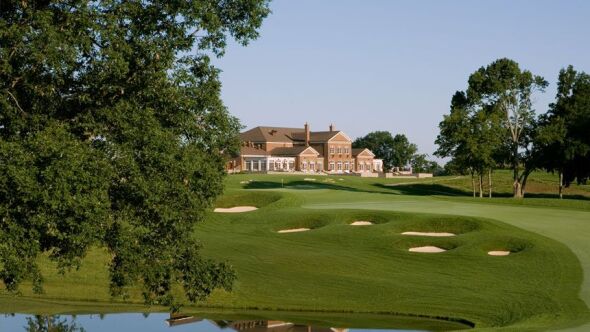
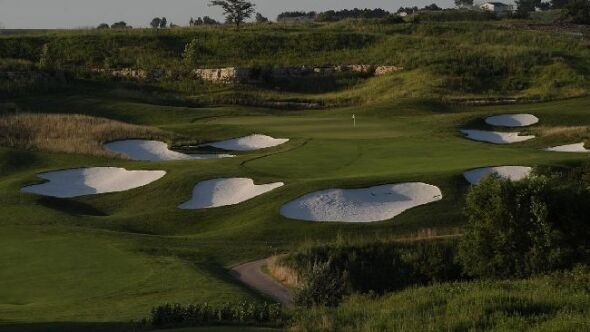
Massive bunkers, multi-decked greens and tons of containment mounding characterize Jones’ style from the 1990s through the 2000s, when he was as hot a commodity as any architect on the planet. Developers of the massive Reynolds property needed to convince visitors and prospective residents to head more than an hour east of Atlanta, and the property’s golf courses became glittering attractions. A generous amount of direct lake frontage makes The Oconee one of the exemplars of this era of golf course design.


The Bull at Pinehurst Farms
Sheboygan, Wisc.
Jack Nicklaus, 2003
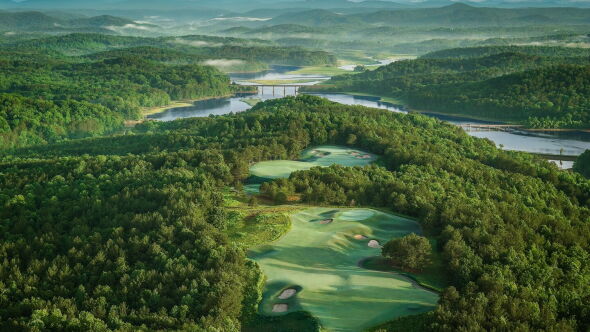
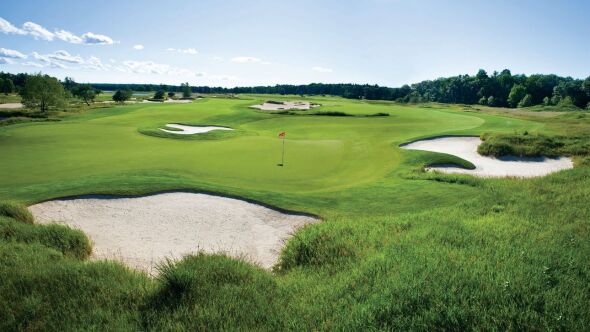
Practically next door to Destination Kohler’s two Pete Dye designs at Blackwolf Run, The Bull is another demanding and visually striking public play. Nearly 80 bunkers, and water (including the Onion River) and wetlands in play on more than a dozen holes mean nearly relentless opportunities to lose golf balls. Homes overlook several holes on the front nine. Still, golfers who embrace the challenge will find plenty of rewards in the form of heroic shot opportunities and some very pretty scenery, both in meadow and forest.

Hammock Beach Resort (The Conservatory)
Palm Coast, Fla.
Tom Watson, 2007
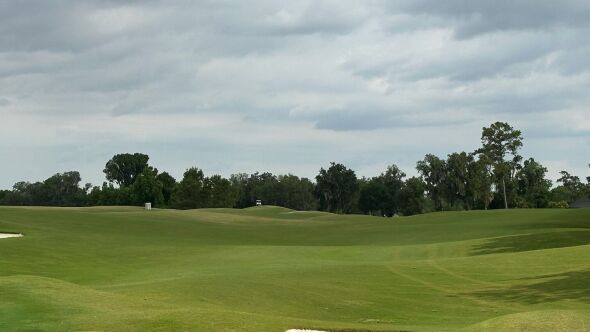
Joining the Ocean Course (Jack Nicklaus, 2000) at this Bobby Ginn-developed resort-and-residential property (Ginn’s story, by the way, is a perfect example of the early-2000s housing bubble), The Conservatory is utterly authentic to its era. Rippling mounds and scads of pot bunkers and sandy wastes down practically every hole sought to give a nouveau-Scottish feel to an otherwise flat piece of ground between Daytona and St. Augustine where real estate speculators spent hundreds of thousands on their lots and often lost their shirts when things went south. It took several years for more than a handful of homes to be built here. True to the Ginn way, the clubhouse’s wide corridors, high ceilings and large doors are meant to make you feel small. In recent years, the resort has wisely filled in several of the more ornamental bunkers in order to keep things playable and maintainable. The 7,700-yard back tees remain, though.
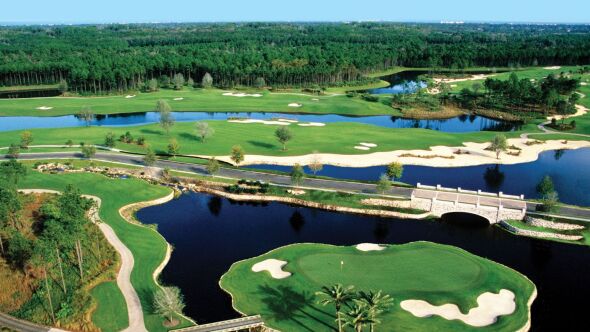
HAMMOCK BEACH RESORT - CONSERVATORY
— Tim Gavrich (@TimGavrich) April 26, 2022
Palm Coast, Fla.
Tom Watson, 2007
$180
Something of a museum piece at 15 years old, it is probably the clearest example of pre-Recession golf course development and architecture, a style unlikely to return. A fun adventure in maximalism. pic.twitter.com/K1j2QVmRX7












Next: the golf industry hits the skids through the 2010s in the form of a long post-Recession hangover. New golf course construction practically grinds to a halt…how do architects respond?


Comments (0)