


 Back
Back






The Golden Bear has been good to me in my golf life.
Anyone who has played a representative sample of Jack Nicklaus-designed golf courses might not necessarily agree. Over his more than 400-course (and counting) career as one of modern golf architecture's major players, and the principal member of the "signature architect" movement, the game's winningest major champion has put millions of golfers through rigorous tests at his courses for more than half a century.
To the extent that a golf course is a collaboration between its owner(s) and its architect(s), this makes perfect sense: developers have been attracted to Nicklaus the architect in large part because they revere Nicklaus the player. They associate his competitive stature with demanding golf courses, and they have come to regard him as the best person to built it for them.
Not all of his golf courses are must-play, but having played a Nicklaus design more times than any other single golf course, I will always harbor some affection for his architecture because I owe a great deal of my own skill in golf to his work.
What, then, are the values Jack Nicklaus golf courses emphasize? It is hard to generalize, because like any practitioner who has been active for decades, there has been considerable evolution in the style and setup of courses in his name, due in part to an expansive and rotating cast of associates who have worked for him over the years.
Nicklaus courses have helped define the modern golf design period from the 1970s up through the Recession of the later 2000s. Heavily shaped and landscaped holes with intimidating features - deep bunkers, grass mounds and hollows and no shortage of water - often calling for aerial approaches are his hallmark.
Nicklaus' tend to be smaller than those of some of his contemporaries, though there are plenty of exceptions. Many are slender and set at angles to the fairway, testing players' powers of shot-shaping and distance control with irons and wedges.
Greens and bunkers on Nicklaus golf courses tend to be defined by smooth lines and amoeba-like shapes. The best ones are a little unconventional; frankly, many of his earlier courses would have benefited from more playfulness. Green contours of earlier and middle-period Nicklaus courses tend to be toned down; the main challenge is getting onto them efficiently.

As a more naturalistic, throwback approach to design has become popular in the last 25 years, there has been something of a tonal shift in Nicklaus courses. More recent new designs and renovations have adopted more rustic-looking bunkering in places, and longtime Nicklaus associates like Chad Goetz and Chris Cochran have given golfers more expressive green contours to navigate, often with less reliance on fortifying the fronts of putting surfaces.
Renovations of his earlier courses tend to move in this direction, too. I am conflicted about this development because it sometimes ends up erasing an aesthetic that will one day be seen as refreshing relative to the one that is currently fashionable.

I would like to dispel one Jack Nicklaus golf course design myth here. In my experience across more than 30 designs - mostly originals, a few renovations - I find the narrative that he designed courses for a high left-to-right shot to be exaggerated. Being able to hit high, soft approach shots is useful at virtually every golf course, especially challenging modern designs. The course I have played more times in my life than any other is a Jack Nicklaus Signature design, and I credit it with teaching me how to move the ball from right to left, especially off the tee.
I have found that the best stretches of Nicklaus' courses call for a variety of shot shapes and lengths, and hew towards my belief that superior golf courses make us want to become better players while not (always) beating the spirit out of us. My favorite Nicklaus courses tend to be a little more on the scoreable side.
Having seen nearly three dozen of his designs across more than 700 courses played in my life so far, I hope to play many more Jack Nicklaus golf courses in the coming years. Contemporary golf course architects seem to want to refute the style and values many Nicklaus designs assert. The future will be an interesting dialogue between these camps.
For now, I can rely on Jack Nicklaus' best golf courses to remind me of how much more skill I have yet to acquire while also rewarding me with a sense of accomplishment on my rare good playing days.
My 10 favorite Jack Nicklaus golf courses you can play


Before launching into this list, I want to acknowledge Harbour Town Golf Links in South Carolina, where his involvement with Pete Dye's design in the late 1960s launched Nicklaus' career. In talking to knowledgeable sources about the course, I have come to consider it mainly a Pete Dye design, so I am setting it aside from this list. It would otherwise be #1 by a comfortable margin. It is one of my 10 all-time favorite courses.
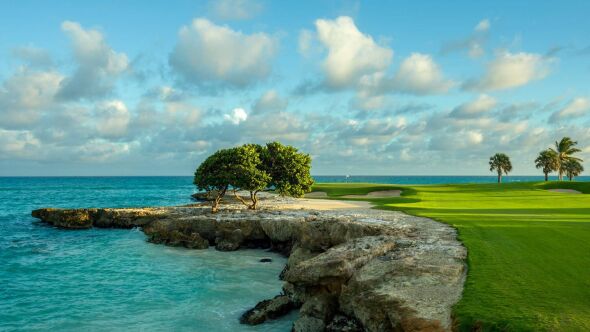
1. Punta Espada Golf Club - Punta Cana, Dominican Republic
Simply one of the best courses in the Caribbean with gorgeous and fun holes like the eye-popping par-5 2nd and the all-world coastal par-3 13th.
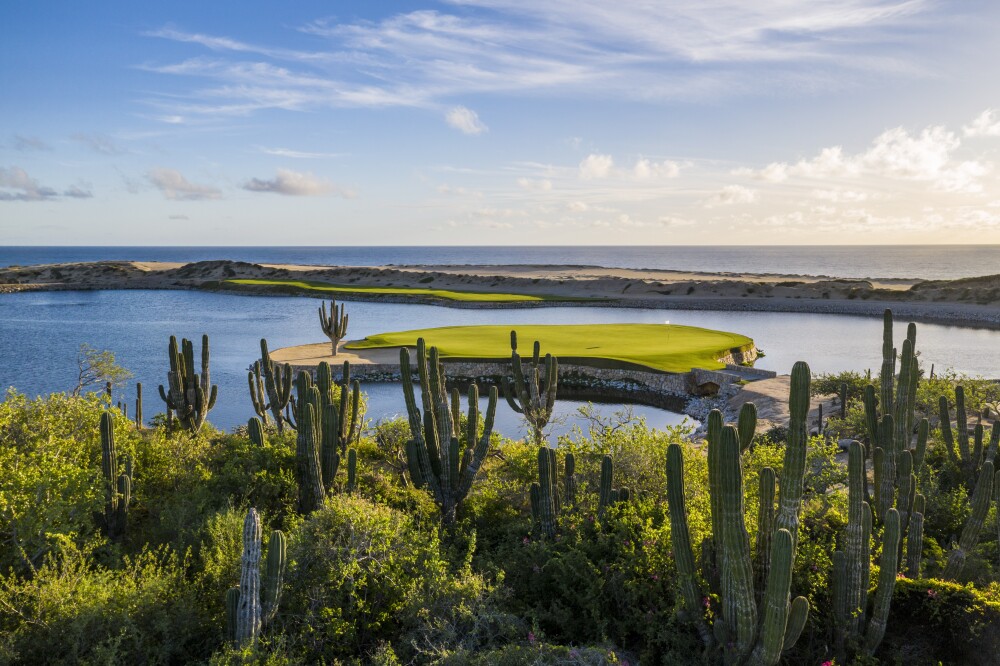
2. Quivira Golf Club - Los Cabos, Mexico
Crazy-long cart rides made very worthwhile with some almost dizzying scenery, including a borderline-insane cliffhanging short par 4 but also my favorite par 5 I've played: the zigzag 12th.
3. Reynolds Lake Oconee (Great Waters) - Greensboro, Ga.
A 2019 renovation opened up a few avenues to the greens but the generous use of lake frontage from hole 9 on is what golfers will remember.
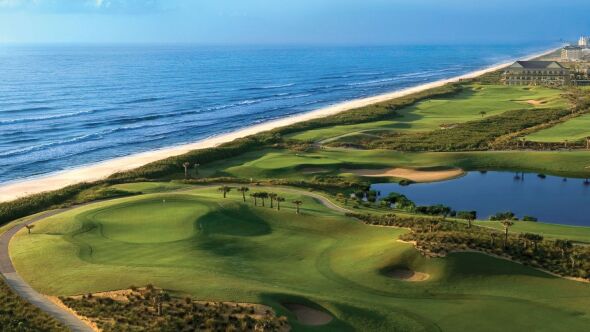
4. Hammock Beach Resort (Ocean) - Palm Coast, Fla.
All the photos you see are of the oceanfront holes (8, 9, 15-18), but the inland ones help buoy one of Florida's best publicly accessible courses.
5. Pawleys Plantation Golf & Country Club - Pawleys Island, S.C.
A sentimental choice for me as I've logged more than 500 rounds here in my life. A much-needed 2023 renovation hit most of the marks.
6. Grand Cypress Golf (Links) - Orlando, Fla.
There is a lot to enjoy at this amusing loop close to amusement parks, where firm conditions can actually make its links-pastiche play sort of like it should.
7. Pinehurst No. 9 - Pinehurst, N.C.
The wildest Nicklaus greens (as a set) I have encountered add considerable punch to a pleasant residential routing that ends up being quite a counterpoint to the resort's classics.
8. The Bull at Pinehurst Farms - Sheboygan, Wisc.
It is less than half as expensive as a round at the nearby Kohler courses, but it is every bit as tough as they are, even if it's not quite as sophisticated as Pete Dye's work.
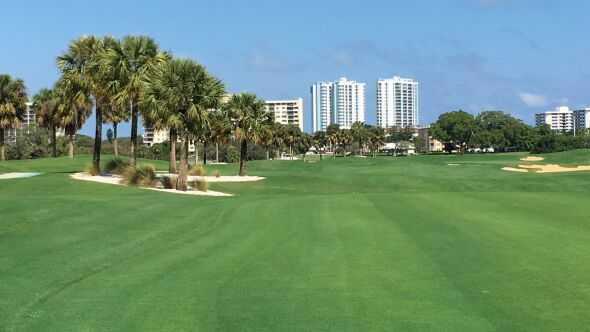
9. North Palm Beach Country Club - North Palm Beach, Fla.
Nicklaus total redo of a long-tenured layout with Seth Raynor roots is a glimpse into his aesthetic shift, with rugged bunkers and greens with contours that look like blistered potato chips. It's one of the best publicly accessible courses in its region.
10. Big Cedar Lodge (Top of the Rock) - Ridgedale, Mo.
Less a "golf course" than a rocky garden tour with clubs in tow, it is noteworthy for its arresting scenery first and foremost. It is a lot of fun to hit shots in such an environment.





Honorable Mentions:
1. Harbor Shores - Benton Harbor, Mich.
2. Bayside Resort - Selbyville, Del.
3. World Golf Village (King & Bear) St. Augustine, Fla.
4. PGA National (Champion) - Palm Beach Gardens, Fla.
5. Pinehills Golf Club (Nicklaus) - Plymouth, Mass.
6. The Nest at Sandhill Crane Golf Course - Palm Beach Gardens, Fla.
7. Long Bay Club - Longs, S.C.
My 5 favorite Jack Nicklaus-designed private golf courses


I have been fortunate to play a handful of Nicklaus-designed private clubs over the years, including a some particularly special places.
1. Mayacama Golf Club - Santa Rosa, Calif.
Tiny tee boxes perched high above landing areas atop stone staircases make it a challenging walk, but the vistas are worthwhile and the individual holes are some of Nicklaus' more eclectic, though also quite difficult with plenty of forced carries. Located in the heart of Sonoma County, Mayacama's wine cellar is probably even more impressive than its golf course.
2. Colleton River Club (Nicklaus) - Bluffton, S.C.
Located just off Hilton Head Island, Colleton is one of America's best 36-hole residential clubs, with a fabulous Pete Dye design in addition to its superb Nicklaus course, which brings golfers to gorgeous tidal marshes that surround the property on three sides. A compact, dunesy four-hole finish leaves golfers grateful for a lovely journey.
3. Creighton Farms - Aldie, Va.
Some of the largest homes you are likely to see on a golf course manage not to detract from the high pre-Recession grandeur of the course, whose jagged bunkering signaled an aesthetic departure from much of Nicklaus' work.
4. Panther National Golf Club - Palm Beach Gardens, Fla.
Nicklaus' new-build course west of his Palm Beach home passes the signature-design torch to Justin Thomas as part of a development for mega-millionaires. The golf course is bold, sandy and wholly shaped out of pancake-flat terrain on the edge of conservation land.
5. Governors Club - Chapel Hill, N.C.
This 27-hole residential club wanders a hilly property, particularly the well-named Mountain nine. The other two loops come together at the edge of a lake below the clubhouse.
(Originally published in May, 2024. Updated in June, 2026.)


Wish list: 5 Jack Nicklaus golf courses I hope to see someday
1. Muirfield Village Golf Club - Dublin, Ohio - Honestly I'm as interested in the way the course is integrated with Desmond Muirhead's community plan here as I am the course itself (and the milkshakes, which golf writers are obligated to mention.)
2. Dismal River Golf Club (White) - Mullen, Neb. - Opinions have been pretty deeply divided since Nicklaus' first foray into the more naturalistic look in the heart of the Sand Hills. Debate and controversy tells me a course is worth seeing.
3. The Bear's Club - Jupiter, Fla. - Like Muirfield Village, this has been something of a sandbox for Nicklaus' design ideas...literally. After a recent renovation, it has more than 300 bunkers!
4. Sebonack Golf Club - Southampton, N.Y. - Philosophies collided when Nicklaus and Tom Doak collaborated here.
5. Desert Mountain Club (Renegade) - Scottsdale, Ariz. - Nicklaus' concept here was to provide two distinct greens and hole locations on each hole. I applaud the experimentation here and would love to see how it looks and plays.


Stay in the Swing with GolfPass!
Get exclusive tips from the pros, in-depth course reviews, the latest gear updates, and more delivered straight to your inbox.


Comments (3)
I love the guy, and he's great for the game - but so many of his holes call for a high fading 5 iron that stops on the hood of a car. He did a terrific job on North Palm Beach, which I believe he did as a gift to the town.
I can't believe Grand Bear didn't make this list. Beautiful course in the middle of the Desoto forest. Due to the design, on every hole, it's like your group is the only one on the golf course. I haven't played many of the one's on this list, but Grand Bear should be in contention.
I love the guy, and he's great for the game - but so many of his holes call for a high fading 5 iron that stops on the hood of a car. He did a terrific job on North Palm Beach, which I believe he did as a gift to the town.
I can't believe Grand Bear didn't make this list. Beautiful course in the middle of the Desoto forest. Due to the design, on every hole, it's like your group is the only one on the golf course. I haven't played many of the one's on this list, but Grand Bear should be in contention.
Put Ferry Point on your wish list if you ever get to NYC. It's an excellent and fun course and would probably be near the top of your public list. I've played a handful of Nicklaus courses and have enjoyed every one.