


 Back
Back





Everything historic is old, but not everything old is historic.
If something is old, especially if it is damaged, I tend to throw it out, making room for something new and better. But if something is old and of value - i.e. historic - I keep it, care for it and hope it can last forever.
This matter of semantics is monumental when debating the worth of some of America's classic golf courses. Many "old" courses with deep ties to their communities, sometimes more than a century, are on the verge of closing. In one sense, it's a tragedy, but on the other hand, maybe it's time to let them go. It's a tricky situation with no easy answers.
Often, the infrastructure of these facilities - on the course and in the clubhouse - is aging and in need of expensive and extensive repairs or updates. Over the years, development has often sprung up around these courses, rendering them unable to expand to accomodate the needs of the modern game and taking away their connection to nature, which was probably a big draw when they first opened. This has made them ripe for redevelopment as well. Should they stay or should they go is a question being asked all around the country.
Failing founding fathers
It's one thing to lose a housing development course built in the 1990s, but another thing entirely to lose community icons. Losing courses from the 1800s really stings, no matter how slow the greens or how scruffy the conditions. These are courses that founded the game in our nation. In that sense, they are definitely "historic." Shouldn't we be holding onto this history instead of casually building another parking lot or condo complex? Managing Editor Brandon Tucker enjoyed his rounds on a pair of 19th-century courses last year. Our Golf Advisor course database lists about 300 North American courses - more than half of them private - with opening dates prior to 1900. That number is dwindling.
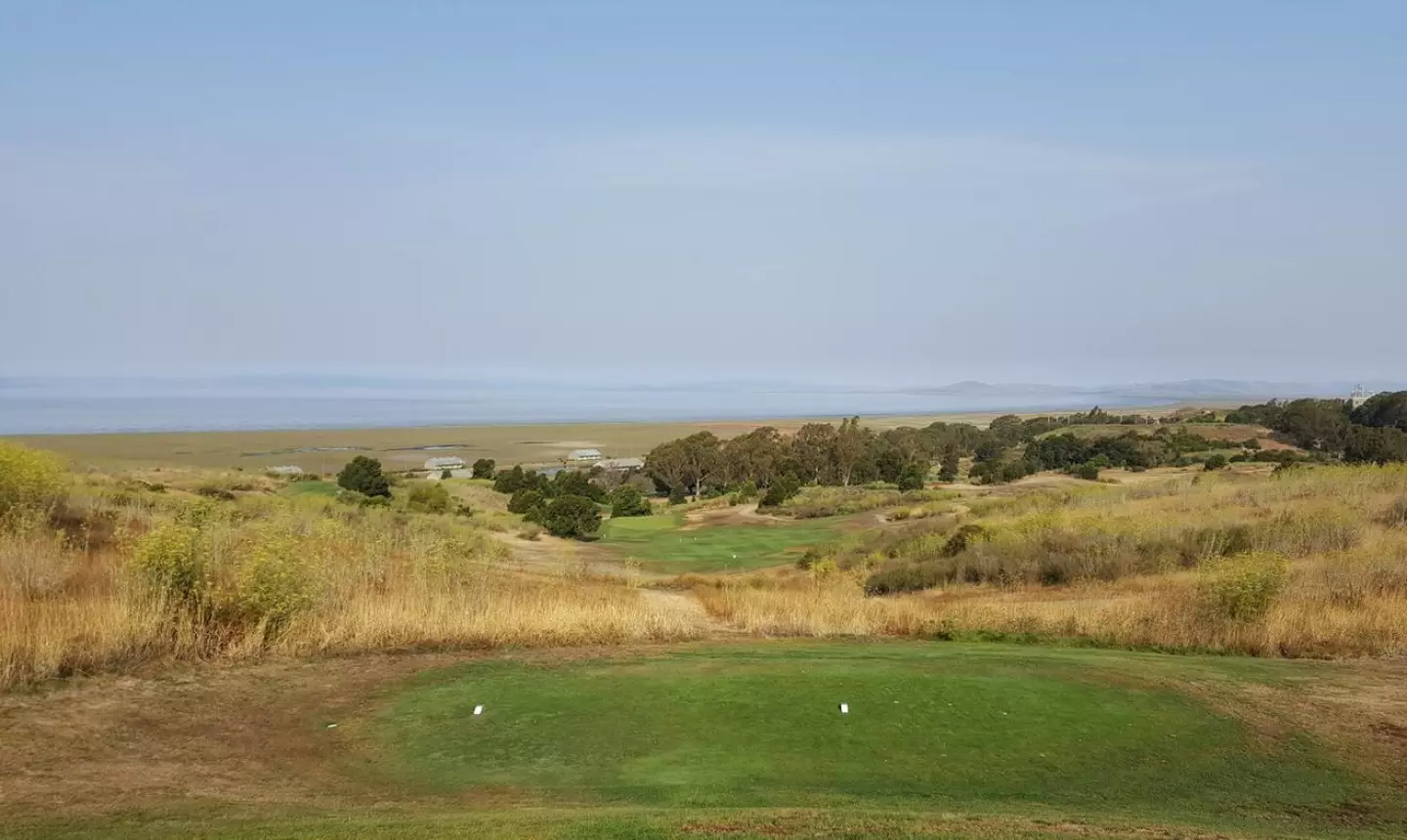
Mare Island Golf Club in Vallejo, Calif., closed earlier this year when its 170 acres were purchased by a developer in June, according to the Vallejo Times-Herald. The club's original nine dates back to 1892 (a second nine was added in 2000-01), making it possibly the oldest course west of the Mississippi.
Our country's military courses, operated by the Morale, Welfare and Recreation arm of the Department of Defense, are steadily closing. And one of its oldest is on the brink of closing.
Arsenal Island Golf Club in Rock Island, Ill., dating to 1897, closed last fall as the U.S. Army continues to search for a company to bring it back to life. It's a rare course located on an island in the middle of the Mississippi River. A statement at the club website reads: "While stepping away from the active management of the course, the U.S. Army is committed to the preservation and enhancement of this historical landmark for future generations." But military-base courses come with unique challenges. Green fees are typically low and they have obstacles to entry like requiring civilians to obtain permission to enter the base.
Dozens of courses more than a century old are struggling, too. The Indianapolis Business Journal has reported that the city's oldest municipal course, Riverside Golf Course, dating back to 1900 and the fourth-oldest municipal course in the country, will close at the end of this year, with the South Grove Golf Course (dating to 1901) following suit in the next couple of years. Both courses are roughly 6,200 yards and get mixed reviews on Golf Advisor.
In Henderson, Ky., although just a nine-hole executive course, Henderson Municipal Golf Course closed its doors earlier this summer, no longer helping young golfers learn the game, its purpose since 1909.
New public play this year has raised the number of four- and five-star reviews of the Joliet Country Club, a former private club in a tony Chicago suburb. The positive mojo might be short-lived. It faces a "significant redevelopment opportunity" of its 1905 Tom Bendelow course, according to a quote from its owner in Crain's Chicago Business.
Mississippi's oldest golf course, Great Southern Golf Club in Gulfport, Miss., has filed for bankruptcy, according to the Biloxi Sun Herald, and faces an uncertain future. The original nine holes were designed by Donald Ross in 1908 and the club later expanded to 18 holes at roughly 6,300 yards. The semi-private club built a new clubhouse after Hurricane Katrina destroyed its previous one. A recent Golf Advisor review from RDJohnsonSr1 echoes the issues in play here. On one hand, he wanted to honor its pedigree by playing and enjoying the course, but maybe the past is already long gone.
"I understand it was a historical course," he writes. "BUT being that, the upkeep on it is not one of such. Tee boxes were terrible and some holes, you couldn't tell the fairway from the rough. Also there is no driving range or real warm up area."
A legend to the rescue

There is hope, however, for at least one historic country club in New England. Metacomet Golf Club in East Providence, R.I., has found its golden parachute. Former PGA Tour player and current TV analyst Brad Faxon, who became a putting whiz on the Ross greens, recruited some friends to help purchase the club earlier this year and is preparing a restoration. It's already solid with our Tim Gavrich giving the 1901 layout four stars in a review in June.
While most of us don't have the pocketbook like Faxon to save a historic course in jeopardy, we do have a collective say in what happens to these properties. Do we start playing these courses and supporting the cause or do we let them fade away like so much of our country's history?
Should golfers pay more attention to saving historic courses or is it time to just move on? Let us know in the comments below.






Comments (35)
Sounds like a lot of these instances are the result of mismanagement over the years. But, as they say, times marches on. Our city has lost a number of exclusive private clubs (not golf) over the years. Members die out and the younger set isn't ready to cough up the big bucks it takes to join a private club, with or without golf.
And then there is the profit motive. We did have a nice 18-hole public course close a few years back and the land was going to be sold for development. But the neighbors got the town to put it up for a referendum and the voters decided to purchase the land for trails and forever wild!
Having grown up sneaking onto the Creek Club on caddie's day, playing Nassau with the high school team( in the clubhouse a replica of the Calamity Jane the pro Maiden gave Bobby Jones, and the game Nassau that came from it's Morgan and Astor members not wanting their full scores posted in the Herald Tribune ), playing Bethpage Black before the sign at age 13, passing lost golfers living in shacks by the sandtrap on the fourth hole, (metaphor), trying to putt the diabolical Ross greens at Mark Twain as an old man, I say "Let them be left, oh let them be left" to paraphrase Hopkins. Golf is history, living still...
Sounds like a lot of these instances are the result of mismanagement over the years. But, as they say, times marches on. Our city has lost a number of exclusive private clubs (not golf) over the years. Members die out and the younger set isn't ready to cough up the big bucks it takes to join a private club, with or without golf.
And then there is the profit motive. We did have a nice 18-hole public course close a few years back and the land was going to be sold for development. But the neighbors got the town to put it up for a referendum and the voters decided to purchase the land for trails and forever wild!
Having grown up sneaking onto the Creek Club on caddie's day, playing Nassau with the high school team( in the clubhouse a replica of the Calamity Jane the pro Maiden gave Bobby Jones, and the game Nassau that came from it's Morgan and Astor members not wanting their full scores posted in the Herald Tribune ), playing Bethpage Black before the sign at age 13, passing lost golfers living in shacks by the sandtrap on the fourth hole, (metaphor), trying to putt the diabolical Ross greens at Mark Twain as an old man, I say "Let them be left, oh let them be left" to paraphrase Hopkins. Golf is history, living still...
I imagine that part of the problem, as stated in the article is the lack of surrounding real estate needed to make improvements. In the Pittsburgh area, we have many older courses, but they have no room to lengthen them now, as they are surrounded by development.. Simply closing them is not a pleasing solution, though, for a number of reasons. 1). The pro's are hitting much further than ever, but most amateurs aren't , so these courses Don't need to be 7200+ yards from the tips. 2). Closing them increases the burden on nearby courses that remain open, and many of these owners, in a pure money grab, will increase green fees as neighboring courses close. 3). Once they close, and development happens, they are gone forever, and where will you find real estate to build bigger, better replacements? There are other issues, too, such as environmental impact, water & fertilizer usage. Losing a local course, whether it is a muni, private, or privately owned for public play is never a good thing, and it really doesn't matter about it's history. If I lose a friendly historic , Donald Ross course in my area, it is no more of a tragedy than you losing a friendly local course designed by Smedley No-name, because we both lost a course, and Smedley's course may have been just as nice, and just as important to you.
As we know, Golf is a centuries old
sport of Tradition and Honor.
It is one of The Most Global
of Games. Yes, I feel as Golfers we
should preserve and protect the best of the best. One of the ‘magics’ of golf is that no two courses are alike,
as courts, fields and pitches are alike in most sports.
Diversity of courses, to me, is one of the great aspects of the Game!
The Wilmington,NC MUNI (Donald Ross) was renovated five years ago to put it back in its original configuration. Greens had shrunk to postage size over the years but are twice the size now. More 3-4 putts but hitting green in regulation. Course is thriving!
I'm not feeling warm fuzzies from the USGA or the PGA. I live in Raleigh, NC and have seen many courses in the south that were very playable for beginners and walkers being bought by developers with the approval of city & county governments for the additional tax revenue. Not sure what the USGA & PGA brain trust in these organizations are doing to partner with local governments to save these courses, that could actually grow the game, but they better get their game plan together soon. Once these courses are gone, you'll never be able to replace them in their geographic locations, again. First Tee or no First Tee you need these type of courses to build and sustain the game with the general public.
Sad to hear about Great Southern. Beautiful layout. Typical small Ross greens. Played it a few times about 20 years ago
There are other great old courses that are on the chopping block mostly in the East. Who can forget Englewood CC, Englewood, NJ. I think they played a US Open there way back when. Then came the GW Bridge and Route 80 cutting thru the front nine. It was gone by the late 70's. I wonder if Orchard Hills, River Edge, NJ is still around? Great beginners course .. Municipal courses are under attack! There's one outside of Newark, NJ that was the local track for so many of us "professional caddies" on Monday's or rainy days.....loved it!
Wow, it saddens me to see Mare Island close as it was a classic course. Unfortunately, as these high end courses gobble up golfer's discrepancy spending and in turn leaves little money left for local golf when they return home. Many people go on golf vacation and pay $5000 for a week. What they don't get is you could belong to a nice club and play golf for that price all year. . Another problem is the dynamic pricing model many courses are using. Say a course has regular green fees of $35, but using dynamic pricing you could be charged $50 or even worse on weekends. Dynamic pricing is just another name for price gouging. As a consumer I won't pay $10 for a item with a MSRP of $6 and same goes for golf. Slow play is the other dynamic killing golf, yet course continue to ignore this. Next add in $600 drivers and $500 to $660 individual iron costs and there goes the chance for main stream golfers to have good clubs especially since most of these clubs are mass produced in the Asian market.
YES,,,,,we are allowing golf history to fade ,,,just as we have forgotten the greats of golfs past who paved the way for what the young guns are enjoying now,,,,,we should all do our part to restore, play and support these historic venues and keep spirits alive nation wide